

KIMI AI Predicts 2026 Prices for BTC, XRP, and SOL
Alibaba’s KIMI AI, a new rival to ChatGPT, has made bold predictions for the prices of Bitcoin (BTC), XRP, and Solana (SOL) in 2026—along with a warning for investors feeling the pressure of crypto FOMO this year.
According to the AI’s projections, if the crypto market enters a strong bull run, supported by clearer U.S. regulations, major cryptocurrencies could hit new record highs during the next market cycle.
Here’s a closer look at what KIMI AI expects for these top cryptos:
**XRP Price Prediction for 2026**
Ripple’s XRP kicked off 2026 with a strong performance, jumping 19% in the first week. It’s currently trading around $2.97. If the bull market continues, KIMI AI sees XRP possibly hitting $8 by 2027 — a massive 300% increase.
XRP had a breakout year previously, reaching an all-time high of $3.65 after Ripple won a key legal battle against the U.S. Securities and Exchange Commission (SEC). That win helped reduce fears that XRP and similar tokens might be labeled as securities, creating a more stable outlook for investors.
With Donald Trump returning to office, a more crypto-friendly stance in the U.S. is helping calm investor worries. XRP’s Relative Strength Index (RSI) is currently at 54, showing neutral momentum and room to grow.
The recent approval of XRP spot ETFs in the U.S. is also attracting traditional finance investors, much like what happened with Bitcoin and Ethereum ETFs.
**Solana (SOL) Forecast for 2026**
Solana remains one of the fastest-growing ecosystems in the crypto world. With over $8.7 billion locked in its smart contracts and a market cap above $75 billion, SOL continues to attract developers and users.
ETFs focused on Solana by firms like Grayscale and Bitwise are fueling renewed interest. After a pullback at the end of 2025, SOL now trades at around $134 and is holding steady at key support levels.
If Bitcoin regains momentum and climbs past $100K again this year, KIMI AI predicts SOL could surge to $380 by 2027 — that’s about 184% higher than where it stands now and well above its previous record high of $293.
Solana also stands out for its use in real-world asset tokenization projects, with financial giants like BlackRock and Franklin Templeton building on its blockchain. This adds credibility and long-term growth potential to the network.
**Bitcoin (BTC) Outlook for 2026**
Bitcoin remains the king of crypto. In October, BTC hit a new all-time high of $126,080. According to KIMI AI, it could climb even further to $170,000 if current trends continue.
Often called “digital gold,” Bitcoin is still the go-to asset for investors looking to protect their money from inflation and economic uncertainty. It currently makes up $1.9 trillion of the $3.23 trillion crypto market and trades near $93,000.
Although Bitcoin saw a small dip recently after EU trade tensions with the U.S., most analysts believe that lower inflation and better regulation could help push BTC to new highs by mid-year.
There’s also speculation that the U.S. might create a Strategic Bitcoin Reserve — if that happens, Bitcoin’s long-term price could rise even more.
**Hot Crypto Presale: Maxi Doge ($MAXI)**
While big names like Bitcoin and Solana dominate headlines, some investors are diving into presales for riskier but potentially high-reward coins. One project getting attention is Maxi Doge ($MAXI), which has already raised $4.5 million.
Maxi Doge is a meme coin inspired by Dogecoin but with a funny gym bro personality. It’s meant to be bold, absurd, and unapologetically “degen” — traits that appeal to meme coin fans who love wild price swings.
Built on Ethereum’s eco-friendly proof-of-stake network, MAXI offers staking rewards up to 69% APY during presale stages. As more people join, those rewards shrink. The token is currently priced at $0.000279 and can be bought using MetaMask or Best Wallet.
With automatic price increases built into each funding round, early investors could see big gains — if demand continues after launch.
Maxi Doge is shaping up to be Dogecoin’s chaotic little brother… and it’s aiming to steal the spotlight.
The Race to Build the Ultimate Financial Super-App
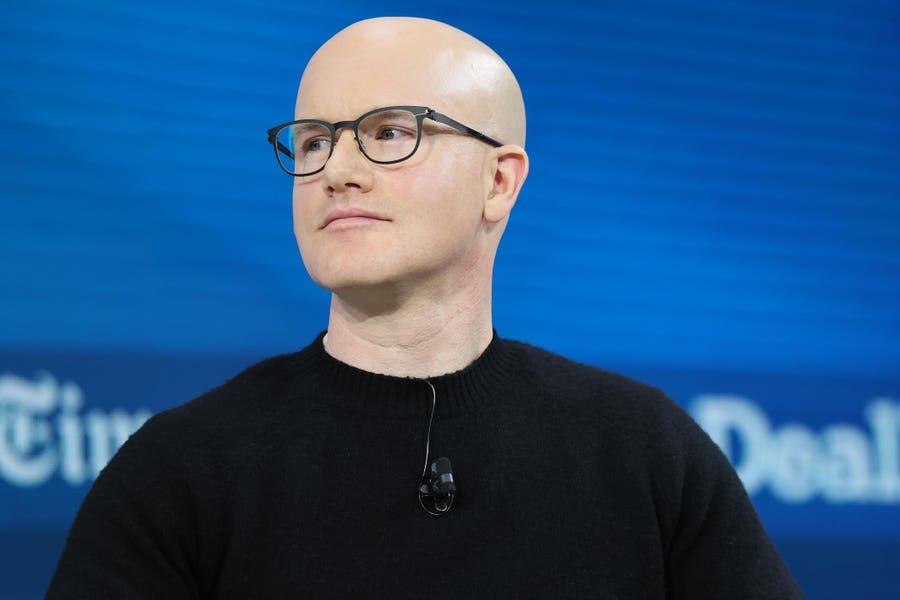
In December 2025, Coinbase CEO Brian Armstrong made a bold announcement in San Francisco: Coinbase was no longer just a crypto exchange. It was becoming “The Everything Exchange.” Users could now buy and sell stocks, trade prediction markets, access derivatives, get AI-driven financial advice, and even borrow up to $5 million using crypto as collateral—all in one app.
“We’re not just about crypto anymore,” Armstrong said. “Now you can trade everything in one place.”
Meanwhile, Robinhood was moving in the same direction. The trading platform, once known for commission-free stock trading, revealed that its new prediction markets—where users can bet on things like elections, sports games, or inflation numbers—had become its fastest-growing product ever. They reached $100 million in annual revenue in less than a year. CEO Vlad Tenev believes prediction markets could become one of the biggest financial markets.
Across the ocean in Paris, a startup called Ouinex—founded by former FXCM executives—is working on a platform that lets crypto traders also access forex, commodities, and stock indices without leaving the crypto world. Founder Ilies Larbi pointed out how broken the user experience is right now: “If you’re a crypto trader, you can’t easily buy gold or stocks. And if you’re in traditional finance, you don’t touch crypto.”
This shift isn’t just happening at Coinbase or Robinhood. Nearly every fintech company is moving toward becoming an all-in-one financial app. Whether they started with payments (like PayPal), banking (like Revolut), or crypto (like Coinbase), they’re all converging into super-apps that let users do everything—from investing in stocks and crypto to saving money or betting on sports.
Coinbase’s December update highlighted how far this has come. The company now holds over $500 billion in crypto assets—five times more than three years ago. But it’s not stopping at crypto. Users can buy stocks using stablecoins like USDC, trade prediction markets through Kalshi, borrow against their Bitcoin and Ethereum, and soon use AI-powered financial advisors.
Robinhood is pushing just as hard from the other side. After adding crypto in 2018, its revenue hit $1.3 billion in Q3 2025—double what it was the year before. Robinhood launched Robinhood Ventures to let regular investors invest in private companies and wants to make over half its money from non-U.S. markets by 2030. Its assets under custody now top $333 billion.
The trend is everywhere. Revolut began as a currency exchange app for travelers and now offers stock trading, savings accounts, insurance, and crypto across Europe and the U.S. PayPal created its own stablecoin, PYUSD. Cash App lets users send money, buy Bitcoin, invest in stocks, and even file taxes. Public.com partnered with Zero Hash to offer both crypto and stocks.
All these companies started in different areas but are ending up with the same idea: offer everything in one place.
Why is this happening? One major reason is “tokenization”—the idea that anything (stocks, real estate, games, even event tickets) can be turned into a digital token on a blockchain. OpenSea CEO Devin Finzer explained it simply: “When we talk about tokenizing everything—we mean literally everything.”
Tokenization breaks down the old barriers between asset types. Unlike traditional markets that close at 4 p.m., tokenized assets can trade around the clock and across borders with fewer restrictions. This makes it easier for companies to expand what they offer—and easier for users to access it all.
Coinbase wants to tokenize real estate and shares of private companies. Robinhood already offers 400 tokenized stocks to users in Europe and plans to eventually move these assets onto blockchain systems where users hold their own keys. The same infrastructure that powers crypto is starting to power everything else.
But this convergence works both ways. Crypto platforms are adding traditional finance products. Traditional finance companies are adding crypto offerings without needing full blockchain infrastructure. Ouinex, for example, uses traditional forex systems to serve crypto users.
There’s also a strong business reason for this trend: customer acquisition costs are going up fast. If a company offers only one service, it spends big to get customers—only to lose them to competitors with more features. Super-apps solve this by giving users more reasons to stay. A user who trades stocks, saves money, and buys crypto all in one place is more likely to stick around.
It’s simple math: If it costs $50 to get a user who only generates $100 in revenue from trading stocks, the profit is slim. But if that user also keeps savings on the platform (earning interest), trades Bitcoin on weekends, and places bets on elections—that same user might now be worth $300 or more.
This creates a powerful cycle: more products bring in more users; more users justify investing in new features. The app becomes stronger over time.
Still, if every app offers the same features—stocks, crypto, prediction markets—how do they stand out?
Finzer believes each platform will target different audiences. OpenSea focuses on NFTs and digital culture rather than competing with trading apps like Coinbase or Robinhood. Coinbase positions itself as secure and regulated. Robinhood keeps things simple and highlights its mission of making finance accessible to everyone. Revolut leans on its global features and European base.
But in practice, many of these apps are starting to look alike. So what sets them apart might not be features—but brand identity and community culture. Some users might stick with Coinbase because they’ve used it for years and trust it. Others might prefer Robinhood because it feels familiar.
For everyday users, this means your investment app may soon let you bet on sports games or political events. The line between investing and gambling is getting blurrier.
For fintech companies, it’s a race against time. Robinhood wants half its revenue to come from global markets and institutional clients by 2030. Coinbase is building AI tools and tokenization tech for big investors too. Whoever grows fastest before the market settles will likely win.
Crypto companies are adding traditional finance tools; traditional finance companies are adding crypto products. Everyone is heading toward the same goal: become the all-in-one financial app.
As Ouinex’s Larbi put it: “Do everything fast—because time is against us.”
The question isn’t if this convergence will happen—it already is. The real question is: Who will build an app that’s different enough to matter once everyone offers everything?

Top 10 Best-Performing Cryptos of 2025
The year 2025 was a strange one for the crypto world. Historically, U.S. presidential election years were often followed by big bull runs and a surge in altcoins. But 2025 broke that pattern.
Although there was a strong crypto rally at the end of 2024, the momentum didn’t carry over into 2025. There was no major altseason, and meme coins didn’t explode like they had in previous years. In fact, some of that hype had already faded by late 2024.
Instead, 2025 saw a shift toward more useful and structured crypto projects. The total market cap of cryptocurrencies reached about $3.364 trillion, up only 1.6% from 2024. While that’s still growth, it was slower than in past bull markets.
Interestingly, Bitcoin and Ethereum both hit new all-time highs during the year—but still ended 2025 with losses. Bitcoin dropped by around 7.96%, and Ethereum fell even more, down 15.25%. Meanwhile, other lesser-known cryptocurrencies took the spotlight.
Here’s a look at the top-performing cryptos of 2025 based on price gains:
**1. MYX Finance (+3,358%)**
MYX Finance was the biggest winner of the year. It launched in May 2025 at just under $0.10 and skyrocketed to over $19 by September. MYX is a decentralized derivatives platform on BNB Chain, focused on perpetual futures contracts.
Its success came from several smart moves: a strong airdrop campaign that attracted users, and the rising popularity of derivatives trading in DeFi. BNB Chain also grew fast thanks to its low fees and high speed, helping MYX thrive.
However, the token later dropped below $3 due to insider trading accusations and controversies around its airdrop recipients.
**2. Zcash (ZEC) (+573%)**
Zcash made a huge comeback in 2025 as privacy became a hot topic again. The coin gained 573% thanks to rising demand for privacy-focused cryptocurrencies.
Launched in 2016, Zcash uses zk-SNARKs to hide transaction details, giving users the option to stay private. In 2025, concerns about government surveillance and privacy led to renewed interest in ZEC. Improved wallet and exchange support also boosted its popularity.
**3. Rain Protocol (RAIN) (+184%)**
Rain Protocol saw major gains thanks to the rise of decentralized prediction markets. It lets users bet on real-world events like elections or sports in a decentralized way—unlike traditional platforms that can be censored or limited.
The U.S. elections brought attention to these platforms, and Rain benefited from partnerships with data providers like Chainlink and smart token incentives.
**4. Zebec Network (ZBCN) (+164%)**
Zebec Network focuses on real-time payments and tokenized real-world assets (RWAs). In 2025, more institutions entered crypto through RWAs due to clearer regulations.
Zebec lets companies stream payments (like salaries) and tokenize assets such as real estate or commodities. Built on fast networks like Solana, it became popular among long-term holders thanks to its fee-based business model.
**5. Zora (+138%)**
Zora is a Layer 2 platform in the SocialFi space—where social media meets decentralized finance. It allows content creators to earn through NFTs and tokens.
In 2025, SocialFi grew rapidly as people moved away from traditional platforms like Instagram or X (formerly Twitter). Zora stood out by helping creators monetize directly while building strong communities on chains like Optimism.
**6. Monero (XMR) (+115%)**
Monero continued to be a leading privacy coin, gaining 115% in 2025. Unlike Zcash, Monero offers default privacy using technologies like Ring Signatures and Stealth Addresses.
Rising concerns about traceability of blockchain transactions helped Monero grow in popularity—not just among privacy advocates but even some institutions looking for confidential solutions.
**7. OKB (+115%)**
OKB is the native token of the OKX exchange. It gained the same percentage as Monero (+115%), driven by investor interest in “exchange tokens” like BNB.
While BNB itself only rose by about 20%, OKB performed much better due to OKX’s growing ecosystem including launchpads and DeFi integrations—showing that centralized exchanges still play a major role in the crypto space.
**8. Alchemist AI (ACH) (+89%)**
AI remained a big trend in 2025, and Alchemist AI tapped into it well. ACH is tied to projects that combine artificial intelligence with blockchain tech—a narrative that continued to attract attention throughout the year.
**9. Maple Finance (MPL) (+75%)**
Maple Finance offers decentralized lending solutions for institutions. As more traditional financial players entered DeFi, Maple’s model proved attractive with its focus on creditworthiness and real-world use cases.
**10. Midnight Network (NIGHT) (+58%)**
Midnight Network launched in December 2025 and focuses entirely on privacy features. Even with limited time on the market, it made an impact by tapping into the growing demand for privacy-preserving blockchains.
—
Overall, the big story of 2025 wasn’t about meme coins or explosive bull markets—it was about mature technologies gaining ground. Privacy coins made a strong comeback, while sectors like DeFi derivatives, RWAs, SocialFi, and AI also had standout performances.
The crypto market seemed to mature this year, shifting focus from hype-driven tokens to projects with solid utility and long-term potential. With no single dominant narrative, investors showed interest across a range of innovative ideas—signaling a more balanced and diversified future for crypto.
ZKP Crypto Set to Soar in 2026 Amid Market Boom
The crypto market is off to a strong start in 2026, with the total global market cap hitting $3.32 trillion. Bitcoin continues to lead with a 57% market dominance, while Ethereum and Monero are showing exciting growth. Ethereum just reached a record 35.9 million ETH staked, and Monero hit an all-time high of $798 before a minor dip. But with these big names already so expensive, many are asking: where’s the next big opportunity?
Experts are now turning their attention to Zero Knowledge Proof (ZKP), a privacy-focused blockchain designed for secure AI processing. This new project is catching major attention because it’s offering something rare—huge growth potential and real-world utility. Analysts call it the top crypto to buy right now because it’s still early, and they predict a 7000x return from current levels.
ZKP is built for privacy and performance. It’s not just another idea on paper—it already has a live four-layer blockchain and physical hardware called Proof Pods. These Pods are real devices that users can buy for $249 and use to earn up to $300 a day by completing computational tasks. Big names like the Miami Dolphins are already using this technology.
What makes ZKP different is its massive early investment—over $100 million in infrastructure was funded before launch. That means most of the risk is already taken care of, making this a safer bet than most new coins.
Right now, ZKP is entering Phase 2 of its rollout. This phase comes with some big changes: the daily coin supply drops from 200 million to 190 million, and any unsold coins are permanently destroyed through a burn system. This creates strong scarcity, which usually leads to price increases. Researchers call this moment the “Golden Gap”—a short window where the coin is undervalued compared to its future potential.
With fewer coins entering circulation and demand rising fast, many investors see ZKP as a once-in-a-decade chance to get in before the price explodes. The project is expected to reach a $1.7 billion valuation as more users adopt its AI and privacy tools.
Meanwhile, Ethereum continues to show strong momentum. It recently doubled its monthly active users from 4 million to 8 million and hit a record 2.8 million daily transactions. This growth is being driven by stablecoin use and lower transaction fees. Institutional money is also flowing in—one wallet linked to analyst Tom Lee just bought $80 million worth of ETH. Even Belgian bank KBC is now offering Ethereum trading to everyday users.
On the tech side, Ethereum’s upcoming Glamsterdam upgrade is expected to supercharge performance by increasing transaction speed from 21 to 10,000 per second using parallel processing. With nearly $120 billion worth of ETH now staked, confidence in Ethereum’s future remains sky-high.
Monero also made headlines after reaching a new high of $798, driven by increased demand for private and untraceable transactions. Even after dipping to $583, it remains one of the most resilient privacy coins out there. Monero’s technology keeps every transaction hidden by default, which helps it avoid regulatory crackdowns that affect other coins. Its recent software upgrade has also improved hardware wallet support and fixed bugs, making it even easier to use.
As we move into 2026, the crypto landscape is seeing strong gains from major players like Ethereum and Monero. But for those looking for high-growth opportunities, ZKP stands out as the top crypto to watch. With real utility, engineered scarcity, and huge upside potential, it could be the breakout investment of the year.
Now is the time to act before Phase 2 fully kicks in and prices begin to climb rapidly. Investors who move early may position themselves for massive returns in the coming months.
ZKP Surges Ahead as Ethereum and WLFI Lose Steam
**Crypto Market Update: ZKP Steals the Spotlight as Ethereum and WLFI Slow Down**
The crypto market saw a small dip of 1.5%, now sitting at $3.32 trillion. Popular coins like Ethereum and WLFI are struggling to gain momentum. Ethereum is hovering around $3,312, while WLFI shows limited room for growth. Many investors are beginning to ask—are the big-name tokens running out of steam? Or is there a more promising opportunity flying under the radar?
**ZKP: The Privacy-Focused Crypto Built for Big Growth**
Zero Knowledge Proof (ZKP) is quickly becoming the talk of the crypto world. It’s a new kind of privacy-focused AI network that’s designed to be fully compliant with regulations. Unlike other privacy coins that are getting delisted or facing legal issues, ZKP uses something called “selective disclosure.” This lets users share only the data they choose—perfect for audits—while keeping everything else private.
This unique feature gives ZKP a major edge in today’s regulatory climate. Investors are taking notice, especially with analysts predicting a possible 5000x price increase. One big reason? Supply is shrinking fast due to regular coin burns, which already pushed the price up 300% to $0.0008.
ZKP doesn’t just protect privacy—it turns it into profit. Users can sell their data through what’s called “Proof Pods” without ever revealing personal information. Plus, it’s eco-friendly, using 99% less energy than Bitcoin. This makes it not only safer but also smarter for future growth.
Because of all this, ZKP is being called the best crypto to buy heading into 2026. With rising demand and limited supply, early investors are locking in before prices skyrocket.
**Why ZKP Could Be the Next Big Thing in Crypto**
ZKP is solving some of crypto’s biggest problems. It keeps your data safe, plays well with regulators, and helps you earn—all while being good for the planet. The protocol’s architecture lets people control their own information and still make money from it.
Meanwhile, as other privacy tokens face bans and delistings, ZKP’s “compliance-first” approach could become the standard. Financial experts believe this design makes it a safe bet for long-term growth. With rising interest from investors and planned token burns creating scarcity, prices are moving up fast—and could explode once the network launches fully.
Analysts say waiting could mean missing out. In a deflationary setup like this, early entry often leads to the biggest gains.
**WLFI Price Prediction: Flat Growth Despite Big Moves**
World Liberty Financial (WLFI) currently trades at $0.168 and has a $4.5 billion market cap. It’s making moves—like teaming up with Pakistan for cross-border payments and adding its USD1 stablecoin to Myriad prediction markets—but the price isn’t reflecting much excitement.
Even with these partnerships, WLFI hasn’t shown strong upward movement. Regulatory pressure, especially from U.S. lawmakers like Senator Elizabeth Warren, is slowing down investor interest. Concerns about centralized control are also hurting its momentum.
While WLFI continues to offer steady utility, analysts say it’s unlikely to deliver the kind of explosive gains seen in newer, more agile projects. It might be worth watching, but don’t expect huge returns anytime soon.
**Ethereum Price Update: Heavy Investment Meets Resistance**
Ethereum remains a major player, trading at around $3,312. Institutional investors are still interested—$1.8 billion flowed into Ethereum-based ETFs this week alone. This shows strong long-term belief in the project.
However, short-term movement is slow. The price dropped by 1% today as Ethereum faces resistance levels on the chart. U.S. regulatory delays have cooled off excitement, shifting market sentiment from “Greed” to “Neutral.”
Ethereum’s role in powering decentralized finance keeps its fundamentals strong. But until it clears current price barriers, major gains may be on hold.
**Conclusion: ZKP Offers Growth While Others Stall**
Ethereum and WLFI are solid projects but currently lack strong upward momentum due to market resistance and regulatory hurdles. Investors looking for quick or large returns may find these assets too slow-moving.
In contrast, Zero Knowledge Proof (ZKP) is emerging as a top pick thanks to its unique blend of privacy, compliance, and high-growth potential. With coin burns reducing supply and selective disclosure tech offering regulatory safety, analysts believe ZKP is on track for a massive breakout.
If you’re hunting for the next big crypto opportunity before mass adoption kicks in, ZKP might be your best bet.
**Learn More About ZKP:**
– Website: https://zkp.com/
– Auction: https://auction.zkp.com/
– X (Twitter): https://x.com/ZKPofficial
– Telegram: https://t.me/ZKPofficial
*Always do your own research before investing. Crypto is volatile and past performance does not guarantee future results.*