
Trump Tariffs Trigger Market Crash and Investor Panic
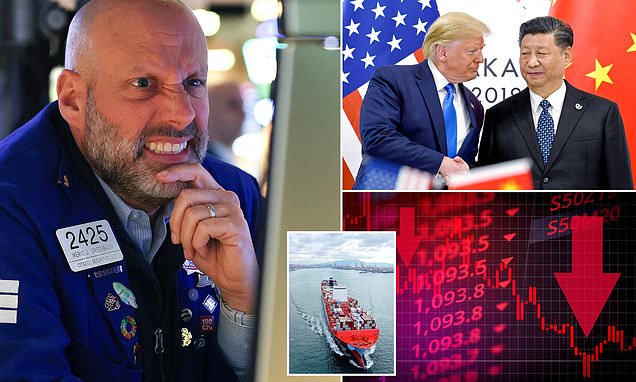
Wall Street is on edge as markets prepare to reopen Monday after a major shakeup caused by former President Donald Trump’s new tariff threats against China. On Friday, Trump announced a 100% tariff on all Chinese goods, sparking a massive selloff that wiped out over $2 trillion from U.S. stock markets.
The move came in response to China’s decision earlier that day to restrict exports of rare earth minerals—critical materials used in everything from fighter jets to smartphones and electric cars. Since China controls around 70% of the global rare earth supply and almost all of the processing capability, this decision could hit U.S. tech companies especially hard.
Investors are bracing for more chaos. Stock markets are closed over the weekend, but U.S. futures—which give an early indication of how markets might open—start trading at 6 p.m. ET on Sunday. Asian markets like Japan’s Nikkei will follow a couple of hours later, giving the first real clues about whether the selloff will continue.
Futures trading lets investors place bets on where they think the major indexes like the S&P 500, Nasdaq, and Dow Jones will head. With investor confidence shaken, many expect more panic selling.
“This feels like more than just a hiccup,” said Art Hogan, chief market strategist at B. Riley Wealth Management. “It could knock the wheels off.”
Dan Ives, a well-known analyst from Wedbush Securities, called it a “white-knuckle moment” for investors, especially those holding tech stocks.
The S&P 500 dropped 2.7% on Friday, its worst single-day performance since April’s trade war tensions. The Nasdaq fell even harder, down 3.6%, and the Dow slipped nearly 2%. The tech sector got hit the hardest, with companies like Nvidia, Super Micro Computer, and Synopsys suffering major losses due to their reliance on rare earth materials.
The panic wasn’t limited to stocks. The crypto market crashed Friday night, with Bitcoin plunging over 10%. Ether and Solana fell even more sharply. In total, nearly $400 billion in crypto value vanished in hours, and leveraged traders lost around $19 billion.
The fear is spreading beyond tech. Shares of smaller banks and industrial companies also dropped, as investors worry that a renewed trade war could push the U.S. economy into recession.
What makes this selloff even more alarming is how fast things turned. Since April, the S&P 500 had been on a historic run—up over 30% and hitting all-time highs. But Friday’s crash erased much of that momentum.
The CBOE Volatility Index, often called Wall Street’s “fear gauge,” jumped nearly 30%, showing just how nervous investors are about where things are headed.
Meanwhile, Trump tried to calm nerves over the weekend. On his social media platform Truth Social, he wrote: “Don’t worry about China. It will all be fine! President Xi just had a bad moment… The U.S. wants to help China, not hurt it!!!”
Still, many analysts believe the damage is already done. China’s new rules mean companies now need special approval to export anything containing even trace amounts of Chinese-processed rare earths. Experts say defense-related exports are likely to be blocked entirely—a move designed to show Beijing’s dominance in the global supply chain and put pressure on Washington.
This escalating trade fight is not just about economics—it’s becoming a geopolitical standoff. And for investors, it’s a harsh reminder that the recent bull market was built on shaky ground.
Keywords: US-China trade war, Trump tariffs, rare earth minerals, stock market crash, tech stocks, crypto crash, Nvidia, Nasdaq drop, economic uncertainty, investor panic, market volatility, S&P 500 decline