
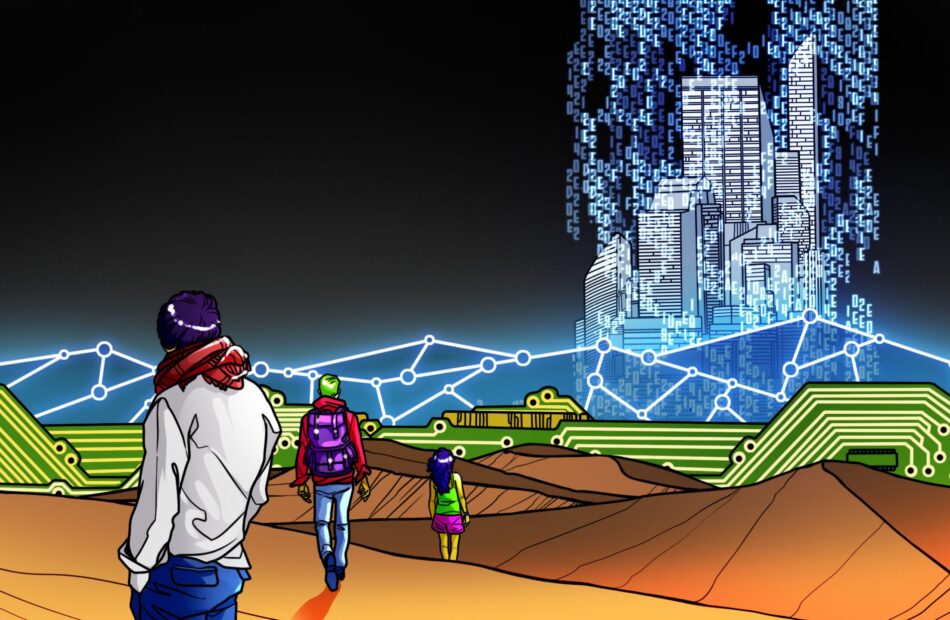
Dubai Emerges as Global Hub for Crypto Innovation
Dubai is becoming one of the best places in the world for cryptocurrency and blockchain innovation. According to experts in the industry, Dubai has created the perfect balance between regulation and growth—tight enough to protect investors, but open enough to allow new ideas to thrive.
Major crypto leaders like Changpeng Zhao, the founder of Binance, have moved to Dubai. Surveys say over 65% of people in the UAE own some form of cryptocurrency. The industry is growing fast. Abu Dhabi’s financial free zone, ADGM, saw a 67% increase in new crypto licenses in the first quarter of 2025 compared to the same time in 2024. Across the UAE, over 1,800 crypto companies are operating, employing more than 8,600 people.
Dubai’s DMCC Free Zone is home to over 600 Web3 companies, and its DIFC area—similar to London’s Canary Wharf—is quickly attracting more crypto projects. Big companies like BlackRock, Circle, Coinbase, Crypto.com, Ripple, Rain, Zodia, and Bybit are either expanding or moving to the UAE. It’s not just exchanges; DeFi platforms, tokenization projects, and blockchain infrastructure firms are also setting up shop.
So how did a small country in the desert with fewer people than New York City become a global crypto leader? The answer comes down to three things: clear laws, access to money, and strong government support.
Back in 2018, Abu Dhabi’s ADGM was one of the first places in the world to introduce a complete digital asset framework. This included rules for exchanges, tokenized assets, and crypto custody. That clarity made it easy for companies to operate with confidence.
Dubai followed suit by launching VARA (Virtual Asset Regulatory Authority) in 2022. This gave Dubai full control to regulate all parts of the crypto industry. Unlike other countries where different agencies argue over control, regulators in Abu Dhabi and Dubai actually work together. Now, even federal-level rules are being developed for nationwide clarity.
But good laws alone aren’t enough. The UAE also has big money behind it. Abu Dhabi’s sovereign wealth fund, Mubadala, manages around $330 billion. Its tech branch, MGX, has been investing heavily in blockchain and crypto infrastructure. In March 2025, MGX invested $2 billion into Binance—a move that showed the UAE’s deep commitment to the future of digital assets.
Abu Dhabi is also known for being a safe, modern city that attracts talent and makes it easy for businesses to grow. With its advanced infrastructure and support for workforce development, it’s no surprise the city is seen as a top destination for crypto businesses.
The UAE’s push into crypto is part of a larger plan to lead in digital technologies. Since at least 2016, the government has been working on using blockchain for things like public records and identity systems. Now, they’re combining blockchain with artificial intelligence under their AI 2031 strategy.
Government-backed groups like the Ministry of AI, Dubai Future Foundation, and Emirates Development Bank are supporting projects in payments, logistics, land registries, and more.
International interest is also growing. In March 2024, U.S. officials met with UAE representatives in Washington to discuss increasing investments in American tech sectors—including crypto.
In Dubai, cryptocurrency is not just a trend—it’s part of the national strategy. The city isn’t waiting to see what happens; it’s building the future now. Projects like real estate tokenization and the soon-to-be-launched Royal Token—backed by sovereign assets—show how serious Dubai is about being a global crypto center.
The UAE hosts major events like TOKEN2049, GITEX Global, and the Future Blockchain Summit. These conferences bring investors and developers together to build partnerships and spark new ideas. Long-term visas are offered to tech workers and founders from around the world, making it easier for them to relocate and grow their businesses.
Other countries are trying to compete—Singapore is still strong but has slowed down after recent industry collapses. Switzerland’s Crypto Valley is active but limited by its small size. London is still figuring out its direction for crypto policy. And in the U.S., regulators continue to clash over how to handle digital assets.
Meanwhile, public adoption in the UAE is high. The country ranks third globally in individual crypto usage after Singapore and Hong Kong. People aren’t just buying tokens—they’re building companies and infrastructure around them.
That said, there are still challenges. Foreign entrepreneurs sometimes find the legal system hard to understand. Human rights concerns and censorship worries can make some investors cautious. Also, different emirates like Abu Dhabi and Dubai issue separate licenses—so moving between them isn’t always seamless yet.
However, progress is being made. Stablecoin rules are now in place, and a new DeFi regulatory framework is set to roll out by September 2026. Projects will need to comply by then.
What sets the UAE apart is its long-term vision. The country isn’t just creating a temporary space for experiments—it’s laying down the building blocks for a full-scale digital economy powered by blockchain. From tokenized real estate and cross-border payments to AI-powered governance tools, the UAE aims to be a global leader not just in crypto—but in tech innovation as a whole.
AIUSD Unveils AI Tool for Effortless Crypto Trading
**AIUSD Launches Smart AI-Powered Trading Tool That Does the Hard Work for You**
In January 2026, AIUSD introduced a powerful new trading product that uses artificial intelligence to do the heavy lifting of crypto trading. Instead of focusing on making trades a little faster or cheaper, this tool tackles a much bigger problem: helping people avoid the kinds of trading tasks that are hard for humans—like reacting quickly to market changes, making decisions based on complex conditions, or handling multiple steps across different blockchains.
**AI-Powered Trading Made Easy**
Traditional crypto exchanges require users to manually place buy or sell orders. With AIUSD’s system, users simply type what they want to do in plain English. The AI takes care of everything—whether it’s buying or selling assets, moving funds across chains, splitting orders, or adjusting your portfolio. All of this can happen instantly or be triggered automatically when certain market conditions are met.
Soon, users will also be able to chat with their AI trading assistant directly through Telegram, making it even easier to manage trades through a simple conversation.
**One Stable Asset, Full Control**
At the center of this system is AIUSD—a stablecoin that acts as the core money layer for all trades. Users don’t have to worry about gas fees, switching blockchains, or routing transactions. It’s all handled behind the scenes.
For example, you could say: “Sell all my Ethereum and Binance Smart Chain tokens and use the money to buy NVDAx on Solana.” The AI will automatically sell your tokens, convert them into AIUSD, manage gas fees and blockchain transfers, and complete the purchase—no extra steps needed from you.
**Smart Portfolio Management**
AIUSD also makes it easy to manage your overall crypto portfolio. Want to rebalance your assets? Just say: “Make my wallet 40% ETH, 30% SOL, 20% BTC, and 10% AIUSD.” The system will figure out the trades required and carry them out across all supported blockchains.
**Set Conditions, Let the AI Watch the Market**
You can also set up conditional trading rules. Instead of watching the market all day or reacting to news yourself, you can let the AI do it for you. For instance, you might say: “If there’s major political uncertainty, move all my assets into yield-bearing sAIUSD.” The system will monitor the news and execute the trade if your condition is met.
AIUSD can even monitor real-time exchange listings—like a new token being added to Coinbase or Binance—and automatically buy in once liquidity becomes available. You can set profit and risk rules ahead of time too. And if your funds aren’t being used in trades, they can earn yield through sAIUSD, which generated an average return of around 20% in 2025.
**Built by Experts in AI and Trading**
This advanced system was created by a team with deep experience in artificial intelligence and institutional trading. Even before its public launch, AIUSD’s system handled over $1 trillion in annualized trading volume during a stealth testing phase.
Co-founder Yao Meng has built large-scale trading systems for over 10 years. Co-founder Bill Sun has a Stanford PhD and has worked on both Google Brain’s AI research and top global trading firms. Their combined experience helped build a system designed for how AI and finance will work together in the future.
**Strong Backing from Top Investors**
AIUSD raised nearly eight figures in its pre-seed funding round. It’s backed by early investors in top AI and fintech projects like Anthropic, Perplexity, and TradingView. Other backers include Sequoia US Scout Fund, a16z Scout Fund, senior AI engineers from Tesla, and global private equity leaders.
**A New Operating System for Finance**
AIUSD isn’t just launching a trading tool—it’s building a new kind of financial infrastructure designed for an economy where AI agents handle transactions for people and machines alike.
In this future, instead of manually clicking through exchanges, users will simply express what they want—and AI will handle everything else. Whether you’re a human or a machine, AIUSD aims to be the smart money layer that powers intent-driven trading across the digital economy.

ZKP Crypto: Earn Daily Income with Massive Growth Potential
The crypto market in early 2026 is showing mixed results. Bitcoin is staying steady around $91,000, and the overall market is hovering near a $3 trillion valuation. Solana is trading at $138 after hitting $6.7 billion in daily decentralized exchange (DEX) volume, while Chainlink is priced at $13.22 despite landing big partnerships with Coinbase and major institutions. Both Solana and Chainlink are strong projects with real-world use, but their higher prices make it harder for new investors to see the kind of life-changing gains that early adopters once enjoyed.
This is where a newer project like Zero Knowledge Proof (ZKP) comes in, offering something different—and potentially much more rewarding. ZKP combines privacy-focused blockchain technology with AI-powered computing. It uses small hardware devices called Proof Pods, which cost just $249 and are designed to plug into your home internet. These Pods do the work of validating transactions while keeping everything private using advanced cryptography.
Unlike Bitcoin mining, which needs giant warehouses and expensive electricity bills, or Ethereum staking that requires technical know-how, ZKP lets anyone earn passive income by simply plugging in a device at home. Just keep your Proof Pod online and it will earn you ZKP tokens daily—no tech skills or huge investments needed.
Experts believe ZKP has massive upside. Some projections suggest the token could grow 500x to 3,000x in value, far beyond what’s expected from Bitcoin or Ethereum. So not only are you earning daily rewards, but you’re also stacking up an asset that could explode in value over time.
Thousands of these Proof Pods are already being shipped around the world, helping to build a global network of everyday people earning crypto from home. Each new Pod helps grow the system while rewarding its user with fresh ZKP tokens. This is why many believe ZKP is the best crypto to buy right now—because you’re investing in both hardware and cryptocurrency at once.
Your home becomes a money-making machine. Your electric bill turns into an income stream. That’s the ZKP vision that’s catching the eye of smart investors.
Now let’s take another look at Solana and Chainlink.
Solana is still a top crypto project. At $138 per coin and with a market cap over $80 billion, it’s one of the biggest names out there. Its network processed 121 billion transactions in 2025, averaging 1,190 transactions per second—faster than most other blockchains. Solana also had a record-breaking $6.7 billion in daily DEX volume and attracted big names like Galaxy Digital and State Street, who plan to launch a tokenized fund on its network.
But for new investors hoping for 10x or 100x returns, Solana may have already grown too big. To go from $138 to $1,380 would require massive new money coming in, which isn’t easy even for such a strong project. ETFs built on Solana have gathered over $1 billion, and developers are adding more DeFi apps, but the chances of explosive growth are shrinking as the price goes up.
Chainlink is another solid project trading at $13.22 with a $9.36 billion market cap. It’s the leading oracle network that connects smart contracts to real-world data. Chainlink had a great year in 2025—Coinbase chose it to handle $7 billion in wrapped assets, Lido upgraded to Chainlink tech for its $33 billion ETH staking product, and cross-chain activity grew almost 2,000% to reach $7.77 billion annually.
Chainlink also powered over $27 trillion in total transaction value and has two ETFs launching soon—Grayscale’s GLNK already has $63 million invested. Partnerships with J.P. Morgan, UBS, and the U.S. Department of Commerce show how trusted Chainlink has become.
Still, at $13.22, it’s harder for new investors to see huge gains. Even if Chainlink jumps to $100 per token, that’s just under an 8x return—not bad, but far from game-changing compared to what early-stage projects can offer.
To sum it all up: Solana and Chainlink are strong and reliable, but their high valuations limit how much more they can grow quickly. They’re great for stability and long-term use cases—but not ideal if you’re chasing massive returns.
Zero Knowledge Proof (ZKP), on the other hand, is offering something fresh and exciting. The Proof Pod gives you a way to earn daily income from home while also holding a token that experts say could surge in value by hundreds or even thousands of times. With low entry cost, no tech skills required, and a growing global network, ZKP may be the best crypto to buy in 2026 for those looking to turn small investments into major gains.
Grayscale Eyes BONK: Meme Coin Gains Institutional Buzz
BONK (CRYPTO: BONK), the popular meme coin on the Solana network, has jumped 6% in the past 24 hours. This rally comes after Grayscale Investments added BONK to its Q1 Assets Under Consideration list. This move is fueling speculation that BONK could soon have a regulated investment product on Wall Street, potentially triggering a major price surge.
**First Time Big Finance Eyes BONK**
Grayscale, a major player in traditional finance (TradFi), revealed that BONK is now under active review for a possible investment product. It’s listed alongside 40 other cryptocurrencies, including those focused on DeFi, AI, and smart contract platforms.
This marks the first time that a major institutional asset manager has publicly considered BONK for inclusion in a regulated financial product. Until now, BONK has mostly been traded by individual investors on decentralized platforms.
BONK now stands next to Dogecoin (CRYPTO: DOGE) as one of only two meme coins being looked at by Grayscale. Notably, Grayscale launched its Dogecoin ETF ($GDOG) in late 2024, which pulled in nearly $2 million in net inflows on January 9—after being dormant for months.
Although being on the list doesn’t mean a new fund is guaranteed, it does show that serious due diligence is happening. If a BONK-based investment product is launched, it would provide institutions like hedge funds and retirement funds with their first easy, regulated way to invest in this meme coin—no need for self-custody wallets or decentralized exchanges.
**Can BONK Hit $1?**
Right now, BONK is trading at around $0.00001149. To hit $1, it would need to skyrocket about 87,000 times. That might sound impossible—but in crypto, especially with meme coins, big moves can happen fast when institutional money and retail hype collide.
What’s surprising is that Grayscale is considering BONK before more well-known meme coins like Shiba Inu (CRYPTO: SHIB) and Pepe (CRYPTO: PEPE). This shifts the landscape and shows how institutions are starting to see value in meme coins.
**Why Institutions Are Interested in Meme Coins**
Grayscale put BONK in its “Consumer & Culture” category, which includes tokens driven by community interest and retail activity. Basically, this means they see that everyday investors love these coins—and where retail interest goes, trading volume often follows.
Other notable cryptocurrencies on Grayscale’s watchlist include Aptos, Arbitrum, Binance Coin (CRYPTO: BNB), Aave (CRYPTO: AAVE), and Uniswap (CRYPTO: UNI). BONK’s rival, ARIA Protocol, also made the list but hasn’t yet been added to Grayscale’s official sector products.
All of this comes as the U.S. Senate is reviewing the Digital Asset Market Transparency Act. If passed, this legislation could give more regulatory clarity for tokens like XRP (CRYPTO: XRP) and Solana (CRYPTO: SOL), putting them on more equal footing with Bitcoin (CRYPTO: BTC) and Ethereum (CRYPTO: ETH).
**BONK Price Chart Signals Possible Breakout**
BONK recently bounced off its December low of $0.00000600 and may be forming a “double bottom” pattern—a bullish signal suggesting a potential price surge. The coin is currently testing two key moving averages: the 50-day EMA at $0.00001014 and the 100-day EMA at $0.00001192.
The Supertrend indicator is still showing bearish sentiment at $0.00000927, but that could change if prices keep consolidating above it.
Key levels to watch:
– Resistance: $0.00001200 (100-day EMA), $0.00001480 (200-day EMA), and $0.00001800–$0.00002000 (previous high zone)
– Support: $0.00001000 (psychological level), $0.00000900 (Supertrend), and $0.00000600 (December low)
If BONK can break above $0.00001200 with strong trading volume, it could climb another 57% toward $0.00001800. But if it falls below $0.00001000, it could revisit December lows—ending hopes for a bullish reversal.
**Meme Coins Gaining Institutional Attention**
With growing interest from firms like Grayscale and potential U.S. regulations on the horizon, meme coins like BONK are starting to gain serious traction among institutional investors. While risks remain high, the potential rewards are drawing attention from both Wall Street and retail traders alike.
Stay tuned as BONK continues to build momentum in both the crypto world and traditional finance circles.
Decentralized Security: Crypto’s Defense Against Hacks
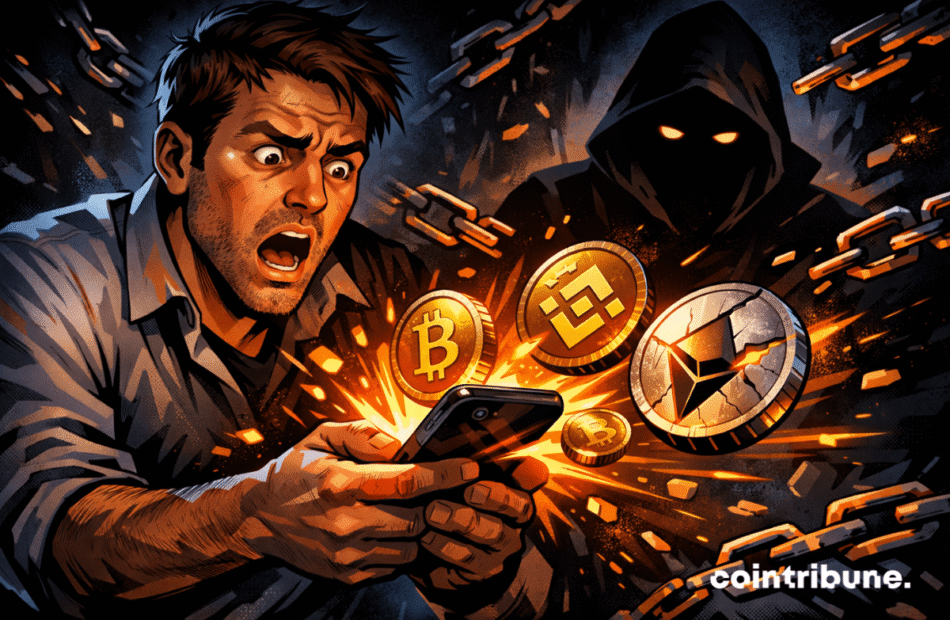
In late 2024 and early 2025, two major cybersecurity incidents shook the crypto world and highlighted serious security flaws in popular platforms. Trust Wallet lost nearly $7 million due to a hacked Chrome extension, while Ledger suffered another data breach through its e-commerce partner. These events have pushed the crypto industry to explore new and stronger ways to protect users.
On December 24, 2025, Trust Wallet’s Chrome extension (version 2.68) was compromised. Attackers used malicious code hidden in the update to steal nearly $7 million from hundreds of users. Victims were those who imported their recovery phrases into the affected extension. The stolen funds included around $3 million in Bitcoin and over $3 million in Ethereum, which were laundered through exchanges like KuCoin, FixedFloat, and ChangeNOW.
Cybersecurity firms PeckShield and SlowMist found that the malicious code secretly sent wallet data to a fake website, metrics-trustwallet.com. This phishing domain had been registered just days before the attack. Trust Wallet’s CEO, Eowyn Chen, confirmed that hackers uploaded the corrupted extension using a stolen Chrome Web Store API key, which bypassed internal checks. Binance co-founder Changpeng Zhao said victims would be reimbursed and hinted at possible insider involvement or even a nation-state attack.
Meanwhile, in January 2026, Ledger informed customers about a new data leak. This time, the breach happened at Global-e, its payment processing partner. The leaked information included names, emails, and mailing addresses of some buyers from ledger.com. Ledger clarified that its own systems, devices, and user funds were safe. Global-e didn’t have access to recovery phrases or private keys.
Even though no funds were stolen, this leak is concerning. In 2020, Ledger had a similar breach that exposed data from over 270,000 users. That incident led to phishing scams and physical threats like “wrench attacks” (real-world robbery targeting crypto holders). Internal reports show that social engineering attacks went up by 40% in 2025, with attackers using leaked personal info to trick users.
Both these incidents show how dangerous it is to rely on single points of failure. At Trust Wallet, one stolen API key allowed hackers to upload malicious software. At Ledger, trusting one outside vendor opened the door to a major data leak.
According to Chainalysis, over $3.4 billion was stolen from crypto in 2025 alone. Most attacks now target users directly rather than exploiting smart contracts. CertiK confirmed this shift—hackers are focusing more on human errors and system weak spots rather than code vulnerabilities.
To fight back, the crypto security industry is trying new ideas beyond traditional audits and security checks.
CertiK is a leader in smart contract auditing and has raised $296 million while protecting over $300 billion in assets across 3,200 clients. Its Skynet platform provides real-time monitoring and uses formal verification tools to catch bugs before code goes live. However, audits only work at a single point in time—they don’t protect against future threats or infrastructure attacks.
Other firms like Hacken and Quantstamp offer audit services too. Exchanges like Bybit EU use Hacken for transparency with proof-of-reserves audits. But these services also share the same limitation—they can’t prevent real-time attacks or evolving threats.
A new player bringing a fresh approach is Naoris Protocol. Instead of relying on central systems or one-time audits, Naoris turns every connected device into a security validator through something called a “Trust Mesh.” Founded in 2018 by David Carvalho, this protocol lets devices check each other for threats in real time.
Naoris uses a special consensus method called dPoSec (Decentralized Proof of Security), where all nodes validate each other’s behavior continuously. It also uses SWARM AI—an intelligent system that helps coordinate responses and roll out security updates instantly.
What really makes Naoris stand out is its post-quantum security. While today’s encryption (like RSA and ECC) could be broken by future quantum computers, Naoris uses quantum-resistant cryptography based on standards from NIST and NATO (including Dilithium-5). In fact, in September 2025, the U.S. SEC cited Naoris as a model for quantum-safe blockchain systems.
Naoris launched its testnet in January 2025 and has shown strong results: over 100 million post-quantum transactions processed, 3.3 million wallets created, 1 million validator nodes online, and 600 million threats blocked. The project raised $31 million from investors including Tim Draper and has high-level advisors from IBM, NATO, and even the White House.
In the Trust Wallet case, if a Trust Mesh had been used, it could have flagged the suspicious behavior—like sending data to an outside domain—before any money was stolen. Every device on the mesh would have worked together to spot and stop the threat early.
For Ledger’s data breach, depending on one vendor like Global-e proved risky. A decentralized system like Naoris could have checked third-party systems for weaknesses and helped prevent data leaks before they happened.
The “zero-trust” model behind Naoris doesn’t just protect one piece of the puzzle—it strengthens the whole system. This idea can be applied not just to wallets but also to DeFi apps, DAOs (decentralized autonomous organizations), and important governance systems in Web3.
As cyberattacks become smarter and more personal, it’s clear that traditional security isn’t enough anymore. The future of blockchain safety may lie in decentralization—not just of money—but of security itself.