
Simplifying Ethereum: A Path to Long-Term Decentralization
Ethereum’s future depends on keeping things simple. While complex code and advanced cryptography may look impressive, they often cause more problems than they solve. If only a handful of experts can understand how the system works, regular users are forced to trust those experts. That defeats the purpose of decentralization and self-sovereignty — key ideas behind Ethereum.
Vitalik Buterin, Ethereum’s co-founder, is concerned that the blockchain is becoming too bloated with complicated features. These short-term upgrades might add functionality quickly, but they also make the system harder to maintain in the long run. When everyday users can’t audit or run the code themselves, trustlessness disappears. Ethereum’s strength comes from being open, transparent, and easy enough for anyone to use without needing a PhD in cryptography.
To fight this complexity, Buterin suggests three main ways to simplify Ethereum:
1. **Smaller Codebase**: Keep the core code short and simple — ideally just a few pages. Less code means fewer bugs and easier auditing.
2. **Simpler Cryptography**: Avoid using exotic math like isogenies or lattice-based encryption. Stick to basic cryptographic tools that most developers understand.
3. **Strong Rules (Invariants)**: Lock in core rules that don’t change. For example, Ethereum Improvement Proposal (EIP) 6780 removed the “selfdestruct” function, reducing how much storage can change in each block. This makes the system easier to manage.
Another big focus is cutting down on technical “garbage” that builds up over time. Ethereum has already made big changes like switching from proof-of-work to proof-of-stake to reduce energy use and increase efficiency. Future updates might go even further by removing outdated features entirely. Instead of updating every client with old code, Ethereum could treat old systems like smart contracts — optional and separate from the core.
Ethereum is entering a new phase. The first 15 years were about experimenting — trying lots of ideas, some good and some bad. Now, it’s time to slow down, focus on what works, and build a stable foundation that could last for 100 years or more. Simple systems are harder to break and easier to trust.
Buterin also talks about improving DAOs (Decentralized Autonomous Organizations), which were supposed to be the future of crypto governance — smarter, code-based alternatives to companies and governments. But today’s DAOs often rely on token voting, which can be manipulated by wealthy holders (“whales”) and suffer from low voter turnout.
Despite these issues, DAOs are still crucial for managing decentralized projects. They can help with:
– Building reliable oracles (which are key to stablecoins)
– Resolving disputes on-chain
– Managing trusted lists
– Launching quick experiments
– Handling long-term upgrades
Different problems need different leadership models. Some challenges require group consensus, while others benefit from quick decisions by trusted leaders under checks and balances.
To fix current DAO problems, we need better tools:
– **Zero-Knowledge (ZK) Privacy**: To protect user data without sacrificing transparency.
– **AI Assistance**: To reduce decision fatigue while keeping user control.
– **Advanced Discussion Platforms**: Like Pol.is, which help communities find common ground.
DAOs hold around $15 billion in assets today, but many struggle with governance. Future designs must focus equally on oracles and communication tools to ensure a truly decentralized structure that scales with Ethereum.
In short: simplify the code, make DAOs smarter, and build Ethereum for the long haul. That’s how we keep decentralization alive and strong.

Crypto Update: Bitcoin Drops, NYSE Eyes 24/7 Trading
**Get the Latest in Crypto: What You Need to Know Today**
We want to hear from you! Take a quick 30-second survey to help us make The Block even better.
Even though U.S. markets were closed for Martin Luther King Jr. Day, the crypto world kept moving. Here’s a breakdown of the key updates you should know.
—
### Bitcoin Drops as U.S.-EU Tensions Rise
Bitcoin dropped sharply to around $92,000 overnight between Sunday and Monday. This sudden sell-off came after renewed fears of a trade war between the U.S. and the European Union, centered around Greenland.
– Over $750 million in long positions were liquidated within hours.
– Other major cryptocurrencies like Ethereum (ETH), Ripple (XRP), and Solana (SOL) also fell alongside Bitcoin.
– Analysts say crypto is underperforming compared to other risky assets like stocks in Asia.
– Delays in U.S. crypto regulation are making things worse.
– Bitcoin breaking below its 50-week average triggered more selling by trading bots.
– More downside is possible, with some expecting prices to drop as low as $67,000, but analysts say this doesn’t look like another “crypto winter” yet.
**Keywords**: Bitcoin price drop, crypto market crash, US-EU trade war, long liquidations, BTC technical analysis
—
### NYSE Plans 24/7 Trading with Tokenized Stocks
The New York Stock Exchange (NYSE) is building a new platform for trading tokenized stocks and ETFs around the clock. This could change how markets operate.
– The system will allow trading 24/7, including fractional shares and instant settlements using stablecoins.
– It combines NYSE’s existing matching engine with blockchain-based tools for settling trades.
– It will support multiple blockchains for secure custody and faster transactions.
– This move aligns with NYSE’s parent company ICE’s goal of creating always-on financial markets.
**Keywords**: NYSE tokenized trading, 24/7 stock trading, blockchain settlement, stablecoin transactions, fractional shares
—
### Paradex Glitch Sends Bitcoin to $0 — Briefly
A technical issue on Paradex, a decentralized exchange built on Starknet, caused Bitcoin to show a price of $0 temporarily. This error led to massive liquidations for some users.
– A database migration mistake caused the glitch.
– Paradex plans to roll back its system to fix the issue.
– The number of users affected hasn’t been confirmed.
– The incident has reignited debates about whether blockchain systems should ever be rolled back, which goes against the idea of permanent transactions.
**Keywords**: Paradex glitch, Bitcoin liquidation, Starknet DEX, crypto rollback debate, smart contract error
—
### Vitalik Buterin Wants Better DAOs
Ethereum co-founder Vitalik Buterin is calling for better DAO (Decentralized Autonomous Organization) designs that don’t rely only on token-holder voting.
– He says current systems are too easy to manipulate and not very efficient.
– Issues like decision fatigue and lack of privacy need to be addressed.
– Buterin suggests using tools like zero-knowledge proofs and AI for smarter governance.
– He also wants developers to focus on better communication tools and governance structures from the start.
**Keywords**: Vitalik Buterin DAO ideas, decentralized governance, token voting problems, zk-proofs, Ethereum community
—
### Ethereum Sees Record Transactions as Fees Drop
Ethereum is busier than ever. Over the weekend, it hit an all-time high in daily transactions, averaging nearly 2.5 million per day.
– Transaction costs are now at record lows — around $0.15 per transaction.
– This is thanks to the recent Fusaka upgrade, which increased capacity.
– Stablecoin usage is now responsible for up to 40% of Ethereum activity.
**Keywords**: Ethereum transaction record, low gas fees, Fusaka upgrade, stablecoin usage, ETH network activity
—
### What’s Coming Up Next
– No big economic events today.
– Bank of England Governor Andrew Bailey will speak Tuesday morning at 9:45 a.m. ET.
– The World Economic Forum meetings continue this week.
– Token unlocks are expected from LayerZero and Kaito.
– Web3 Hub Davos 2026 is still ongoing.
Stay tuned for more updates from the digital asset world.
Market Recap: Small Caps Rise, AI & Commodities in Focus
**Weekly Market Recap: Choppy Action, Small Caps Shine**
Last week’s stock market action was mixed. While most major indexes slipped slightly, the small-cap Russell 2000 stood out by hitting a fresh all-time high. The Nasdaq dipped 0.66%, the S&P 500 lost 0.38%, and the Dow Jones Industrial Average dropped 0.29%. The tech sector remains under pressure, but with earnings season kicking off, investors are hoping it will bring some much-needed momentum.
Meanwhile, cryptocurrency markets continue searching for a solid bottom, and precious metals like gold are approaching critical levels that could either lead to a breakout or a pullback.
—
**Stock Spotlight: DigitalOcean Holdings (DOCN) – 52% Upside Potential**
DigitalOcean (NYSE: DOCN) offers cloud computing services tailored for startups and developers. The company provides tools like virtual servers, managed databases, Kubernetes, serverless computing, and AI support. Its latest quarter showed revenue of $229.6 million and earnings of $56 million.
From a valuation standpoint, the stock is somewhat expensive with a price-to-earnings (P/E) ratio of 22.13 and a price-to-sales (P/S) ratio of 6.07. However, it has a solid EV/EBITDA of 18.81. Technically, the stock just broke out from an ascending triangle pattern, signaling continued upward movement.
What’s driving the growth? DigitalOcean is seeing strong demand for its AI-focused platform, Gradient AI Agentic Cloud. Direct AI revenue more than doubled for the fifth straight quarter in Q3 2025. The company is capturing market share from larger players by offering user-friendly and cost-effective cloud solutions.
They also raised their guidance for 2025 and expect revenue to grow by 18–20% in 2026, thanks to AI adoption and general cloud usage. Strategic partnerships and new product innovations are helping attract new customers while keeping existing ones loyal.
Financially, DigitalOcean is becoming more efficient too—its free cash flow margin hit 21%, and operating costs are being managed well.
**Analyst Ratings:**
– Barclays: Overweight
– Piper Sandler: Neutral
– Canaccord Genuity: Buy
**Buy Zone:** Above $45–$46
**Target Price:** $80–$82
—
**Stock Spotlight: Peabody Energy (BTU) – 26% Upside Potential**
Peabody Energy (NYSE: BTU) is a major global coal producer supplying both thermal coal for power and metallurgical coal for steelmaking. The company made $1.01 billion in revenue last quarter with earnings of $3.23 million.
Valuation looks attractive here—P/S is at 1.08 and EV/EBITDA is 9.27. The book value stands strong at 29.11. Technically, the stock is building energy inside a saucer pattern, which often precedes big upside moves.
Why now? U.S. coal demand is holding steady due to delays in shutting down coal plants, giving Peabody pricing power through 2026. Most of its output is already locked in at solid prices.
The company’s focus on metallurgical coal—used in steelmaking—adds growth potential, especially with strong demand in Asia. Recent acquisitions and improved mine operations are boosting margins and efficiency.
Peabody also benefits from U.S. policy changes that reduce royalty rates and offer tax incentives for coal production, especially metallurgical coal.
**Analyst Ratings:**
– UBS: Neutral
– Benchmark: Buy
– Texas Capital Securities: Buy
**Buy Zone:** Above $28–$29
**Target Price:** $46–$48
—
**Stock Spotlight: Baidu (BIDU) – 87% Upside Potential**
Baidu (NASDAQ: BIDU) is China’s top search engine and a key player in artificial intelligence, autonomous driving, and cloud services. It reported quarterly revenue of $31.17 billion with $3.77 billion in earnings.
Valuation remains attractive with a P/E of 13.63, P/S at 2.77, and EV/EBITDA at 9.36. Technically, Baidu is close to completing a saucer base breakout—often a powerful bullish signal.
What’s behind the bullish case? Baidu is spinning off its AI chip unit Kunlunxin via a Hong Kong IPO in 2026, potentially unlocking huge value.
The company’s latest AI model, ERNIE 5.0, launched with multi-modal capabilities including text, image, audio, and video processing—putting Baidu at the forefront of China’s AI race. Upcoming chips like Kunlunxin M100/M300 will power massive AI models.
Baidu’s search business remains strong and continues to integrate more AI features, while its Qianfan Cloud platform sees growing demand for generative AI workloads.
Apollo Go, Baidu’s autonomous ride-hailing service, has surpassed 10 million rides in China and is expanding internationally. In some cities, the robotaxi service is close to turning profitable—a major milestone.
**Analyst Ratings:**
– Freedom Capital Markets: Buy
– Jefferies: Buy
– JP Morgan: Overweight
**Buy Zone:** Above $125–$126
**Target Price:** $280–$290
—
**What to Watch This Week**
**Federal Reserve Under Pressure**
The Fed’s independence is being questioned as fiscal dominance becomes more obvious. Even though inflation appears under control, the Fed hasn’t yet signaled more rate cuts—and political pressure is building.
A new lawsuit against Fed Chair Jerome Powell adds even more uncertainty as his term ends soon. Meanwhile, any weakness in the market could force the Fed’s hand to act sooner than planned.
—
**Earnings Season Begins**
With stock valuations high following strong gains in 2025, this earnings season needs to deliver. Expectations for Q4 are about 8.3% EPS growth year-over-year and full-year growth around 12–13%.
Looking forward to 2026, earnings are projected to grow by more than 14%, powered by AI adoption, strong consumer spending, increased M&A activity in financials, and possible regulatory tailwinds.
So far, bank earnings have been mixed—JPMorgan missed on profit despite beating on revenue—but other banks have performed better. Strong forward guidance from AI-driven companies and banks could help lift broader markets.
—
**Sector Trends Shift**
There’s been a notable shift in sector performance:
– **Basic Materials (XLB)** just overtook **Healthcare (XLV)** as the top-performing sector since Q4 started.
– **Industrials (XLI)** are close behind.
– **Energy (XLE)** has seen renewed strength.
– **Utilities (XLU)** are now lagging significantly.
Tech (XLK) continues to drag down major indices—earnings season could be the spark it needs.
—
**Metals Near Key Resistance**
Gold prices have soared beyond most expectations and are now testing major resistance levels versus the S&P 500 (GLD/SPY ratio). The next move will determine whether gold pulls back or begins another leg higher.
If you’re holding metals-related assets, consider booking partial profits as prices near long-term resistance.
—
**Commodities Showing Signs of Life**
The long-term downtrend in commodities (DBC/SPY ratio) may be ending. For years, stocks have outperformed commodities as inflation cooled off since mid-2022.
But now the ratio is trying to break out of its falling trendline—a sign that commodities could start catching up or even outperforming stocks soon.
—
**Bond Market Warning Sign**
Watch the ratio between high-yield bonds (HYG) and intermediate-term Treasuries (IEI). This gauge reflects investor risk appetite.
Since April last year, risk appetite has been strong—but recently momentum has faded. If junk bonds start underperforming Treasuries significantly, it could signal rising market volatility ahead.
—
**Crypto Watch: Solana (SOL)**
Solana is showing real signs of recovery after months of decline. Last week it broke above its December high—a key first step toward reversing the downtrend.
A rounding bottom pattern suggests a potential breakout ahead. If SOL clears resistance around $175–$190, it could confirm a new bull trend with longer-term targets as high as $500 per coin.
—
**Key Takeaway**
Markets remain volatile but full of opportunity—from cloud computing plays like DigitalOcean to energy names like Peabody and AI leaders like Baidu. Keep an eye on sector shifts, earnings reports, commodity movements, and crypto signals as we head deeper into Q1 2026.
Alibaba’s KIMI AI Predicts Crypto Surge by 2027
**Disclaimer**: Cryptocurrency is a high-risk investment. This content is for informational purposes only and should not be considered financial advice. Always do your own research before investing.
—
**Alibaba’s KIMI AI Predicts Big Crypto Price Moves by 2027**
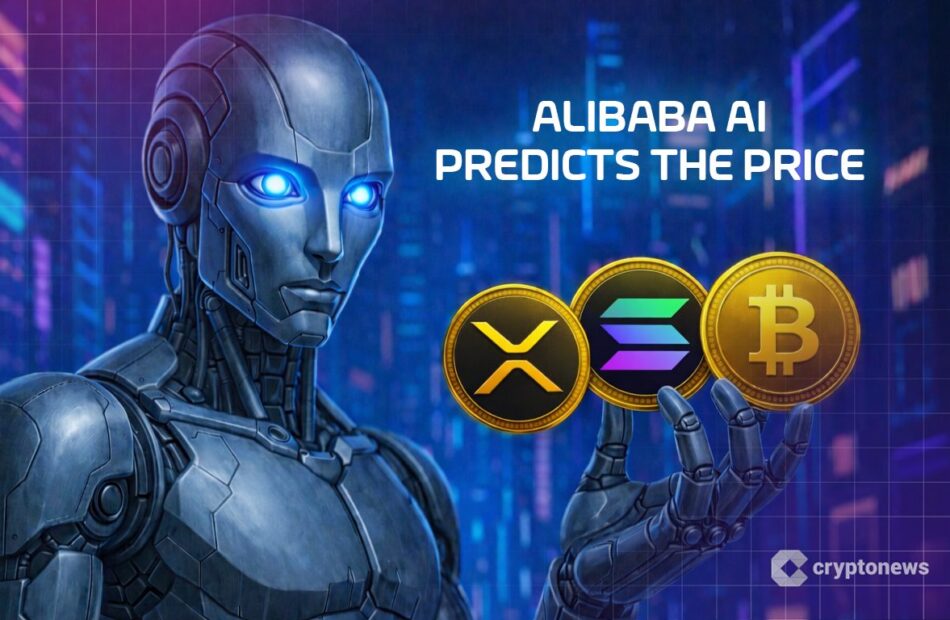
Alibaba’s new AI tool, KIMI AI, has made bold predictions for where top cryptocurrencies like XRP, Solana (SOL), and Bitcoin (BTC) could be heading by 2027. The forecast comes as investor interest in crypto heats up again, with fear of missing out (FOMO) rising fast.
The AI model suggests that if a strong bull market continues — helped by clearer crypto rules in the U.S. — major cryptocurrencies could hit new all-time highs in the next cycle.
Here’s what KIMI AI expects for XRP, Solana, and Bitcoin:
—
**XRP ($XRP) Could Jump to $8 by 2027**
XRP kicked off 2026 with a strong rally, gaining 19% in just one week. It’s currently trading around $2.97. According to KIMI AI, XRP could climb to $8 by 2027 — that’s more than 300% upside.
In 2025, XRP had a major comeback after Ripple won its long-running legal battle with the U.S. Securities and Exchange Commission (SEC). That legal win helped clear up confusion about whether XRP should be classified as a security, giving investors more confidence.
Adding to the bullish case, pro-crypto Donald Trump was re-elected, reducing fears of harsh crypto regulations.
XRP’s Relative Strength Index (RSI) is at 54, which means buying and selling are balanced. There’s still room for growth if buying pressure increases.
Also boosting XRP’s future is the recent approval of U.S.-based XRP exchange-traded funds (ETFs), which are bringing in more traditional finance (TradFi) money—just like what we saw with Bitcoin and Ethereum ETFs.
—
**Solana ($SOL) Might Reach $380**
Solana is one of the fastest-growing smart contract platforms. As of now, the network has $8.7 billion in total value locked (TVL) and a market cap of over $75.6 billion. Its user base and developer activity are both growing rapidly.
Big investment firms like Grayscale and Bitwise have launched Solana-focused ETFs. These have brought fresh attention to SOL and could help drive prices higher—similar to how ETFs boosted Bitcoin and Ethereum in previous cycles.
Currently trading at $134, SOL is recovering from a dip at the end of 2025. Whether it can break out from here depends heavily on if Bitcoin can reclaim the $100K mark — a level many expect BTC to hit again soon.
In an optimistic case, KIMI AI sees Solana hitting $380 by 2027. That would be a 184% gain from today’s price and well above its previous all-time high of $293.
What’s helping Solana stand out is its growing role in real-world asset tokenization. Big names like Franklin Templeton and BlackRock are using Solana for these projects, signaling strong long-term potential.
—
**Bitcoin ($BTC) on Track for $170K**
Bitcoin remains the king of crypto with the largest market cap—about $1.9 trillion out of the $3.23 trillion total crypto market. It recently hit a new high of $126,080 on October 6, but currently trades around $93,000 after a slight dip due to geopolitical tensions between the U.S. and EU.
Despite short-term volatility, KIMI AI predicts Bitcoin could soar to $170,000 by 2027.
Bitcoin is often called “digital gold” because investors use it as a hedge against inflation and economic uncertainty. With inflation cooling down and U.S. crypto laws becoming clearer, many believe BTC could set a new record by mid-year.
There’s also talk about a possible U.S. Strategic Bitcoin Reserve, which could push prices even higher if it becomes reality.
—
**Maxi Doge ($MAXI): The Meme Coin to Watch**
While Alibaba’s AI focuses on major coins, meme coins are still making waves in the market — especially during presales.
Maxi Doge ($MAXI) is one of the most hyped new meme tokens this year. It’s raised $4.5 million so far during its presale phase.
The project is a parody of Dogecoin but with a gym bro twist — bold, funny, and wild by design. MAXI is building its own fanbase called the “Maxi Doge Army,” made up of meme lovers and risk-taking traders.
Unlike Dogecoin, which runs on energy-hungry proof-of-work tech, MAXI is built on Ethereum’s proof-of-stake system — meaning it’s more eco-friendly.
Right now, MAXI offers staking rewards up to 69% APY during presale. As more people join, those rewards decrease. The current price is $0.000279, and each new funding round increases the price automatically.
Buyers can get MAXI through MetaMask or Best Wallet.
Say goodbye to old-school meme coins — Maxi Doge is here to steal the spotlight.
Stay connected with updates via Maxi Doge’s official X and Telegram channels.
—
**Key Crypto Forecasts at a Glance:**
– **XRP**: Targeting $8 by 2027 (currently ~$2.97)
– **Solana**: Could reach $380 (currently ~$134)
– **Bitcoin**: Aiming for $170K (currently ~$93K)
– **Maxi Doge**: High-risk meme coin with big staking rewards
Keep an eye on market trends and always invest wisely!

Fortune Horses: New Slot Racing to Big Wins by 5G Games
The world of online slots welcomes an exciting new release with Fortune Horses, the latest game from 5G Games. Inspired by themes of luck, power, and prosperity, Fortune Horses delivers a visually engaging experience paired with smooth gameplay mechanics and rewarding features. Designed for modern players, the game balances accessibility with depth, making it appealing to both casual players and seasoned slot enthusiasts.
From the first spin, Fortune Horses stands out with polished visuals and fluid animations. The game’s design embraces a sense of motion and momentum, perfectly reflecting its theme of strength and fortune. Every spin feels lively, enhanced by responsive sound effects and a clean interface that keeps players focused on the action.
Immersive Gameplay Experience

Fortune Horses is built around a modern slot framework that emphasizes fast-paced gameplay and multiple winning opportunities. The reel layout is designed to keep rounds engaging, while symbol combinations and special features introduce variety throughout each session. Whether you’re playing for entertainment or chasing bigger payouts, the game offers a satisfying rhythm that keeps spins flowing smoothly.
One of the game’s strongest aspects is its intuitive structure. New players can quickly understand how the game works, while experienced players will appreciate the layered mechanics that unlock as gameplay progresses. This balance makes Fortune Horses easy to pick up but difficult to put down.
Feature-Rich Mechanics That Keep Things Exciting

What truly sets Fortune Horses apart is its collection of rewarding features. Wild symbols play a crucial role, substituting for standard symbols to help form winning combinations. These wilds can appear frequently, increasing the chances of consecutive wins and adding excitement to every spin.
Scatter symbols introduce another level of anticipation. When landed in the right combinations, they unlock free spin rounds that elevate the action. During these bonus phases, players often encounter enhanced win potential through multipliers or additional wilds, turning ordinary spins into high-impact moments.
Cascading wins and bonus interactions further enhance gameplay, ensuring that no two sessions feel the same. This dynamic structure keeps players engaged and encourages longer play sessions without feeling repetitive.
Optimized for All Devices
Fortune Horses is fully optimized for both desktop and mobile play. Whether you’re spinning the reels on a computer or enjoying the game on a smartphone, the visuals remain sharp and the controls responsive. This flexibility allows players to enjoy the game anytime, anywhere, without sacrificing quality or performance.
Why Fortune Horses Is Worth Playing
Fortune Horses combines strong visual identity, engaging features, and smooth mechanics into a single, cohesive slot experience. It’s a game that prioritizes entertainment while still offering competitive winning potential. For players looking to explore a new release that feels fresh yet familiar, Fortune Horses delivers on all fronts.
Game Highlights
- 🐎 Fortune-Inspired Theme – A visually rich design focused on luck and strength
- 🎰 Smooth Reel Mechanics – Fast, responsive spins with engaging flow
- 🃏 Wild Symbols – Substitute to create more winning combinations
- ✨ Free Spins Feature – Trigger bonus rounds with enhanced win potential
- 📱 Mobile & Desktop Optimized – Seamless performance across all devices
- 🔄 High Replay Value – Dynamic features keep gameplay fresh and exciting