

Galaxy Digital Launches $100M Crypto-Fintech Hedge Fund
Galaxy Digital, the crypto-focused financial firm led by Mike Novogratz, is launching a brand-new investment fund worth $100 million. The goal? To make money in both rising and falling markets by investing in cryptocurrencies and fintech stocks.
This new hedge fund is set to launch in the first quarter of the year and will follow a long-short strategy. That means the fund will place bets on both price increases and price drops, unlike traditional funds that only profit when prices go up. It’s designed to navigate today’s more unpredictable crypto market, where the days of nonstop growth seem to be over.
The fund’s structure is split: about 30% of the money will go into cryptocurrencies like Ethereum and Solana. The other 70% will target stocks in the financial services sector, including both traditional players like Fiserv and emerging fintech companies. This mixed approach allows Galaxy Digital to tap into opportunities across both the crypto and traditional finance worlds.
Joe Armao, who will lead the fund, says the market has changed. Simply buying and holding assets isn’t enough anymore. With AI developments and evolving regulations in the U.S., companies are being valued differently. Galaxy Digital aims to take advantage of these shifts by actively managing their investments instead of just waiting for prices to rise.
The fund has already caught the eye of wealthy investors and family offices, who have committed $100 million so far. Galaxy Digital is also investing its own capital to kick-start the fund, showing strong confidence in the strategy.
But that’s not all Galaxy Digital is doing. The company is growing on multiple fronts. Just last week, it completed its first tokenized collateralized loan obligation (CLO) on the Avalanche blockchain. This $75 million deal shows how Galaxy is blending traditional lending with digital technology.
They’re also expanding their mining and computing power. Galaxy recently got approval to boost energy capacity at its Helios data center in West Texas. This facility supports both crypto mining and AI computing, giving Galaxy a stronger foundation for future growth.
In a time when Bitcoin has dropped around 30% from its recent highs, Galaxy Digital is choosing not to sit still. Instead, it’s building tools to profit in any market—bull or bear—by combining the best of crypto and traditional finance.
Grayscale Files to Launch NEAR ETF With Staking Rewards
Grayscale Investments, the largest crypto asset manager in the world, has taken a big step to bring more exposure to NEAR Protocol. The company has officially filed paperwork (Form S-1) with the U.S. Securities and Exchange Commission (SEC) to turn its Grayscale Near Trust (GSNR) into a spot ETF. If approved, this ETF would be listed on the NYSE Arca, making it easier for everyday and institutional investors to invest in NEAR without having to deal with complex wallets or private keys.
This move follows the trend of other cryptocurrencies like Solana and XRP that are also aiming for ETF status. It signals growing interest in altcoins beyond just Bitcoin and Ethereum.
**How the NEAR ETF Will Work**
The proposed ETF will use Coinbase for secure storage of the NEAR tokens and for executing trades. It will also track the CoinDesk NEAR Reference Rate, which gives real-time pricing based on major crypto exchanges. This helps ensure transparency and trust in how the ETF is priced.
A standout feature of this ETF is its staking option. Investors could earn staking rewards—estimated at around 8–10% annually—just by holding shares in the ETF. This sets it apart from traditional crypto ETFs like those for Bitcoin, which don’t offer any yield.
**NEAR Price Reacts to the News**
Right after the news broke, NEAR’s price jumped 3%, rising to $1.54 from a recent low of $1.50. This price boost came even as Bitcoin struggled due to some negative market news. The uptick suggests traders are optimistic about NEAR’s future, especially with new ETF products on the horizon.
Trading volume for NEAR also saw a noticeable jump—up 22% in just 24 hours. Open Interest in NEAR futures climbed to $229 million, showing growing attention from institutional investors. Experts say this move confirms NEAR’s strong position as a key player in the “chain abstraction” space, which focuses on making blockchain tech more user-friendly, especially for AI-powered applications.
**The Rise of Altcoin ETFs in 2026**
Grayscale’s NEAR ETF filing is part of a bigger trend in 2026: more crypto companies are seeking approval for altcoin-based ETFs. Recent filings have included projects like Binance Coin (BNB) and tokens from decentralized exchanges such as Hyperliquid. This signals a shift in investor interest toward a wider range of digital assets beyond Bitcoin and Ethereum.
**What’s Next?**
The SEC usually takes between two to eight months to review these types of filings. If everything goes smoothly, the NEAR ETF could launch as early as Q2 or Q3 of 2026. If approved, it would not only bring more liquidity to NEAR but also pave the way for U.S.-listed crypto ETFs that include staking rewards—a major step in connecting decentralized finance (DeFi) with traditional financial markets.
**Key Takeaways:**
– Grayscale wants to convert its NEAR Trust into a spot ETF listed on NYSE Arca.
– Coinbase will manage storage and trading.
– The ETF includes staking rewards, which could offer 8–10% APY.
– NEAR price jumped 3% following the announcement.
– This move is part of a larger wave of altcoin ETFs coming in 2026.
– Approval could come by mid to late 2026, creating more investment opportunities in crypto.
This development marks another major milestone in bringing crypto investing into mainstream financial products—and NEAR might be one of the first altcoins to lead the charge with built-in staking rewards.

Solana Holds $130 Amid Growth, Legal, and Market Pressures
**Solana (SOL) Struggles Near $130 as Network Activity Booms**
Solana’s native token, SOL, is facing a tough time holding above the important $130 price mark. Even though there’s a lot of positive activity happening on the Solana blockchain, the token is feeling pressure from the overall crypto market downturn and some ecosystem-specific issues. Investors are now asking: can Solana’s strong fundamentals outshine the current selling pressure?
—
**Big Institutions Still Backing Solana**
Despite SOL’s recent price dip, big-name financial players are still building on the Solana network. Western Union has announced it will launch a US dollar stablecoin (USDPT) on Solana by mid-2026. Investment giant Fidelity has also added Solana to its crypto offerings. On top of that, R3, a group of global banks, is using Solana’s tech for tokenized assets.
These moves show that while the token’s price may be down short-term, long-term belief in Solana’s technology remains strong.
—
**Price Drops While Usage Soars**
SOL’s price dropped about 11% over the last week, landing around $128. This slide matches a wider pullback in crypto, especially after the U.S. introduced new tariff threats that shook markets across the board.
But here’s the twist—while prices are down, Solana’s blockchain activity is way up. According to data from January 18, Solana hit 27.1 million active addresses in just one week—a 56% jump. Over 30 days, the network handled about 2.3 billion transactions, more than any other blockchain. In DeFi (decentralized finance), Solana’s Total Value Locked (TVL) has surged to $9.2 billion, putting it close to the $10 billion milestone.
—
**Stablecoin Outflows Raise Concerns**
However, not all news is good. Around $2.7 billion worth of stablecoins left the Solana ecosystem in the last 30 days—a 17% drop. In comparison, Ethereum only saw a 1% decline during the same period.
Analysts see this as a warning sign. A class-action lawsuit against the Solana Foundation and Solana Labs may be making investors nervous. Also, companies holding SOL in their reserves—like Forward Industries—are reportedly sitting on over $700 million in unrealized losses this year alone, according to NS3.AI.
—
**Major Upgrades Could Change the Game**
Despite short-term issues, experts see a bright future for Solana. Research firm Delphi Digital believes 2026 could be “the year of Solana,” thanks to a lineup of powerful upgrades aimed at making the network faster and more efficient.
Here are some of the key upgrades:
– **Alpenglow Consensus**: This major change could cut transaction finality time from 12-13 seconds to just 1 second.
– **Firedancer Validator**: Developed by Jump Crypto, this upgrade has already hit over one million transactions per second in tests and is partially live on mainnet.
– **DoubleZero Infrastructure**: Aimed at making communication between validators nearly instant, this upgrade could bring speeds similar to those used by Nasdaq or CME.
Solana also has strong developer support. A recent report from Electric Capital shows that the network now has around 17,700 active developers—many working on big projects like ChainLink, Wormhole, and Pyth Network.
—
**Technical Levels to Watch for SOL**
Traders are closely watching key price zones for signs of a turnaround. The $132–$135 range is seen as critical resistance—SOL needs to break above this to start recovering. On the downside, support could be found between $122 and $126. If SOL falls below $120, more losses may follow.
Looking at short-term indicators:
– The Stochastic Oscillator shows SOL is oversold, which could mean a bounce is coming.
– However, SOL is still trading below its 50-day moving average ($132).
– The Supertrend indicator continues to signal a bearish trend.
—
**What’s Next for Solana?**
In the coming weeks, all eyes will be on whether Solana’s strong network activity and upcoming upgrades can help stabilize its price. If SOL can reclaim and hold above $132, it could be a signal that confidence is returning. But if legal troubles and stablecoin exits continue, the token may face more downside ahead.
For now, SOL is at a crossroads—strong tech and big plans ahead, but battling short-term market challenges.

Husky Inu AI Rises in Pre-Launch as Crypto Market Dips
**Husky Inu AI (HINU) Price Rises Again in Pre-Launch Phase**
Husky Inu AI (HINU), a new crypto project, just recorded another price increase during its pre-launch phase. The token rose slightly from $0.00025441 to $0.00025539. This price bump is part of the project’s ongoing pre-launch, which started on April 1, 2025.
This pre-launch phase is a critical time for Husky Inu AI. It allows the team to raise more funds, grow its community, and improve the platform before the official launch. The developers use this phase to build momentum, test strategies, and expand the ecosystem. With less than three months until the planned launch, the team is staying flexible. They’ve already held two review meetings (in July and October 2025) and plan another one on January 1, 2026. These meetings will help decide if they stick to the current timeline or adjust based on market conditions.
So far, Husky Inu AI has raised $922,212 and could hit the $1 million mark before launching. Fundraising has picked up again after a brief slowdown, showing renewed interest from investors.
**Crypto Market Drops as Tariff Tensions and Global Uncertainty Shake Traders**
While Husky Inu AI continues to grow, the broader crypto market took a big hit this week. Market values fell nearly 4% as fears over new tariffs and global political tensions caused panic selling.
Bitcoin (BTC), the largest cryptocurrency, dropped from over $91,000 to a low of $87,828 before bouncing back to $89,628. That’s a loss of over 2%. Ethereum (ETH) had an even steeper fall, dipping below the key $3,000 level to $2,927 before recovering slightly to $2,988.
Other major cryptocurrencies also saw red:
– Ripple (XRP): Down over 2% at $1.91
– Solana (SOL): Down over 3% at $128
– Cardano (ADA): Trading at $0.360
– Dogecoin (DOGE): Dropped nearly 2% to $0.125
– Chainlink (LINK): Down almost 3% at $12.40
Coins like Stellar (XLM), Litecoin (LTC), Toncoin (TON), and Polkadot (DOT) also suffered losses. One exception was Hedera (HBAR), which went up nearly 1% to $0.110 despite the market turmoil.
According to CoinGlass data, more than 180,000 traders were liquidated in the last 24 hours. Total liquidations hit $1.07 billion. Long positions made up most of that—$998 million—while short positions accounted for around $71 million. Bitcoin and Ethereum led the way with the largest liquidation amounts: $440 million in BTC and $392 million in ETH.
**Bitcoin Loses 2026 Gains After Sharp Drop**
Bitcoin’s price crash wiped out most of its gains for 2026. After falling below a key support level—the 50-day exponential moving average—it lost nearly 10% from its peak of just under $98,000 earlier this year.
This recent dip shows how sensitive the crypto market is to global news and economic uncertainty. With investors becoming more cautious, Bitcoin’s future short-term moves will likely depend on how these issues develop.
**Stay Connected With Husky Inu AI**
Want more info about Husky Inu AI? Follow their official channels:
– Website: Husky Inu Official Website
– Twitter: Husky Inu Twitter
– Telegram: Husky Inu Telegram
**Disclaimer**: This article is for informational purposes only and does not provide financial or investment advice.
Grayscale Plans NEAR Spot ETF Listing on NYSE Arca
**Grayscale Aims to Turn Its NEAR Trust into a Spot ETF on NYSE Arca**
Grayscale, one of the biggest players in the crypto asset management space, is planning to turn its current NEAR Trust (GSNR) into a spot ETF that would trade on the NYSE Arca. This move could give investors more regulated access to NEAR Protocol, a layer-one blockchain project. Right now, the trust is already active, trading over-the-counter with about $900,000 in assets and a net asset value (NAV) of $2.19 per share.
**What’s Changing with the Grayscale NEAR Trust ETF Plan**
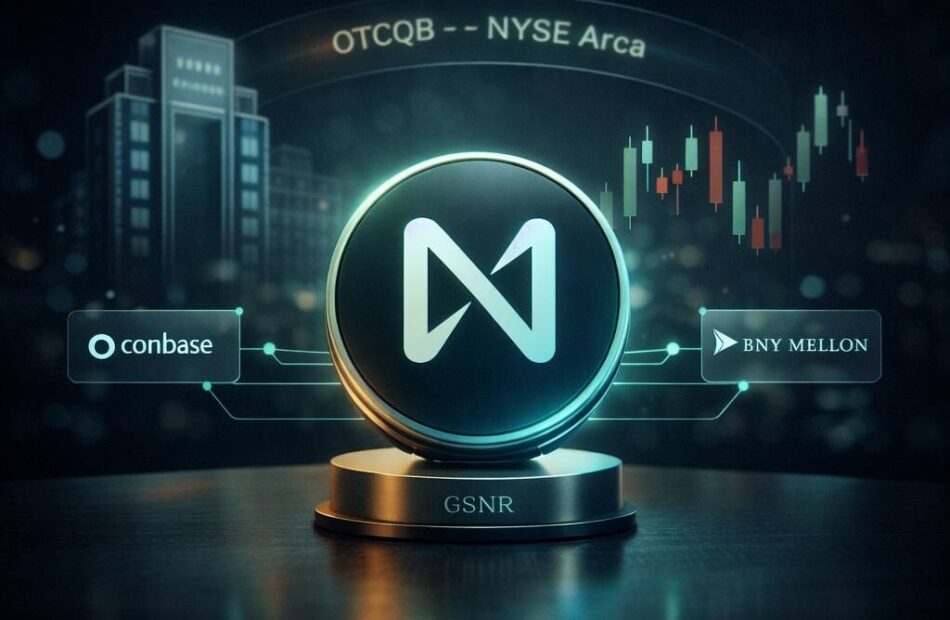
The Grayscale NEAR Trust currently trades on the OTCQB market, which is less accessible for many investors. Grayscale wants to shift this product onto NYSE Arca as a fully regulated spot ETF. If approved, the ETF will continue under the GSNR ticker. Importantly, it will directly hold NEAR tokens—no futures, no leverage, and no derivatives—keeping it simple and closely tied to the real market price of NEAR.
To make this transition happen smoothly, Grayscale is working with some well-known partners. Coinbase Custody will safely store the NEAR tokens. Coinbase will also act as the prime broker, helping with buying and selling. The Bank of New York Mellon will handle admin tasks like share transfers and fund accounting. This setup is designed to bring traditional financial structure to crypto investing.
**Grayscale Expands Its Crypto ETF Portfolio**
This NEAR ETF push is part of a larger strategy by Grayscale. The company already runs nine crypto ETFs and has turned several of its older products into exchange-traded funds. These include ETFs for Bitcoin, Ethereum, Chainlink, and XRP. The NEAR ETF shows that Grayscale sees long-term value in offering regulated access to more blockchains.
Grayscale isn’t stopping at NEAR. It has also created trusts for BNB and Hyperliquid and is preparing to launch ETFs for Hedera, Avalanche, and Bittensor. These are still in early stages but signal the company’s plan to offer a wide range of crypto ETFs as the market and regulations evolve.
**NEAR Token Price Struggles Despite ETF News**
Despite this big news from Grayscale, NEAR’s price hasn’t jumped. In fact, it dropped around 1.76% in the last 24 hours to $1.54 and has fallen over 14% in the past week. This matches a broader decline across the crypto market.
This kind of price action shows that investors are becoming more cautious. Simply filing for an ETF isn’t enough to drive prices up anymore—people want to see actual approvals and listings before reacting.
Still, if the ETF is approved and starts trading on NYSE Arca, it could open up NEAR to a whole new group of investors, including financial advisors, retirement funds, and institutions that don’t want to deal with direct crypto custody.
**Understanding the ETF Approval Process and Risks**
To launch this ETF, Grayscale has filed Form S-1 with the SEC. This kicks off a two-part process: first, getting the registration approved so they can legally issue shares; second, getting NYSE Arca’s rule change approved so the ETF can list and trade on the exchange.
One of the most important things in the filing is that this ETF will directly hold NEAR tokens—no synthetic products or derivatives. That reduces risk for investors and keeps performance closely tied to real market prices.
However, like all crypto investments, this ETF comes with risks:
– **Price Volatility**: NEAR’s price can swing wildly based on market trends or news.
– **Regulatory Changes**: If laws change around crypto or how NEAR is classified, that could impact the fund.
– **Custody & Security Risks**: Even with Coinbase Custody handling storage, there’s always some risk of hacks or operational issues.
– **Liquidity Issues**: In times of market stress, it might be harder for the ETF to create or redeem shares without affecting prices.
– **No Yield**: This ETF won’t participate in staking or lending NEAR tokens, so investors won’t earn rewards even though they face price risk.
This product is aimed at people who want easy access to NEAR through their brokerage accounts without managing wallets or private keys. But they’ll pay management fees for that convenience—and those fees could eat into returns if NEAR’s performance is slow.
**Facing Off with Bitwise and Other Competitors**
Grayscale isn’t alone in chasing a NEAR-based ETF. Bitwise filed for its own NEAR ETF back in May 2025, setting up direct competition if both get approved. Investors will likely compare them based on things like fees, trading volume, and how closely they track NEAR’s price.
Grayscale does have an edge: it’s a well-known name with existing ETFs and experience converting trust products into exchange-traded funds. However, newer competitors like Bitwise sometimes offer lower fees to attract early interest.
For NEAR Protocol itself, having a major ETF listed could raise its profile among mainstream investors and analysts. It might also bring in more passive investment from funds that track crypto indices or allocate small amounts to digital assets.
On the flip side, ETFs can reduce direct user engagement with the network—fewer people might stake tokens or use decentralized apps if they just hold shares through traditional brokerages.
**Big Picture: What This Means for Crypto ETFs**
This filing is part of a bigger trend: asset managers are pushing beyond just Bitcoin and Ethereum ETFs into more altcoins like NEAR, Hedera, Avalanche, and others. Each new application gives insight into how regulators are thinking about these newer assets and whether they’re comfortable allowing broader crypto exposure through ETFs.
If approved, the Grayscale Near Trust ETF could help validate Grayscale’s strategy of building a full shelf of crypto ETFs—not just for top-tier tokens but for a wide range of blockchain networks.
**Conclusion**
The Grayscale Near Trust ETF proposal represents another step toward making crypto investing easier for traditional investors. By converting its small but operational NEAR trust into a spot ETF on NYSE Arca—with major partners like Coinbase and BNY Mellon—Grayscale hopes to bring more legitimacy and accessibility to NEAR Protocol exposure.
While approval isn’t guaranteed, success would support broader adoption of altcoin ETFs in the U.S. If rejected, it could slow similar plans across the industry—but either way, this filing signals that crypto ETFs are expanding beyond Bitcoin and Ethereum into a more diverse market.