
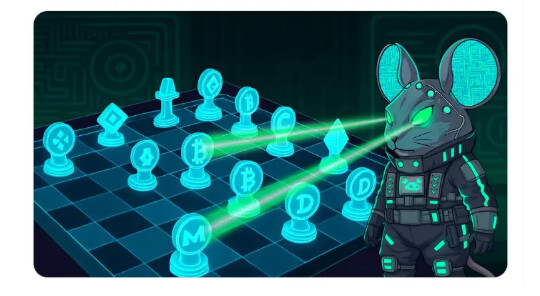
DeepSnitch AI: Smarter Crypto Trading via Telegram
**DeepSnitch AI: The New Crypto Trading Tool Everyone’s Talking About**
AI tokens have been booming lately—up over 600% since CoinMarketCap started tracking them. Big names like Bittensor and Render have already seen massive gains. Now there’s a new AI-powered project making waves: DeepSnitch AI.
It’s built for crypto traders who use Telegram and want faster, smarter insights. DeepSnitch AI uses advanced artificial intelligence to detect scams, analyze contracts, and send out real-time alerts—giving retail traders a real shot at competing with whales.
But is DeepSnitch AI legit? Or just another overhyped project? Let’s break it down in simple terms.
—
**What is DeepSnitch AI?**
DeepSnitch AI is a smart trading assistant powered by artificial intelligence. It’s designed to help regular crypto traders catch early opportunities, avoid scams, and make better decisions—all within Telegram.
It runs on five powerful AI tools called “snitches.” Each one focuses on a specific part of trading, like tracking whales, spotting scam tokens, or scanning contract risks. These tools work together to deliver real-time alerts, giving traders a head start in the market.
And the best part? No browser dashboards or complex platforms—everything works inside Telegram, where most crypto traders already hang out.
—
**The Mission Behind DeepSnitch AI**
DeepSnitch AI wants to level the playing field for retail traders. Right now, whales and insiders have huge advantages—access to private data, custom dashboards, and analyst teams.
DeepSnitch gives everyday users access to similar tools. It tackles three big problems in crypto trading:
– **Scam tokens**: Fake coins with misleading hype are everywhere. DeepSnitch flags them early.
– **Emotional trading**: Many traders panic in bear markets. DeepSnitch helps you trade smart, even when prices fall.
– **Lack of early signals**: Most people miss key moves until it’s too late. This tool finds them before the crowd does.
For example, the Kanye West-inspired YZY token jumped 1,400% in an hour, then crashed 80%, hurting 51,000 wallets. Just 11 wallets made $1M. DeepSnitch is trained to catch patterns like this early.
It’s not just about avoiding scams—it also finds legit opportunities during down markets by tracking wallet activity, contract launches, and on-chain trends.
—
**Meet the Five AI “Snitches” That Power DeepSnitch**
DeepSnitch AI is built around five intelligent agents:
1. **SnitchFeed**
Scans social media (Telegram, X/Twitter) for emotion spikes like FOMO or fear. Sends early alerts before prices move.
2. **SnitchScan**
Reviews new token contracts for risks—like unlocked liquidity or shady dev permissions. It also highlights clean projects with growth potential.
3. **SnitchGPT**
Your AI-powered research assistant. Ask it questions like “Is this token safe?” or “Who owns this wallet?” and get instant answers.
4. **SnitchCast**
Filters news and updates to show only what really matters for price and sentiment. No spammy influencer posts or paid PR fluff.
5. **AuditSnitch**
Analyzes any smart contract in seconds. Flags risky permissions, odd tokenomics, and other red flags most people miss.
These tools work independently but give you full coverage when used together—all inside your Telegram app.
—
**Is DeepSnitch AI Legit? Or Just Hype?**
Skepticism is normal in crypto. There are too many copy-paste projects that disappear after launch. So it’s fair to ask: is DeepSnitch AI the real deal?
Here’s why many believe it is:
– **Real working product**: Tools are already in development—not just promises.
– **Clear roadmap**: The team has laid out what’s coming next and when.
– **Audited code**: Smart contracts are checked by top firms (SolidProof and Coinsult) with no major issues found.
– **Transparent whitepaper**: Easy to understand and focused on solving real problems.
– **Safe presale access**: Tokens are only available on the official website—no shady third-party links.
– **Fair tokenomics**: 35% of tokens go to presale buyers. Only 5% is reserved for the team, with proper vesting.
Most projects start with a token and figure out the utility later. DeepSnitch is doing it the right way—building useful tools first, then launching the token around them.
—
**What Makes DeepSnitch Different from Other Crypto Tools**
DeepSnitch isn’t just another meme coin or AI project with flashy branding. It actually does something useful:
– Flags scam tokens before they trap people
– Tracks big wallet movements in real time
– Analyzes smart contracts before you invest
– Gives early signals during both bull and bear markets
– Works right inside Telegram—no extra tools needed
It’s like having a mini Bloomberg terminal in your pocket, built for crypto.
—
**How to Safely Buy DSNT Tokens**
To buy DSNT (the native token of DeepSnitch), follow these steps carefully:
1. **Go to the official presale site**
Only buy from the verified DeepSnitch website to avoid scams.
2. **Connect your wallet**
Use MetaMask, TrustWallet, or WalletConnect.
3. **Pick your payment option**
You can pay using ETH, USDT, or BNB.
4. **Enter how much you want to buy**
The earlier you join the presale, the better your price.
5. **Approve the transaction in your wallet**
Check gas fees and confirm the transaction.
6. **Wait for confirmation**
Your tokens will be distributed after the presale ends—no extra steps needed.
Always double-check that you’re on the official site before making a transaction.
—
**The Roadmap Ahead: What’s Next for DeepSnitch AI**
The development roadmap looks solid and focused:
– **Phase 1**: Launch SnitchFeed (sentiment tracker) and SnitchScan (contract screener) with Ethereum and BNB support.
– **Phase 2**: Add SnitchGPT (Telegram research bot).
– **Phase 3**: Release AuditSnitch and expand to Solana and Base chains.
– **Phase 4+**: Roll out SnitchCast (news alerts), predictive analytics, and pro tools like dark pool tracking and institutional dashboards.
This step-by-step rollout focuses on solving real problems—not chasing hype.
—
**Final Verdict: Is DeepSnitch AI Worth It?**
Based on what we’ve seen so far—yes, DeepSnitch AI looks legit.
It has a working product in progress, strong security audits, a clear roadmap, real use cases, and no obvious red flags. Plus, the presale has already hit its first goal quickly, showing strong market interest.
If you’re into crypto trading and use Telegram often, this could be a useful tool to help you trade smarter—not just harder.
Want to learn more? Visit the official site to check out the whitepaper or join the presale while it’s still open.

Ozak AI: Top Presale Crypto to Watch for 2025 Bull Run
Crypto investors are getting excited as many believe 2025 could bring one of the biggest bull runs yet. While big-name coins like Bitcoin and Ethereum offer steady growth, the biggest profit opportunities often come from smaller altcoins with strong ideas and early market entry. One project that’s catching a lot of attention is Ozak AI — a new token combining artificial intelligence (AI) and blockchain technology, currently priced at just $0.012.
Ozak AI is making waves in the crypto space. The project has already raised over $3.7 million and sold more than 940 million tokens during its presale phase. This level of early support shows strong interest from investors. What makes Ozak AI stand out even more is that it has passed security audits from CertiK and Sherlock, two trusted names in blockchain auditing. Plus, it’s already listed on major crypto tracking platforms like CoinMarketCap and CoinGecko — which is rare for a presale token.
As the hype around AI continues to grow, many analysts believe Ozak AI could be one of the top-performing tokens in the coming year. Some even predict potential returns of 100x or more. With its low entry price, cutting-edge tech, and growing community, Ozak AI is quickly becoming a top pick for those looking for high upside in 2025.
Keywords: crypto bull run 2025, best altcoins to invest in, Ozak AI token, AI blockchain project, high ROI crypto, presale crypto 2024, top crypto to watch
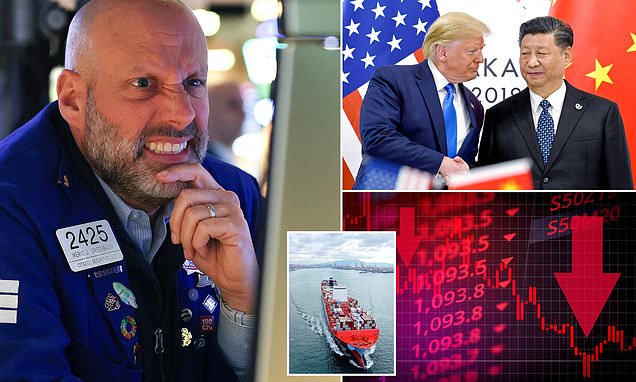
Trump Tariffs Trigger Market Crash and Investor Panic
Wall Street is on edge as markets prepare to reopen Monday after a major shakeup caused by former President Donald Trump’s new tariff threats against China. On Friday, Trump announced a 100% tariff on all Chinese goods, sparking a massive selloff that wiped out over $2 trillion from U.S. stock markets.
The move came in response to China’s decision earlier that day to restrict exports of rare earth minerals—critical materials used in everything from fighter jets to smartphones and electric cars. Since China controls around 70% of the global rare earth supply and almost all of the processing capability, this decision could hit U.S. tech companies especially hard.
Investors are bracing for more chaos. Stock markets are closed over the weekend, but U.S. futures—which give an early indication of how markets might open—start trading at 6 p.m. ET on Sunday. Asian markets like Japan’s Nikkei will follow a couple of hours later, giving the first real clues about whether the selloff will continue.
Futures trading lets investors place bets on where they think the major indexes like the S&P 500, Nasdaq, and Dow Jones will head. With investor confidence shaken, many expect more panic selling.
“This feels like more than just a hiccup,” said Art Hogan, chief market strategist at B. Riley Wealth Management. “It could knock the wheels off.”
Dan Ives, a well-known analyst from Wedbush Securities, called it a “white-knuckle moment” for investors, especially those holding tech stocks.
The S&P 500 dropped 2.7% on Friday, its worst single-day performance since April’s trade war tensions. The Nasdaq fell even harder, down 3.6%, and the Dow slipped nearly 2%. The tech sector got hit the hardest, with companies like Nvidia, Super Micro Computer, and Synopsys suffering major losses due to their reliance on rare earth materials.
The panic wasn’t limited to stocks. The crypto market crashed Friday night, with Bitcoin plunging over 10%. Ether and Solana fell even more sharply. In total, nearly $400 billion in crypto value vanished in hours, and leveraged traders lost around $19 billion.
The fear is spreading beyond tech. Shares of smaller banks and industrial companies also dropped, as investors worry that a renewed trade war could push the U.S. economy into recession.
What makes this selloff even more alarming is how fast things turned. Since April, the S&P 500 had been on a historic run—up over 30% and hitting all-time highs. But Friday’s crash erased much of that momentum.
The CBOE Volatility Index, often called Wall Street’s “fear gauge,” jumped nearly 30%, showing just how nervous investors are about where things are headed.
Meanwhile, Trump tried to calm nerves over the weekend. On his social media platform Truth Social, he wrote: “Don’t worry about China. It will all be fine! President Xi just had a bad moment… The U.S. wants to help China, not hurt it!!!”
Still, many analysts believe the damage is already done. China’s new rules mean companies now need special approval to export anything containing even trace amounts of Chinese-processed rare earths. Experts say defense-related exports are likely to be blocked entirely—a move designed to show Beijing’s dominance in the global supply chain and put pressure on Washington.
This escalating trade fight is not just about economics—it’s becoming a geopolitical standoff. And for investors, it’s a harsh reminder that the recent bull market was built on shaky ground.
Keywords: US-China trade war, Trump tariffs, rare earth minerals, stock market crash, tech stocks, crypto crash, Nvidia, Nasdaq drop, economic uncertainty, investor panic, market volatility, S&P 500 decline
The Evolving World of Tokenized Art and Web3 Collecting
It’s been two years since the launch of the “Sino Amazon and Sino Signia” project, and almost a year since we released our first “Det0xant” tokenized artwork series. What began as experimental digital merch to support the release of .det0x Web3 names has since become a journey into the evolving worlds of cryptocurrency, blockchain, and Web3.
### Learning the Web3 Landscape
Over time, we’ve realized that many public voices in the crypto space—commentators, writers, even journalists—don’t actually use or build with blockchain tech. They don’t trade digital assets, create on-chain products, or hold meaningful amounts of crypto. This often leads to misconceptions, especially for newcomers who rely on these sources for guidance.
### Tokenized Art is Evolving
The digital collectibles space has changed a lot. We’ve stepped deeper into it and started to question what gives these items their value. It’s time to rethink how people view and collect tokenized art.
One important concept is **OFP** or **Original Floor Price**—the first price a digital collectible was offered at. This is often influenced by where and how the item was launched. Marketplaces like OpenSea, Magic Eden, Blur, Rarible, and others let creators set their prices directly. Sometimes, collectibles are even released for free as rewards or promotional items.
Creators may also use “lazy minting,” where users pay the gas fees when they decide to claim or mint the collectible. This reduces risk for the creator while still encouraging adoption, especially on networks like Ethereum or Bitcoin Ordinals.
### PFPs vs Tokenized Art
PFPs (Profile Picture NFTs) are designed to be avatars—think of collections like Bored Apes or Cryptopunks. These are usually generated from a mix of traits using algorithms. Users either pick them manually or receive them randomly.
On the other hand, **Tokenized Art** refers to digital images—JPEGs, PNGs, etc.—that are made with traditional design tools like Photoshop or AI programs like Midjourney, DALL·E, and Adobe Firefly. Some of the best work combines both manual and AI techniques for rich visual depth.
Over time, collectors have started shifting away from PFPs toward more unique, meaningful tokenized artworks. That’s because PFPs can now be mass-produced with minimal effort, which lowers their perceived value. The market now values originality and difficulty of creation.
### Are NFTs Dead?
Not at all.
While headlines have claimed that NFTs are dead, this mainly refers to unrealistic hype around early PFP projects like Bored Apes and Mfers. When those prices crashed, people assumed the whole NFT market was over. But that ignores the fact that NFTs are just a type of blockchain token (like ERC-721) used for owning unique items.
NFTs can still be used for many things beyond collectibles: access passes, identity management, and even ownership of virtual land or digital names. And tokenization isn’t limited to Ethereum—other chains like Bitcoin (Ordinals), Solana (SPL), and others have their own protocols too.
### Choosing the Right Token Type
ERC-721 tokens represent one-of-a-kind items—perfect for true digital collectibles. ERC-1155 tokens can be used for both unique and non-unique items. If a collectible isn’t using ERC-721, make sure its supply is only “1” to confirm it’s truly unique.
Different blockchains offer different advantages in terms of security and decentralization. However, some wallets may not support all token types yet, which can limit accessibility.
### The Human Side of Collecting
People have always loved collecting—whether it’s old coins, rare furniture, or sports memorabilia. Digital collectibles are just the modern version of that age-old habit.
In earlier times, physical collections were proudly displayed in homes as a way to show personality and spark conversation. Now with Web3, people can carry their collections everywhere—on phones, laptops, or screens—sharing them as part of their personal brand.
What makes these digital collections powerful is that they’re secured by blockchain technology. That means owners have a provable record of ownership that can’t be tampered with.
### What Makes a Digital Collectible Valuable?
The early days of Web3 were tough. Minting was expensive and often failed. Creating quality art took time and skill—especially before tools improved and AI became widely available. That effort gave early pieces more value.
But today’s tools make it easier and cheaper to create digital art quickly. So how do you make something stand out in this fast-moving world?
Here’s what helps:
– **A compelling story** behind the artwork
– **Connections to well-known creators or ecosystems**
– **Multiple discovery channels** like social platforms, marketplaces, or brand partnerships
– **Product ecosystems**, where owning one item gives access to other parts of a larger project (games, events, domain names)
These features make a collectible more than just an image—they make it part of something bigger.
### Keep Up with Technology
If you’re creating new digital collectibles in 2025 and beyond, they need to feel fresh. Today’s buyers expect improvements in design, utility, speed, and affordability compared to what was made between 2021–2023.
Also consider creating **NSFW-safe** or **Universal Content Rated (USR)** pieces if you want your work to reach broader audiences without running into platform restrictions.
### Utility is Key
Web3 allows tokenized items to have programmable features—like unlocking content, granting access, or enabling interaction within games or apps. Tokens that offer this kind of functionality will always stand out.
One great example is Handshake Names—tokens representing web domains that can be used across Web3 products.
### Collector Mindset vs Profit Chasing
True collectors buy because they love collecting—not just to flip for profit. The most successful collectors throughout history had passion first; profits followed later.
This mindset carries into Web3 too. People who treat collectibles like short-term investments usually burn out fast. They don’t understand what makes an item meaningful—and when hype fades, they disappear.
### Tips for Smart Digital Collecting
– Be genuinely interested in what you’re collecting
– Look for unique pieces—check that supply is “1”
– Buy near the original floor price ($0–$50 for ERC-721; up to $30 for others)
– Prioritize items with dynamic features or future applications
– Choose projects with ecosystems rather than one-off releases
– Make sure the collection shows up in web searches beyond just marketplaces
– Prefer safe-for-work content if you want wide visibility
– Find projects with a story or ties to other Web3 products
Digital collecting is more than clicking “buy.” It’s about being part of something bigger—a community, a story, a movement in how we share ownership in the digital age.

Crypto Market Drops $19B; Raoul Pal Urges Calm
**Crypto Market Sees $19 Billion Wipeout Amid Tariff Fears – Raoul Pal Urges Long-Term Thinking**
The crypto market took a big hit in the last 24 hours, losing a staggering $19.38 billion. This drop came as global concerns over new trade tariffs caused panic across financial markets. According to data from CoinGlass, major cryptocurrencies like Bitcoin, Ethereum, and XRP saw sharp price declines.
This sudden downturn is linked to growing fears about macroeconomic changes, especially potential tariffs that could disrupt trade. Many short-term traders who were using borrowed money (leverage) to boost their positions were caught off guard. These leveraged positions were wiped out as asset prices fell quickly.
Despite the chaos, Raoul Pal, founder of Real Vision and a well-known market analyst, isn’t worried. He called the current panic “just noise.” According to Pal, it’s mostly short-term players reacting emotionally to the news. He believes that for long-term investors who are using their own money—not borrowed funds—this kind of market volatility is not a big deal.
Pal emphasized that the world is becoming more digital every day. He sees long-term value in digital assets like Bitcoin (BTC), Ethereum (ETH), and XRP. As technologies like artificial intelligence (AI) and blockchain continue to grow, digital currencies will play a bigger role in global finance.
Another key point Pal made is about the liquidity cycle. He says central banks and governments are likely to keep injecting money into the system, which supports crypto growth. In fact, he believes that over $10 trillion in liquidity will enter the market over the next year. This could give a major boost to digital assets.
Pal advised long-term investors to ignore the short-term panic and focus on the bigger picture. He recommended using this dip as a buying opportunity. According to him, in five years, today’s price drop won’t even matter.
Looking at the numbers, Bitcoin dropped 7.86% and is now trading around $112,104.11. Interestingly, trading volume surged by over 167% to $198.04 billion, suggesting that many investors are using this as a chance to buy at lower prices.
Ethereum also fell by about 12%, now sitting at $3,824.05. XRP followed with a similar 12.06% drop to trade at $2.48.
Despite the losses, market participants remain hopeful. Many believe that once the current volatility settles, prices will recover and continue to grow in the long term.
**Keywords:** crypto market crash, Bitcoin price drop, Ethereum fall, XRP decline, trade tariffs impact, Raoul Pal crypto advice, digital assets outlook, blockchain growth, AI and crypto, long-term crypto investing, market volatility, buy the dip strategy, crypto market recovery