
Crypto Market Shifts: New Strategies Amid Volatility
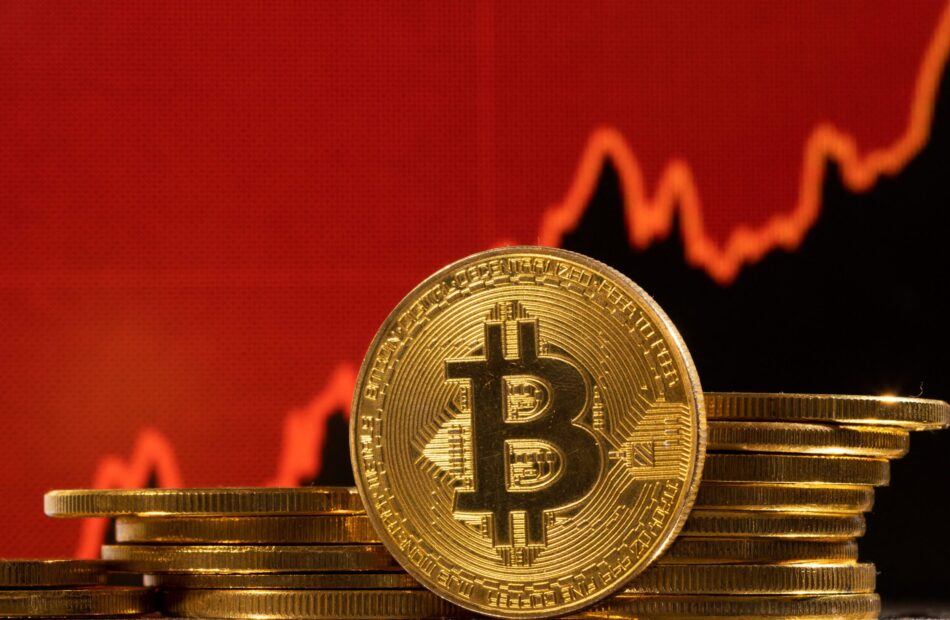
The crypto market has recently taken a big hit, especially in the most popular and hyped-up areas. This has made many investors more careful. At the same time, it’s giving a push to new investment strategies that focus on managing risk more actively.
In just a few years, the number of ways to invest in crypto has grown rapidly. Investors can now buy cryptocurrencies directly, invest in spot Bitcoin ETFs, use options and futures, or put money into companies involved in mining, exchanges, or crypto infrastructure.
But with all these choices, results vary a lot. Some investments have been hurt by things like using too much borrowed money (leverage), high prices, or funding issues.
John D’Agostino from Coinbase Institutional said that Bitcoin investment tools have expanded fast for both regular and big investors. However, he pointed out that how people use leverage and manage risk really matters.
**Overpaying for Bitcoin**
Bitcoin dropped as much as 36% from its high of $126,223 on October 6 and is still down about 30%. Companies that hold a lot of Bitcoin on their balance sheets, like Strategy Inc., got hit even harder.
These companies often borrow money or sell stock to buy more Bitcoin. In the past, their share prices were higher than the value of the Bitcoin they owned — and investors thought that would always continue. But when Bitcoin prices fell, their stock prices crashed even more.
Strategy Inc.’s stock has dropped 54% since Bitcoin’s October high and is down 63% from mid-July. Japan’s Metaplanet and other similar companies also suffered large losses.
Lyn Alden, founder of an investment strategy firm, said this was like a small bubble that popped. Now, investors are more careful about overpaying for these types of stocks.
**Crypto Miners Are Changing Course**
Bitcoin mining companies like IREN, CleanSpark, Riot, and MARA were once investor favorites. They had cheap electricity deals and made big profits. Now, many are shifting to building AI data centers to serve tech companies.
These stocks were strong performers earlier because they were involved in both crypto and AI — two of the hottest trends in tech. But some investors are now worried about these companies’ profits since they carry a lot of debt and need constant funding to make the switch.
Matthew Sigel from VanEck Onchain Economy ETF said that when the economic environment changed a bit, these mining stocks took a hit.
**Energy Is a Big Piece of the Puzzle**
In the coming years, crypto mining and AI are expected to work more closely together. Crypto infrastructure could help solve a growing energy shortage for U.S. data centers.
Morgan Stanley estimates there will be a 47-gigawatt power shortage in U.S. data centers by 2028. But if crypto miners are converted into AI data centers, they could cover 10 to 15 gigawatts of that need.
Brian Dobson at Clear Street said that if you want a company exposed to both crypto and AI growth stories, look at crypto miners — they’re sitting at the center of this trend.
**New Investment Strategies Are Gaining Ground**
Some companies believe the best way to deal with market ups and downs is through actively managed or hedged investment strategies.
The VanEck Onchain Economy ETF, which launched in May, has gained 32% by avoiding risky, over-leveraged companies. Sigel believes that active management is key because crypto is still a young and unpredictable asset class.
Another example is EMJ Crypto Technologies (EMJX), run by activist investor Eric Jackson. EMJX offers an actively hedged treasury that holds Bitcoin, Ethereum, and other top cryptocurrencies. It also makes money by selling options rather than taking on debt or issuing more stock.
EMJX recently went live after SRx Health Solutions announced it would acquire the company. The combined company will trade under the ticker EMJX starting in early 2026.
**Bitcoin Remains Strong**
Despite all the market noise, Bitcoin remains the leader in the digital currency world. Institutional investors are backing it heavily.
Harvard University’s endowment now holds BlackRock’s iShares Bitcoin Trust as its biggest public stock position. Sovereign wealth funds from Luxembourg, Abu Dhabi, and the Czech Republic are also investing in Bitcoin.
Crypto miners also prefer Bitcoin as their main currency.
With more investment options now available — like ETFs, regulated exchanges, and safer storage — experts like Coinbase’s D’Agostino believe the crypto market is becoming more like traditional markets such as stocks or commodities.
He says if you’re comfortable investing in gold, real estate, or art but still afraid of crypto, you might just need better information.
Crypto Market Slumps as Year Ends, Long-Term Hope Remains
As the year draws to a close, the crypto market is once again showing signs of weakness—a trend that has become all too familiar during holiday seasons. Bitcoin and altcoins are struggling to maintain momentum, with overall trading activity dropping sharply. This slowdown is largely due to lower liquidity, as many investors cash out their profits and take a break from the markets. The result? Price swings become more unpredictable, and market confidence takes a hit.
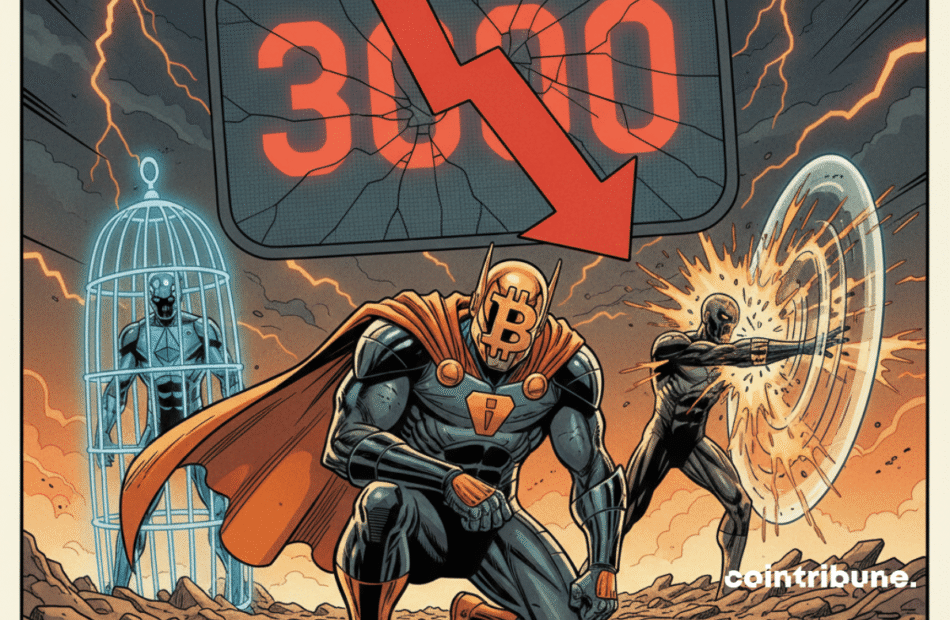
Bitcoin is hovering around $86,580, only slightly down from $86,700 earlier in the week. This small dip may not seem like much, but it reflects a broader decline in the total crypto market cap, which has fallen below the $3 trillion mark once again. Ethereum has also taken a step back, dropping below $2,930, while XRP is facing resistance near $1.90 after trying to bounce back.
Market sentiment is clearly deteriorating. The Crypto Fear and Greed Index has plunged to 11—an extremely low level that signals high anxiety among investors. Bitcoin’s key support levels at $81,000 and $70,000 are now under close watch. If those levels break, more downside could follow.
One big reason behind this downturn is the lack of interest from institutional investors. Crypto ETFs, which usually help stabilize the market, aren’t attracting enough demand to counter the selling pressure. Some experts believe major institutions are reevaluating their exposure to crypto due to changing risk appetites. This shift could have long-term implications for the market.
Global economic conditions are playing a bigger role in crypto prices than ever before. Asian stock markets like the Hang Seng and Nikkei have recently taken hits due to concerns over artificial intelligence growth, profit margins, and central bank policies. These macroeconomic worries are spilling over into the crypto space. Bitcoin and Ethereum are now reacting much like tech stocks—sensitive to interest rate changes and weak economic data.
Even altcoins like Solana and Cardano are feeling the pressure. Their prices move sharply based on liquidity levels and investor sentiment, making them even more volatile during uncertain times.
Given all this uncertainty, investors are divided on what to do next. Some are choosing to stay on the sidelines and wait for clearer signals. Others see the current dip as a buying opportunity, betting on a strong rebound in 2026.
Behind the scenes, there’s still strategic buying happening. Some large players are quietly accumulating assets during this dip. For example, one firm recently purchased over 10,000 BTC worth nearly $1 billion. Moves like this suggest that not all capital is exiting the market—some of it is being repositioned with a long-term view.
This kind of targeted buying shows strong belief in the future of bitcoin and other major cryptocurrencies. While altcoins remain more vulnerable to sharp corrections, tokens linked to decentralized finance (DeFi) and blockchain innovation are still drawing interest from investors.
Liquidity remains a key issue across the board. Tether (USDT), one of the major stablecoins used for trading, has seen its supply drop dramatically—from $15.38 billion to just $4.83 billion in two months. This suggests that a lot of money is waiting on the sidelines rather than entering the market.
Still, there’s a silver lining. Some analysts believe bitcoin could see new record highs by mid-2026. That outlook is based on improving fundamentals and the possibility of clearer regulations in the U.S., which could open the door for renewed institutional interest and stronger investor confidence.
In short, while the current picture looks rough, long-term optimism remains for bitcoin and select cryptos—especially for those watching closely and thinking ahead.

Crypto Forecast: BTC, SOL, PI & MAXI Set for Big Moves
**Disclaimer:** Crypto is a high-risk investment. This article is for informational purposes only and is not financial advice. You could lose all your money.
—
### Big Price Moves Ahead: Pi Network, Bitcoin, Solana, and a Surprising Meme Coin
Perplexity AI, an advanced AI model similar to ChatGPT, has shared some wild predictions for three major cryptocurrencies: Pi Network (PI), Bitcoin (BTC), and Solana (SOL). According to the model, all three coins could see big price swings—up or down—by the end of December.
Here’s a simple breakdown of what might happen next with each one.
—
### Pi Network (PI): Could Jump 1,300% or Drop Lower
Pi Network ($PI) is a mobile-first crypto project that lets users mine coins by checking into the app daily. It has stayed relatively strong even while most other coins have been falling. At the moment, PI trades around $0.20, up 3.2% in the last 24 hours, while big names like Bitcoin and Ethereum have dropped over 5%.
Perplexity AI sees two possible paths for PI:
– **Bearish case**: PI could fall to $0.15 if the market turns sour.
– **Bullish case**: It could skyrocket to $2.80, a 1,279% gain from today’s price.
Recent upgrades on the Pi testnet are adding real value to the network. Features like decentralized exchanges, automated market makers (AMMs), better liquidity tools, and a new KYC system are helping build momentum. Plus, Pi’s partnership with AI company OpenMind is showing how Pi nodes can be used for real-world computing power.
—
### Bitcoin (BTC): $230K Target or a Drop Back to $70K
Bitcoin ($BTC), the world’s largest cryptocurrency, hit a new all-time high of $126,080 on October 6. Perplexity’s long-term outlook suggests it could reach $200,000 or even $230,000 by 2026.
Right now, Bitcoin dominates the market with over $1.7 trillion in value out of the total $3 trillion crypto space. As inflation cools and investor mood improves during the holiday season, BTC might make another push higher.
However, there’s still risk:
– **Worst-case scenario**: BTC could fall back to $70,000 if selling pressure increases.
– **Best-case scenario**: BTC could climb above $200K if new crypto regulations pass and the U.S. launches a national Bitcoin reserve.
The recent interest rate cut from the Federal Reserve may also help support Bitcoin by pumping more money into the market.
—
### Solana (SOL): Might Crash to $30 or Soar 450%
Solana ($SOL) is one of the fastest-growing blockchain platforms right now, with over $9 billion locked in its network and a market cap above $72 billion. Developer activity is booming, and institutional investors are paying close attention.
Recent launches of Solana ETFs by Bitwise and Grayscale have renewed interest in SOL. Currently trading at $128.60, the token has held up well despite market dips.
Perplexity AI outlines two possible outcomes:
– **Bullish case**: SOL could surge to $480—more than 273% higher than current levels.
– **Bearish case**: It might drop slightly to $120 or possibly lower to $30 in extreme cases.
Solana previously hit $250 in January before falling to around $100 in April. Now, technical indicators suggest it could be breaking out of a bullish pattern again.
Big players like BlackRock and Franklin Templeton are using Solana for tokenizing real-world assets. This adds more weight to the idea that SOL could be gearing up for a big move upward.
—
### Maxi Doge (MAXI): The Meme Coin Making Noise
While Perplexity focused on major cryptos, one lesser-known coin is gaining traction—Maxi Doge ($MAXI). This meme token has already raised over $4.4 million in its presale and is positioning itself as the next Dogecoin.
MAXI features a fun character named Maxi Doge, described as a wild crypto lover obsessed with leverage trading and community building. It lives on Ethereum’s proof-of-stake network, which makes it more energy-efficient and scalable compared to Dogecoin’s older system.
MAXI is currently priced at $0.0002735 in its presale phase and offers staking rewards of up to 71% APY. The earlier you buy in, the more rewards you could earn—but those rewards decrease as more people join.
Buyers can get MAXI using MetaMask or Best Wallet. With its strong meme culture and growing hype, MAXI might be worth watching.
—
Stay tuned as these coins head into what could be a very volatile December. Whether you’re into major assets like Bitcoin and Solana or early-stage tokens like MAXI, now might be the time to keep your eyes on the charts.

Coinbase Becomes All-in-One Investing Platform
Coinbase is rolling out a major upgrade, turning its platform into what it calls the “Everything Exchange.” This means users can now do much more than just trade crypto. The company is adding stock trading, prediction markets, and a range of other financial tools to its main app, making it a one-stop shop for all types of investing.
### Stock Trading Comes to Coinbase
Coinbase is introducing stock trading directly within its app. Users will be able to buy and sell top U.S. stocks and ETFs using either U.S. dollars (USD) or USD Coin (USDC). While the full list of available stocks isn’t final yet, Coinbase says it plans to start with hundreds of the most popular ones based on market size and trading activity. Thousands more will be added in the coming months.
One of the biggest features is 24/5 trading—meaning users can trade stocks 24 hours a day, five days a week, without being limited to regular market hours. This is a big shift from traditional brokerages and gives more flexibility to everyday investors.
In early 2025, Coinbase plans to introduce stock perpetuals (perps) for users outside the U.S., allowing round-the-clock exposure to U.S. equities with lower capital requirements.
All of this is powered by Coinbase Tokenize, a new institutional platform that turns real-world assets like stocks into digital tokens, making them easier to trade.
### Prediction Markets Now Available
Coinbase is also stepping into prediction markets. These are platforms where users can bet on real-world outcomes like elections, sports results, or economic events. Coinbase has partnered with Kalshi, a prediction market provider valued at $11 billion, to make this possible.
Users will be able to trade event-based contracts with prices driven by market demand—essentially betting on what they think will happen in the world.
### Better Derivatives and Futures Trading
Coinbase is simplifying how users trade futures and perpetual contracts. These are advanced tools that let traders make larger bets with less money upfront. They also come with potential tax benefits.
Right now, Coinbase offers over 30 futures and perps contracts in the U.S., covering crypto, commodities, and equity indices. As of this week, there are 15 active crypto perps for coins like Bitcoin (BTC), Ethereum (ETH), Solana (SOL), Ripple (XRP), and others.
### Solana DEX Integration
Coinbase is expanding access to decentralized finance (DeFi) by adding support for Solana tokens through its main app. It’s doing this by integrating Jupiter, a top Solana DEX aggregator. This means users can swap Solana-based tokens securely without needing to leave the Coinbase app.
### New Tools for Businesses
A new product called Coinbase Business is now live for eligible companies in the U.S. and Singapore. It’s designed for startups and small businesses that want to use crypto in their operations.
With Coinbase Business, companies can send and receive payments worldwide, manage digital assets using Coinbase Advanced tools, and automate financial processes using Coinbase’s regulated infrastructure.
### AI-Powered Wealth Management
Coinbase is also launching an AI-based financial advisor tool called Coinbase Advisor. This feature helps users get personalized investment advice without needing to figure everything out themselves.
You can ask the AI things like “Build me a portfolio” or “What’s happening in the market?” and it will provide tailored suggestions based on real-time data and tools available on the platform.
The goal is to make high-quality financial planning accessible to everyone—not just wealthy investors.
### Global Expansion of Base Network
Coinbase’s blockchain network, Base, is now officially available in over 140 countries. This makes it easier for developers and users around the world to access decentralized apps and financial services built on Ethereum.
While there have been rumors about Coinbase releasing a native token for Base, the company says there are no updates on that yet—but they’re still exploring the idea.
—
In short, Coinbase is becoming more than just a crypto exchange. It’s building a full-featured financial platform where users can trade stocks, crypto, futures, and even place bets on real-world events—all from one app. With new business tools and AI-powered investing help, Coinbase aims to be the go-to hub for both casual investors and serious traders alike.

Coinbase Adds Stock Trading, Prediction Markets & More
Coinbase is expanding beyond just cryptocurrencies. The popular U.S.-based exchange announced a major update that will let American users trade traditional stocks and exchange-traded funds (ETFs) directly through its platform—without paying any commission fees.
In a livestream event, Coinbase shared that it’s rolling out more than a dozen new features and upgrades. These include support for stock trading, prediction markets, and tools for creating digital versions of real-world assets. Users will also gain access to decentralized finance (DeFi) apps on the Solana blockchain, all through the Coinbase app.
Soon, Coinbase users in the U.S. will be able to buy and sell thousands of stocks and ETFs that trade five days a week—just like with traditional brokerages. Looking ahead, the company plans to launch perpetual futures based on international stocks by next year. This brings Coinbase closer to its goal of offering tokenized stocks, similar to what platforms like Robinhood and Kraken are doing.
Coinbase also plans to offer tools for institutions to tokenize assets, making it easier to move real-world value onto blockchains. The process will allow users to wrap and unwrap traditional shares so they can be used across different blockchain networks, while keeping the actual shares safe in custody.
Scott Shapiro, Coinbase’s Head of Trading, said the platform is aiming to make tokenized stock trading available in the next few months. This system will be compatible with USDC, a stablecoin created by Circle. However, he also pointed out that progress depends heavily on regulations from the U.S. Securities and Exchange Commission (SEC), which have been delayed due to recent government shutdowns.
Coinbase is also entering the prediction markets space. Similar to Robinhood’s recent move using Kalshi-powered predictions, Coinbase will partner with Polymarket competitors and plans to add more platforms in the future. These markets let users place bets on real-world outcomes like election results or economic trends.
Additionally, U.S. users can now trade crypto perpetual futures—contracts that let you hold leveraged positions indefinitely—directly through Coinbase. This feature initially launched in July for Bitcoin and Ethereum and is now being expanded.
Coinbase’s app now supports trading any asset available on Solana-based decentralized exchanges (DEXs). This builds on the platform’s recent expansion into its own Ethereum layer-2 network called Base. With support for millions of tokens on both Base and Solana, Coinbase plans to keep adding more networks over time.
The updated Base app—a rebranded version of Coinbase’s self-custody wallet—is now live in 140 countries. It allows users to earn rewards from posts, play games, and interact with social features, all while managing their crypto.
Another major update includes an AI-powered financial advisor built into the platform. This tool will help users manage their investments and stay up to date with market news.
Finally, Coinbase is launching a new service for businesses to create their own branded stablecoins. These custom digital currencies will carry the company’s brand in every transaction. This ties into a new internet payment standard called x402, which is designed for AI-powered agent payments using stablecoins.
Analysts at Compass Point believe prediction markets could bring Coinbase about $230 million per year. However, experts at Mizuho warn that many users might sell off their crypto to place bets, which could impact overall trading volumes.
With these updates, Coinbase is pushing hard to become a full-service financial platform that bridges traditional finance and the blockchain world.