

Tech, AI Stocks Lead Market Rally Ahead of Triple Witching
U.S. stock markets ended the week strong on Friday, driven by growing investor excitement around artificial intelligence (AI) and preparations for December’s “triple witching” event — when stock options, index futures, and index options all expire at the same time.
By midday in New York, the Nasdaq-100 was leading the charge higher, fueled by a rebound in big-name tech stocks and semiconductor companies after a rollercoaster week. The S&P 500 and Dow Jones also climbed steadily, while small-cap stocks kept pace with the broader rally.
The technology sector was the top performer. Micron Technology (NASDAQ: MU) stood out with a surge of over 6%, building on Thursday’s 10% jump following a stellar earnings report. Nvidia (NASDAQ: NVDA) also had a strong day, rising 3.6% — its best daily gain in over a month.
Earnings reports played a big role in individual stock moves. Carnival Cruise Lines (NYSE: CCL) jumped 8% after beating Wall Street expectations with strong quarterly earnings, record revenue guidance for 2025, and a reinstated dividend — all signaling continued strength in travel demand.
On the flip side, Nike (NYSE: NKE) dropped more than 10%, even though it reported profits above estimates. Investors focused instead on shrinking profit margins, slowing sales trends, and continued challenges in China.
Commodities also had a solid day:
– Silver soared past $67 per ounce, up 127% so far this year.
– Gold hovered near all-time highs, trading close to $4,350 an ounce.
– Crude oil rose for the third straight session after dipping to nearly five-year lows earlier this week.
– West Texas Intermediate crude traded near $56.50 per barrel, up about 1%.
In currency markets, the U.S. dollar strengthened significantly — up around 1.3% against the Japanese yen. This came despite Japan’s central bank raising interest rates to 0.75%, their highest level in three decades.
Crypto-related stocks moved higher as cryptocurrencies rallied. MicroStrategy (NASDAQ: MSTR), known for its Bitcoin holdings, gained over 4%. Bitcoin itself traded above $87,000, while Ethereum and Solana also saw strong gains.
Here’s how major ETFs performed on Friday:
– Vanguard S&P 500 ETF (NYSE: VOO) rose 0.9% to $627.65.
– SPDR Dow Jones Industrial Average ETF (NYSE: DIA) gained 0.6%, hitting $482.21.
– Invesco QQQ Trust (NASDAQ: QQQ), which tracks tech-heavy Nasdaq stocks, climbed 1.28% to $616.92.
– iShares Russell 2000 ETF (NYSE: IWM), tracking small-cap stocks, rose 1% to $251.19.
– Technology Select Sector SPDR Fund (NYSE: XLK) outperformed with a 2% gain.
– Consumer Staples Select Sector SPDR Fund (NYSE: XLP) underperformed, slipping 0.4%.
Top Gainers in the Russell 1000 on Friday:
– BioMarin Pharmaceutical (BMRN): +18.6%
– AST SpaceMobile (ASTS): +11.8%
– Astera Labs (ALAB): +11.2%
– Rivian Automotive (RIVN): +10.4%
– Rocket Lab (RKLB): +15.9%
Top Losers:
– Lamb Weston Holdings (LW): -24.5%
– Nike (NKE): -10.3%
– Louisiana-Pacific Corp (LPX): -5.45%
– Howard Hughes Holdings (HHH): -5.08%
– KBR Inc (KBR): -4.25%
Crypto snapshot:
– Bitcoin (BTC): $87,100 (+1.92%)
– Ethereum (ETH): $2,948 (+4.30%)
– Solana (SOL): $123.96 (+3.71%)
Overall, Friday’s market activity reflected strong momentum in tech and AI-related sectors, supported by upbeat earnings and a rebound in commodities and crypto assets.
Crypto Market Volatility: What Really Matters Now
The Crypto Market Feels Unstable — But Here’s What Actually Matters
Lately, the crypto market has been looking shaky. Headlines are full of talk about a crash, and many altcoins have taken a hit. This drop is being caused by a mix of political uncertainty, big financial contracts expiring, and speculation about the overall economy.
But here’s the thing — when you look past the noise, the core of the crypto world is still strong. The market isn’t crashing because of one big issue. It’s just going through some short-term ups and downs while waiting for more clarity.
Why This Is Important for Crypto Investors
One of the biggest things holding back crypto growth is unclear regulation. Right now, there’s still confusion about which crypto assets are securities (like stocks) and which are commodities (like gold). This matters because big institutional investors want clear rules before they jump in with large amounts of money.
As regulations become clearer, especially in the U.S., it helps reduce legal risks, allows for new investment products, and boosts confidence in major cryptocurrencies like Bitcoin and Ethereum. This paves the way for long-term growth across the crypto industry.
The Role of Inflation, Interest Rates, and Liquidity
Tariffs and global trade issues can increase inflation. When inflation is high, interest rates usually stay high too. And when interest rates are high, there’s less money flowing into riskier investments — like cryptocurrencies.
Crypto markets rely heavily on liquidity. Less money in the system means less buying power for crypto assets. So even if prices dip, it’s often tied to macroeconomic factors rather than a problem within the crypto world itself.
Options Expiry: A Monthly Event That Shakes Prices
About $3.15 billion worth of Bitcoin and Ethereum options are expiring. These financial contracts often cause short-term price swings as traders adjust their positions. But this happens every month and usually settles down shortly afterward.
So while it may look like a major sell-off, it’s really just part of the regular cycle — not a sign that the market is heading for a long-term drop.
Regulatory News: A Win for the Crypto Ecosystem
The recent confirmation of a pro-crypto chair for the Commodity Futures Trading Commission (CFTC) is a quiet but important win for the industry. It signals continued progress toward building a better regulatory framework for crypto derivatives and attracting institutional investors.
This won’t cause immediate price jumps, but it’s a strong step toward building a healthier crypto market over time.
Other Political News Has Minimal Impact on Crypto
Recent political talk about cutting government jobs to reduce unemployment might sound dramatic, but it doesn’t really affect crypto unless it changes Federal Reserve policy — which it hasn’t so far.
New AI + Crypto Projects Are Gaining Steam
A new project called Fraction AI has launched on Coinbase’s Base network. It blends artificial intelligence with blockchain automation — a growing trend in the crypto space. While this doesn’t impact the entire market, it’s significant for projects on Base and shows how innovation continues despite market volatility.
Key Takeaways:
– The crypto market isn’t crashing — it’s just dealing with short-term noise.
– Regulatory clarity is key for long-term growth and institutional investment.
– Inflation and interest rates affect crypto through liquidity.
– Monthly options expiry causes price moves but doesn’t change long-term trends.
– Pro-crypto leadership at the CFTC supports positive regulation.
– New tech like AI + blockchain is still evolving within specific ecosystems.
Stay focused on what really matters — and don’t let short-term headlines distract you from the bigger picture in crypto.
Investors Shift Focus Beyond Big Tech and AI Stocks
Investors are getting more cautious about artificial intelligence (AI) stocks. After years of excitement and heavy investment, they’re now looking closely at how companies are spending money and when those big investments will start paying off. At the same time, the U.S. stock market is seeing growth outside of just the big tech names. Other sectors, commodities, and smaller companies are showing strength too.
Big tech stocks are still popular, but there’s a shift happening. Some companies, like Oracle, are still in the game — especially with news like its role in the TikTok deal — but others are falling behind. Investors are paying more attention to how these companies fund their AI projects. If a company uses its own profits (free cash flow) to build AI tools, that’s seen as a good sign. But if they’re taking on debt to do it, investors are becoming more skeptical.
For example, companies like Oracle and Cloudflare rely more on debt, which raises concerns. In contrast, Nvidia is a standout — it benefits directly from AI spending and is already making solid profits. Investors are starting to separate winners from those that might not keep up. This shift started becoming clear in recent months.
Take Meta (Facebook’s parent company) as another example. Its stock had a great run, but now there’s concern over how much it’s spending on AI. They’ve moved away from the metaverse idea but are putting a lot of money into large language models. Since Meta mainly makes money from ads, people are wondering how it will turn these big investments into profits. That question will likely be a big focus in the coming year.
On another note, there’s growing concern about crypto scams, especially in Canada. Some fake ads on platforms like Facebook even use fake endorsements from public figures like the Prime Minister to trick people. While Bitcoin and Ethereum are more established — and now have spot ETFs — newer coins and projects carry much more risk. These unknown cryptocurrencies are where most of the scams happen.
Looking at earnings trends, something interesting is happening. For a long time, most of the growth came from just a few big tech names. Now, earnings across all 11 sectors of the S&P 500 are positive for the year — and five sectors are keeping pace with the index itself. That’s a big improvement from last year when only two sectors were positive.
Smaller companies (small caps) are also doing well, outperforming larger ones since September. In fact, their earnings outlook is better than the broader S&P 500 for the next couple of years. Investors are beginning to pay attention to companies beyond just the top seven mega-cap names.
Gold has also made a big comeback. It’s now the top-performing group in the S&P 500 Gold Index — up about 173% this year. This breakout was a long time coming — 10 years on a nominal basis and nearly 40 years after adjusting for inflation. More investors are jumping in, helped by easier access through ETFs like GLD. Central banks are buying gold too, especially after geopolitical tensions like Russia’s invasion of Ukraine shook up global financial systems.
Another surprise winner is GE Vernova — part of General Electric’s spinoff strategy. It’s in the power infrastructure space and has doubled in value this year. With huge energy needs from data centers and AI models, demand for power equipment is rising fast. GE Vernova has positioned itself well to meet that demand. Other GE spinoffs like GE HealthCare are also doing well, showing that these breakups can be very successful.
Overall, we’re seeing a broadening market where investors are looking beyond just AI hype and focusing on real growth, strong earnings, and long-term trends like energy infrastructure and gold.
Peter Diamandis on Innovation, AI, and the Future
Peter Diamandis, the visionary behind the XPRIZE Foundation and co-founder of Singularity University, sat down to share insights into his mission to push humanity forward through innovation. Known for championing moonshot ideas, Peter talked about why he created XPRIZE and how it’s changing the world.
The idea for XPRIZE came from Peter’s deep desire to go to space. Back in the early ’90s, becoming an astronaut was nearly impossible unless you worked for a government agency. Inspired by Charles Lindbergh’s transatlantic flight in 1927, which was driven by a prize, Peter decided to launch a similar competition to encourage private space travel. That decision helped jumpstart the commercial spaceflight industry.
Since then, XPRIZE has expanded far beyond space. It has launched competitions worth over $500 million, including initiatives focused on climate change, education, and healthcare. Some notable examples include a $100 million prize for carbon removal funded by Elon Musk and a $101 million prize focused on extending healthy human lifespan.
Peter believes in using incentives to inspire entrepreneurs to think bigger. He wants people to aim higher than just creating another photo-sharing app. Instead, he encourages them to tackle major global problems like disease, food scarcity, clean water access, and education.
XPRIZE also looks at bold new areas like:
– Technology that measures and boosts happiness
– Earthquake prediction systems
– Tools for spotting and deflecting asteroids
– Communication tools for understanding animals
– Autonomous systems to detect and fight wildfires
One area Peter is especially passionate about is longevity. He asks: What would you do if you had 40 extra years of healthy life? For him, the answer includes watching his children grow, building cities on the Moon, and witnessing breakthroughs in brain-computer interfaces.
Peter is also a long-time supporter of Bitcoin. He first learned about it in 2010 and began investing around 2014. He even gave Bitcoin to CEOs in his Abundance 360 program to help them learn about it hands-on. Peter believes Bitcoin is digital money that solves many problems found in traditional currencies—it’s stable, secure, and decentralized. Today, his crypto holdings are mostly Bitcoin and Ethereum.
Peter sees potential where AI meets blockchain—especially for verifying content. With AI becoming better at generating realistic fakes, blockchain could be key to proving what’s real.
He’s also interested in quantum technologies. Through his venture funds, he has invested in companies using quantum computing for drug discovery and health applications. For example, one of his portfolio companies uses AI and quantum chemistry to create new molecules for medicine.
When asked about artificial intelligence becoming conscious, Peter says it’s likely. He believes we’re heading toward Artificial General Intelligence (AGI) by 2029, aligning with the prediction of his partner Ray Kurzweil. Technologies like ChatGPT have already made huge leaps, and while they’ve integrated smoothly into our lives, they mark major progress toward true machine intelligence.
Peter uses AI tools from Google, OpenAI, and Stability AI daily. He’s especially excited about applying AI in healthcare—to analyze large health datasets and offer personalized recommendations for medicine, diet, and lifestyle.
In education, Peter envisions AI tutors offering personalized learning experiences tailored to each student’s knowledge, interests, and learning pace. Combined with virtual reality, this could make learning immersive and fun. Eventually, brain-computer interfaces may allow people to instantly access knowledge or communicate ideas just by thinking.
When it comes to fears about AI taking control or making people lazy, Peter remains optimistic. He believes AI will augment human intelligence rather than replace it. Throughout history, new technologies like cars and electricity didn’t make people idle—they enabled them to do more. Similarly, AI will create new opportunities and challenges that push us to grow.
In Peter’s view, the future isn’t about losing control to machines—it’s about using powerful tools to solve humanity’s biggest problems and elevate our potential as a species. Whether through space exploration, advanced health tech, or AI-powered education, the goal is clear: to build a better future for everyone.
Top Altcoins to Watch Before the 2026 Crypto Bull Run
**Disclaimer:** Crypto is a high-risk investment. This content is for information only and should not be considered financial advice. You could lose all your invested money.
—
**Crypto Markets Might Be Gearing Up for a Big Move in 2026—Now Could Be the Time to Get In**
As talk of a potential 2026 crypto bull run picks up, especially with U.S. lawmakers expected to roll out clearer crypto regulations, many investors are watching the current market closely. With the holiday season approaching, this could be one of the best times to start building positions—if you believe in crypto’s future.
**Bitcoin (BTC) Holds Steady, But Altcoins Are Gaining Attention**
Bitcoin has been trading just above $87,000, staying below the $90K mark for now. But something interesting is happening—Bitcoin’s dominance in the overall crypto market has been dropping since summer. This usually means investors are moving their money from Bitcoin into other coins, especially altcoins.
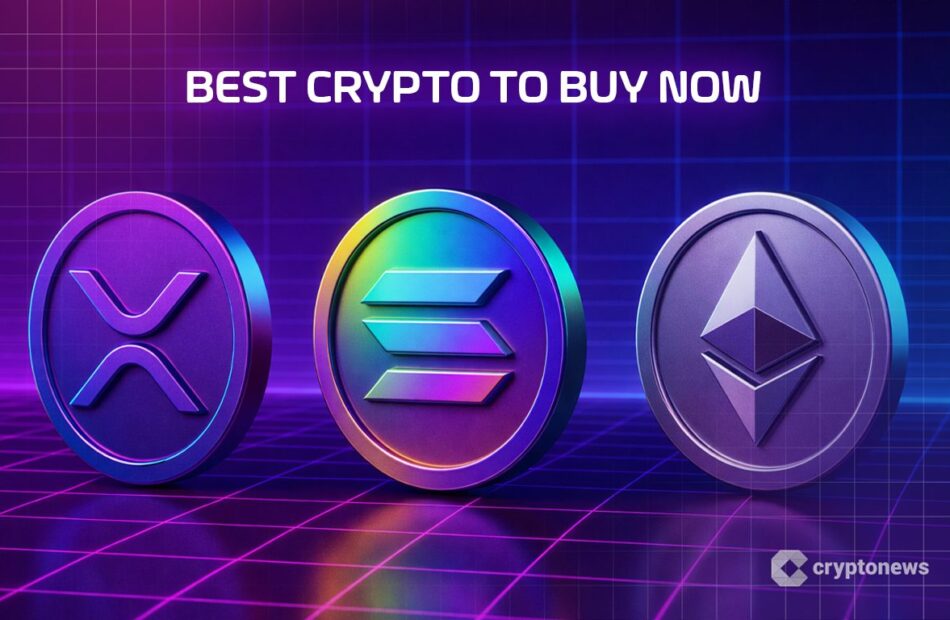
Coins like XRP, Solana, and Ethereum are starting to look more attractive as we head into the new year.
—
### **XRP (XRP): Changing How Global Payments Work**
Ripple’s XRP is designed to make international payments faster and cheaper. It uses the XRP Ledger (XRPL), which works faster and costs less than traditional systems like SWIFT.
XRP has gotten attention from big institutions and even been mentioned in official documents from the United Nations and the White House. With Ripple’s growing number of financial tech partners, XRP has become one of the top cryptocurrencies (excluding stablecoins), with a market value over $113 billion.
After Ripple resolved its long legal fight with the U.S. SEC, XRP hit a new all-time high of $3.65—the first in seven years. Since then, it has pulled back around 49% and now trades close to $1.87.
Five new XRP spot ETFs (exchange-traded funds) have launched in the U.S., opening the door for more institutional investment. If more ETFs are approved and regulations become clearer, XRP could see another big price jump and possibly hit new highs by New Year.
—
### **Solana (SOL): Fast Blockchain Aiming for Major Growth**
Solana is one of the fastest blockchains around. It’s great for smart contracts and DeFi apps because it’s quick and cheap to use. Right now, Solana has about $71 billion in market cap and over $9 billion locked in its DeFi ecosystem.
New Solana spot ETFs from companies like Grayscale and Bitwise could attract serious institutional money—just like what happened with Bitcoin and Ethereum in the past.
SOL dropped to around $100 earlier this year but has bounced back to about $125. It’s sitting near a key support level. If momentum picks up, it could climb to $130 or $140 soon.
If Solana breaks past the next major resistance at $250, it could head toward its all-time high of $293. In a strong rally, some even see it hitting $500. Even if the market stays quiet during the holidays, SOL likely won’t fall much further.
Solana is also becoming a popular choice for tokenizing real-world assets (RWA). Big players like BlackRock and Franklin Templeton are already using Solana to launch tokenized investments.
—
### **Ethereum (ETH): The Original Smart Contract Platform is Evolving**
Ethereum remains the most widely used platform for decentralized applications and smart contracts. With a market cap over $357 billion and $69 billion in total value locked, ETH still dominates the DeFi space.
Right now, ETH is trading around $2,966. In a strong bull market, it could reach $6,500 by year-end—well above its previous high of $4,946 from 2021.
A recent upgrade called Fusaka has made Ethereum faster, safer, and more scalable—especially for Layer-2 networks that help reduce fees and increase speed. This upgrade could push ETH toward $5,000 in the short term.
To reach five figures, Ethereum will likely need help from better crypto regulations in the U.S. and a more favorable economic environment. These changes would bring more big investors into Ethereum.
Earlier this year, ETH broke out of a bullish pattern and surged from $1,800 to nearly $3,000. If this momentum continues, we could see a new all-time high soon.
—
### **SUBBD ($SUBBD): AI + Blockchain = A New Creator Economy**
SUBBD is a newer project that’s getting attention for combining artificial intelligence with blockchain to shake up the creator economy—an industry worth over $85 billion.
SUBBD gives content creators better tools to make money without losing a big chunk of their earnings to middlemen. Unlike platforms that take 20% or more in fees, SUBBD uses decentralized tech to give creators more control.
The project has already raised $1.4 million during its presale and offers features like token-gated content, early access drops, and exclusive discounts for fans. This helps creators build stronger communities and connect directly with their supporters.
You can keep up with SUBBD on platforms like X (Twitter), Telegram, Instagram—or join their ongoing presale through their official website.
—
**Final Thoughts**
With Bitcoin stable and altcoins like XRP, Solana, Ethereum, and SUBBD showing strong potential, now might be an ideal time to watch or enter the crypto market before momentum builds into 2026. Whether you’re a beginner or seasoned investor, keeping an eye on these key players could pay off down the road.