

$952M Exits U.S. Crypto Funds Amid CLARITY Act Delay
Crypto investment funds in the U.S. just saw their first major money pullout in a month, with $952 million leaving the market in a single week. This comes after delays to a key crypto regulation bill, the CLARITY Act, caused fresh uncertainty for investors.
According to CoinShares data, digital asset funds had $952 million in net outflows last week. This marks the first time since late November that more money has left the market than entered. The bulk of this sell-off happened in the United States, which accounted for $990 million in outflows. In contrast, investors in Canada and Germany added $46.2 million and $15.6 million, respectively, offering only minor relief.
Much of the concern is tied to delays in passing the CLARITY Act—a proposed U.S. law aimed at clarifying how digital assets like cryptocurrencies are regulated. The Act is meant to define whether crypto assets are securities or commodities and clarify the roles of the SEC and CFTC. But political gridlock and a 43-day government shutdown have pushed the Senate’s decision on this bill into January 2026. This delay has shaken investor confidence.
Ethereum was hit the hardest during this pullback, with $555 million in outflows. Experts say Ethereum is more sensitive to regulation than other assets due to its major role in decentralized finance and staking services—areas that could be heavily impacted by new rules.
Despite this rough week, Ethereum investment products have still attracted $12.7 billion in inflows this year—well above the $5.3 billion seen during the same period last year.
Bitcoin also saw significant outflows, with $460 million leaving investment products. Year-to-date, Bitcoin has brought in $27.2 billion—still strong, but below the $41.6 billion it gained by this time last year.
Overall, assets under management for all crypto exchange-traded products now total $46.7 billion, down from $48.7 billion at the same point last year. This drop makes it unlikely that 2024 will surpass last year’s record numbers.
U.S.-based spot Bitcoin ETFs also felt the pressure, posting $497.05 million in weekly outflows as of December 19. However, total inflows for these ETFs remain strong at $57.41 billion.
Not all cryptocurrencies suffered losses. Solana and XRP continued to attract investor interest. Solana investment products saw $48.5 million in new inflows, while XRP added $62.9 million. This trend was also seen in U.S.-based spot ETFs, where XRP brought in $82.04 million and Solana added $66.55 million for the week.
These gains reflect a steady accumulation trend for Solana and XRP that has been going on for several months.
Lawmakers confirmed that the Senate review of the CLARITY Act won’t happen until January 2026—pushing it past earlier expectations that it would reach President Trump before the end of 2025. The House already passed the bill back in July, but Senate delays have pushed back progress.
Supporters of the bill argue it would finally give crypto companies clear rules and reduce legal uncertainty. But with ongoing political challenges and upcoming elections, any progress may remain slow.
Senate Banking Committee Chair Tim Scott and Agriculture Committee Chair John Boozman are expected to lead the markup process, though more changes may still be made before a final vote is possible.

Google Buys Intersect: Big Impact on GOOGL and Crypto
**Google Buys Intersect for $4.75 Billion: What It Means for GOOGL Stock and Crypto Markets**
Google just made a big move that could change both the tech and crypto worlds. The company, listed under the stock ticker $GOOGL, announced that it’s buying Intersect—a company that builds data centers and energy systems—for $4.75 billion in cash, plus some debt. This deal, confirmed on December 22, 2025, is all about boosting Google’s power in artificial intelligence (AI) and cloud computing.
### Why This Matters for GOOGL Stock
This kind of large acquisition usually signals that Google is confident about its future growth. When big tech companies buy key infrastructure firms, it often leads to short-term gains in their stock prices. Investors tend to react positively because they expect better performance and reduced costs over time.
For GOOGL stock, keep an eye on price levels around $150 (support) and $180 (resistance). These are important zones where the stock has recently bounced or slowed down. Historically, deals like this boost trading volume by 15-20% in the days following the news. That means more people buying and selling the stock, which can lead to sharp price movements. If you’re a trader, this could be a good time to look at short-term call options or swing trades based on momentum.
### Impact on the Crypto Market
Google’s focus on data centers ties directly into the growing need for AI infrastructure. This also affects the cryptocurrency market—especially tokens connected to AI and computing power. Projects like Fetch.ai (FET) and Render (RNDR), which offer decentralized AI tools and GPU processing, could benefit from this news.
When a tech giant like Google invests heavily in AI infrastructure, it can boost confidence in similar crypto projects. Traders might see increased action in pairs like FET/USDT or RNDR/BTC. In the past, these tokens have seen up to 30% spikes in volume after similar news stories. There’s also potential for Ethereum (ETH) to gain value since many AI-based crypto apps run on its network.
### Energy and Blockchain Infrastructure
Intersect also brings strong energy management expertise to Google. This is important because both cloud computing and crypto mining require a lot of energy. If Google can make its systems more efficient, it could lower operating costs across tech and blockchain platforms.
This could benefit green energy crypto projects—like those focused on eco-friendly blockchain networks—or fast, scalable platforms like Solana (SOL). If data becomes cheaper to manage, networks like SOL could become more attractive. Watch for trading patterns in SOL/ETH pairs and indicators like RSI (Relative Strength Index) to time entries or exits.
### Bigger Picture: Tech Meets Crypto
This deal shows how traditional tech companies are getting closer to blockchain and crypto technologies. Google’s move into smarter infrastructure is likely to attract more institutional investors into AI-related crypto projects. Tools like Chainalysis show that investments in AI-focused blockchain projects have grown 25% year-over-year—and this trend could now speed up even more.
Bitcoin (BTC) may also benefit as a safe-haven asset when tech news causes volatility. Look out for changes in sentiment indicators like the Fear and Greed Index, which tends to move up with positive news from big tech companies.
### Trading Tips Based on This News
– Consider trading GOOGL stock or options as short-term momentum builds.
– Watch AI-related crypto tokens like FET and RNDR for volume spikes.
– Monitor ETH and SOL as supporting networks for AI decentralized applications.
– Look into DeFi platforms that use AI for predictive trading models.
– Stay alert for changes in energy regulations that could impact high-energy cryptos like Bitcoin.
In summary, Google’s $4.75 billion purchase of Intersect is a powerful signal of where tech is headed—toward smarter, more efficient infrastructure for both AI and blockchain. Whether you’re trading stocks or crypto, this move opens up new opportunities across markets. Keep an eye on relevant indicators and stay updated to make the most of this shift.
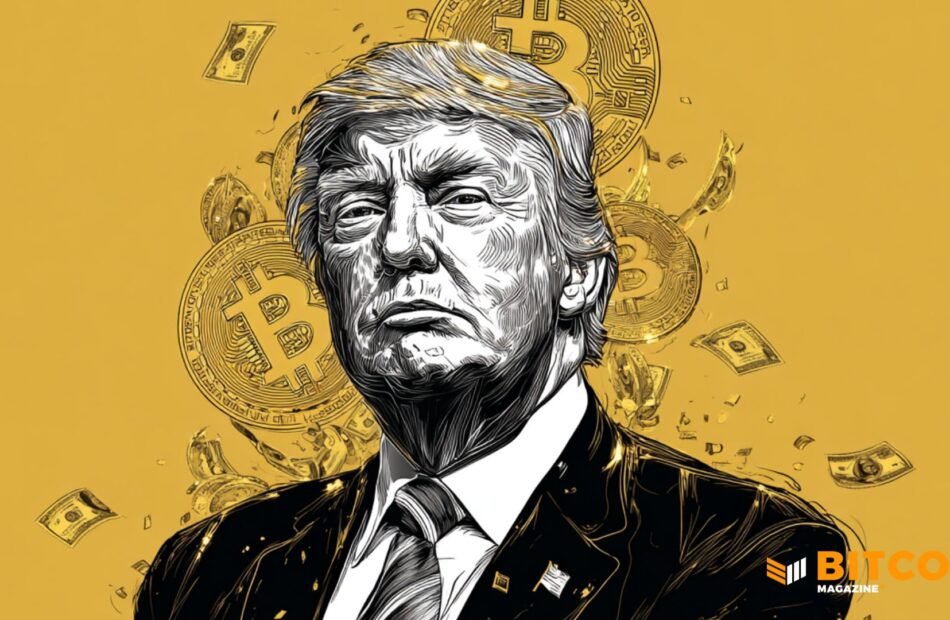
Trump Media Boosts Bitcoin Holdings, Eyes ETF Launch
Trump Media & Technology Group has just added more Bitcoin to its growing crypto portfolio. The company bought 451 more Bitcoins, which are worth around $40.3 million at current prices. With this new purchase, Trump Media now holds a total of 11,542 Bitcoins. That’s over $1 billion in value, according to data from analytics firm Arkham.
This move is part of Trump Media’s bigger plan to invest heavily in cryptocurrencies. Earlier in 2025, the company reported owning about $2 billion in Bitcoin and other digital assets. It’s clear they’re shifting their focus toward becoming a major crypto investment player.
Back in July, Trump Media announced plans to create a new Bitcoin and Ethereum ETF (Exchange-Traded Fund) under the Truth Social brand. Crypto.com was chosen to handle everything from custody and trading to staking and liquidity services. The ETF is backed by Yorkville America Digital, LLC as the official sponsor.
However, the ETF can’t launch just yet. It still needs approval from the U.S. Securities and Exchange Commission (SEC). The fund is set up as a Nevada business trust and will allow investors to buy or redeem shares in groups of 10,000 using cash. While in-kind transactions (swapping crypto for shares) aren’t available now, they might be added later depending on regulatory clearance.
At the moment, Trump Media’s stock (traded as $DJT) is down nearly 10% for the day. But just last week, the stock saw a big jump after announcing an unexpected all-stock merger with TAE Technologies. This deal values the combined company at more than $6 billion.
Following the news, shares soared by 42% on Thursday, adding over $500 million to Donald Trump’s family wealth. The momentum continued with an 8.3% increase on Friday and another 3.6% rise in Monday’s premarket trading.
The merger marks a big shift for Trump Media, turning it from a social media company into a player in the fusion energy space. The plan now includes building nuclear fusion plants to power artificial intelligence systems.
Trump Media went public in 2024 through a SPAC merger and is based in Sarasota, Florida. Devin Nunes serves as the CEO. The company operates in three main areas: social networking via Truth Social, streaming through Truth+, and financial services under its fintech brand Truth.Fi. The majority of the company is owned by the Donald J. Trump Revocable Trust.
As for Bitcoin itself, it’s currently priced at $89,358 with a daily trading volume of $38 billion. The price is up 2% in the past 24 hours, sitting just below its weekly high of $90,353 and above its weekly low of $87,948. There are 19,965,603 Bitcoins in circulation out of a maximum supply of 21 million, giving Bitcoin a total market cap of around $1.78 trillion.
Keywords: Trump Media Bitcoin holdings, Trump Media ETF, Truth Social Bitcoin ETF, Trump Media stock news, Bitcoin price today, crypto investment strategy, TAE Technologies merger, Devin Nunes CEO, Truth+ streaming platform, Truth.Fi fintech platform, cryptocurrency market update, fusion energy AI integration.

Crypto Funds Lose $952M Amid CLARITY Act Delay Fears
U.S. crypto investment funds just saw their first weekly losses in a month, with investors pulling out a total of $952 million. This big drop came after more delays to the long-awaited CLARITY Act, a bill meant to provide clearer rules for digital assets. The delay has made investors nervous again about the lack of regulation in the crypto market.
Data from CoinShares shows that nearly all of the withdrawals—about $990 million—came from U.S.-based funds. This was slightly balanced by new investments from Canada and Germany, which added $46.2 million and $15.6 million, respectively.
Ethereum (ETH) was hit hardest, with $555 million in outflows. Experts say Ethereum is more affected by regulatory news than other coins because it’s widely used in decentralized finance (DeFi) and staking platforms—areas that could be directly impacted by new U.S. rules.
Bitcoin (BTC) also saw large withdrawals, with $460 million pulled out last week. Even though Bitcoin still dominates the market overall, this year’s inflows of $27.2 billion are lower than last year’s $41.6 billion during the same period.
Despite these recent losses, Ethereum products have still brought in a solid $12.7 billion in 2024 so far—more than double the $5.3 billion seen during the same time last year.
Total assets under management for all crypto exchange-traded products (ETPs) are now at $46.7 billion, down from $48.7 billion at this time last year. This decline suggests the crypto fund market may not beat last year’s performance.
U.S. spot Bitcoin ETFs also took a hit, with $497.05 million in net outflows for the week ending December 19. Still, total inflows into these ETFs remain strong at $57.41 billion for the year.
Interestingly, not all cryptocurrencies were affected negatively. Solana (SOL) and XRP actually gained new investments. Solana products saw $48.5 million in inflows, while XRP brought in $62.9 million.
This positive trend for SOL and XRP was also seen in spot ETFs. XRP funds added $82.04 million over the week, and Solana ETFs gained $66.55 million—continuing a steady growth pattern that’s been building for months.
The market’s nervous reaction came after it was confirmed that the Senate has once again delayed action on the CLARITY Act, now pushing the vote to January 2026. The bill had already passed in the House back in July, but progress in the Senate has been slow due to political roadblocks and a government shutdown that lasted 43 days.
The CLARITY Act is intended to settle a key question: are digital assets securities or commodities? It would also define the roles of major regulators like the SEC and CFTC.
Supporters of the bill say it will reduce confusion and give crypto businesses a clearer path to compliance. But with ongoing political disagreements and election-year distractions, progress is stalling.
Senators Tim Scott and John Boozman are leading efforts to finalize the bill, but it may still go through changes before a full vote happens. Earlier hopes that President Donald Trump would sign it into law by the end of 2025 now look uncertain as political tensions rise ahead of the election season.

ETHZilla Sells $75M in ETH Amid Crypto Market Struggles
**ETHZilla Sells More Ethereum as Market Struggles – What It Means for Crypto Reserve Companies**
ETHZilla, a crypto reserve company listed on Nasdaq, has sold a large amount of Ethereum again. This marks its second big sell-off in just a few months as it tries to manage falling stock prices and reduce debt. The company sold 24,291 ETH, worth around $75 million, to help pay off convertible bonds. This brings its total ETH reserve down to around 69,800 coins.
ETHZilla first gained attention when it sold $40 million worth of Ether earlier this year and used the money to buy back some of its own stock. Back then, the stock price was about $20. Now, it’s dropped below $7—a 96% decline from its peak during the height of the crypto reserve company boom in August. The ongoing sales signal deeper struggles within ETHZilla and possibly other similar companies.
This situation highlights a bigger issue in the crypto world: the bursting of the crypto reserve company bubble. These companies were built around holding large reserves of top cryptocurrencies like Ethereum and Bitcoin, but falling prices have made that model risky. ETHZilla’s continuous selling shows how quickly things can unravel when asset values drop and debts pile up.
One company that’s still holding on better than most is Strategy. While it’s also facing pressure, its market net asset value (mNAV) is still slightly above 1, at about 1.08. That’s important because once it dips below 1, issuing new debt or buying more Bitcoin becomes much harder. However, Strategy has over $2 billion in cash and a large Bitcoin reserve, which gives it more room to manage downturns compared to others.
Strategy’s lower costs and cash cushion might help it stay ahead even if crypto prices continue to fall. But other companies that tried to copy its strategy have already taken heavy losses due to recent market declines. If the crypto market doesn’t bounce back soon, more reserve companies may follow ETHZilla’s path—selling off assets and struggling to stay afloat.
Key Takeaways:
– ETHZilla sold another $75 million worth of ETH to reduce debt.
– The company’s stock has crashed 96% from its peak during the reserve company boom.
– Strategy remains more stable thanks to large cash reserves and BTC holdings.
– Falling crypto prices are putting pressure on all reserve-backed companies.
– The overall crypto reserve company model is being tested as the market weakens.
Investors should stay alert—crypto markets remain highly volatile. Always do your own research before making any investment decisions.