

Quantum Computing’s Future Threat to Bitcoin Security
Quantum computing has been talked about for years as a possible danger to cryptocurrencies like Bitcoin. The main worry is that, one day, quantum computers could become powerful enough to break the cryptographic systems that protect digital currencies. In 2026, that concern is making a comeback as big tech companies increase their investments and progress in quantum technology.
While quantum computers are still not ready for everyday use, companies are making progress. For example, Microsoft recently introduced a new chip called “Majorana 1,” which uses a unique design known as Topological Core architecture. This has sparked fresh conversations about how soon quantum computing could start affecting real-world systems like blockchain networks.
Even with all the attention, most experts agree that the threat to cryptocurrencies from quantum computers is not immediate. The bigger issue is what hackers might be doing today to prepare for a future when quantum machines are ready. Some believe bad actors are already storing encrypted data, planning to crack it later when the technology becomes powerful enough.
Clark Alexander from Argentum AI believes that quantum computing will have very limited use in 2026. Nic Puckrin from Coin Bureau is even more skeptical, saying the idea that quantum computers will soon break Bitcoin is mostly hype and marketing. According to him, we’re likely at least ten years away from any real threat.
Right now, Bitcoin and other major blockchains use public-key cryptography to secure wallets and verify transactions. This system relies on private keys to sign transactions and public keys to confirm them. If a quantum computer could figure out private keys just by looking at public keys, it could potentially steal large amounts of crypto.
Some regulators are paying attention too. Last year, the U.S. Securities and Exchange Commission (SEC) received a warning that future quantum computers might be able to break Bitcoin’s encryption.
Experts say digital signatures are the weakest part of blockchain security in a quantum world. These signatures, especially the Elliptic Curve Digital Signature Algorithm (ECDSA), could be broken if a powerful enough quantum computer comes along. However, the SHA-256 hash functions used in Bitcoin are much harder to crack, even with quantum tech.
Another major vulnerability is when users reuse addresses. Once a public key is exposed on-chain, it becomes more vulnerable to future attacks using quantum machines.
Despite these concerns, it’s still extremely unlikely that quantum computers will be strong enough to break Bitcoin by 2026. That’s because current quantum devices are still far from having the capabilities needed. They only have a few hundred or thousand “qubits,” and they’re very noisy — meaning they make too many errors. To actually break cryptography, you’d need millions of high-quality qubits that can perform long sequences of operations without errors.
There are also big challenges in materials science and engineering that need to be solved before we get there. Some experts even believe that current approaches may never get us to a point where Bitcoin’s cryptography is at real risk.
Still, there’s another kind of threat happening right now: “harvest now, decrypt later.” Hackers may be downloading and storing encrypted data today with the hope that they can decrypt it in the future using quantum computers. This includes public blockchain data where public keys are already exposed.
An estimated 25%–30% of all Bitcoin — around 4 million BTC — may already be sitting in vulnerable addresses. These addresses have exposed public keys and could be targeted first once quantum machines become powerful enough.
To stay safer, users are advised not to reuse addresses and to keep their public keys hidden until they spend their funds. People should also get ready to move their crypto into wallets that use post-quantum cryptography when those become available.
The crypto world is already working on solutions. In mid-2023, researchers shared a plan to update Bitcoin’s signature system with quantum-resistant options. Around the same time, a company called Qastle announced tech that brings quantum-level security to hot wallets by using quantum-generated randomness and post-quantum encryption — all without needing extra hardware or complex setup.
So while there’s no need to panic about a quantum doomsday in 2026, awareness is growing. The question is no longer “if” quantum will impact crypto — it’s “when.”
Experts say the chances of a major quantum attack happening by 2026 are low to moderate. But there’s a high chance that by then, quantum threats will become a key focus in crypto security planning.
Crypto in 2025: Institutional Growth and Market Maturity
**Crypto Market in 2025: A Shift Towards Maturity and Institutional Growth**
The crypto industry made a big leap in 2025, moving from trial-and-error stages to becoming more stable and financially integrated. This shift was driven by rising interest from large institutions, better regulations around the world, and stronger links to global economic trends.
**Big Changes in 2025**
In 2025, crypto prices were no longer just driven by hype or news. Instead, the market started responding to real financial structures and global economic signals. Institutions like banks, hedge funds, and asset managers became major players, bringing in more money and discipline to the space.
Spot Bitcoin ETFs (Exchange-Traded Funds) became popular tools for price discovery. According to Bloomberg, these ETFs saw between $25 and $30 billion in net inflows by mid-2025. Meanwhile, mergers and acquisitions (M&A) in the crypto space exceeded $8 billion globally, with a clear focus on regulated platforms and companies involved in digital payments.
**Global Regulation Improving**
Around the world, countries made important progress with crypto regulation. The U.S. took a friendlier approach with new legislation like the GENIUS Act. The European Union rolled out its MiCA framework. Regions such as Hong Kong, Singapore, and Brazil also introduced supportive policies that made crypto feel more legitimate as an investment option.
**Institutions Take the Lead**
Institutional investors started seeing crypto as a long-term treasury asset. Public companies now hold about 5% of all Bitcoin and Ethereum in circulation. Some governments are even looking into creating their own strategic crypto reserves.
Despite ups and downs in the market, investor belief in crypto remained strong. For instance, Bitcoin dropped to $75,000 in April but bounced back to hit a new high of over $124,000 by October. Meanwhile, exchange reserves of Bitcoin and Ethereum stayed close to record lows, showing that investors were holding onto their assets.
**More Predictable Market Movements**
Crypto volatility was still present in 2025, but it made more sense compared to earlier years. Price movements were linked to real-world factors like U.S. interest rates, the strength of the dollar, and global risk sentiment. Unlike previous cycles driven by retail traders or excessive liquidity, this year’s market was more balanced and professional.
Trading activity moved toward regulated platforms, ETFs, futures contracts, and prime brokerage services. As a result, price spreads narrowed, volatility came down, and liquidity stayed strong even during stressful times.
**Better Standards and Transparency**
With more institutions involved, higher standards for things like custody, audits, and governance became the norm. Following the rules became a competitive advantage. Crypto prices started to reflect serious financial strategies like hedging and portfolio diversification, not just speculation.
Looking into 2026, experts expect the market to remain volatile but in a more controlled way. As institutions increase their involvement, price discovery is expected to become smoother and more stable.
**The Rise of Digital Assets**
The digital asset space is growing beyond just Bitcoin and Ethereum. Over 200 public companies now hold crypto, and ETFs manage more than 2.5 million BTC combined. This level of transparency and compliance is helping stabilize prices and mature the asset class.
Binance reported a 14% increase in institutional users and a 13% growth in trading volumes over the past year. In 2026, institutions are expected to diversify into altcoins (alternative cryptocurrencies), while governments may also deepen their involvement.
**India Leads in Crypto Adoption**
India continued its dominance in global crypto adoption by topping the Chainalysis Index for the third year in a row. People across big cities and small towns are getting involved, supported by a large talent pool—about 20-30% of global Web3 developers are Indian. However, unclear local regulations have pushed many crypto builders overseas. To keep this talent at home, India needs clear rules that define how exchanges and brokers should operate.
**Liquidity Boost from Central Banks**
In December 2025 alone, central banks added nearly $150 billion into the global economy through quantitative easing. This increased money supply is expected to flow into riskier assets like crypto, driving prices up.
**New Growth Areas: AI & Tokenization**
Beyond major coins like Bitcoin and Ethereum, other trends are gaining attention. The combination of AI and blockchain is sparking interest in tokens like TAO, NEAR, and FET. Tokenizing real-world assets (RWAs) such as real estate or bonds has also become a hot trend—growing from $8.6 billion at the start of 2025 to over $55 billion by year-end. Tokens like ONDO, POLYX, and PENDLE are leading this area.
**Stablecoins Gain Real-World Use**
Stablecoins are becoming one of the most practical parts of crypto for everyday use. They are now widely used for payments, remittances, and managing cash on-chain. With over $300 billion in market capitalization, stablecoins will be at the center of policy discussions in 2026. As regulations like the US GENIUS Act take effect, products such as ETFs are likely to expand further—offering safer access to the crypto market beyond just Bitcoin.
**What’s Ahead for 2026**
The crypto market is expected to become even more structured and institutionalized in 2026. Volatility will still exist but may be easier to understand. As digital assets become part of mainstream finance, expect more involvement from governments, big companies, and public institutions—helping move the industry toward greater stability and long-term growth.
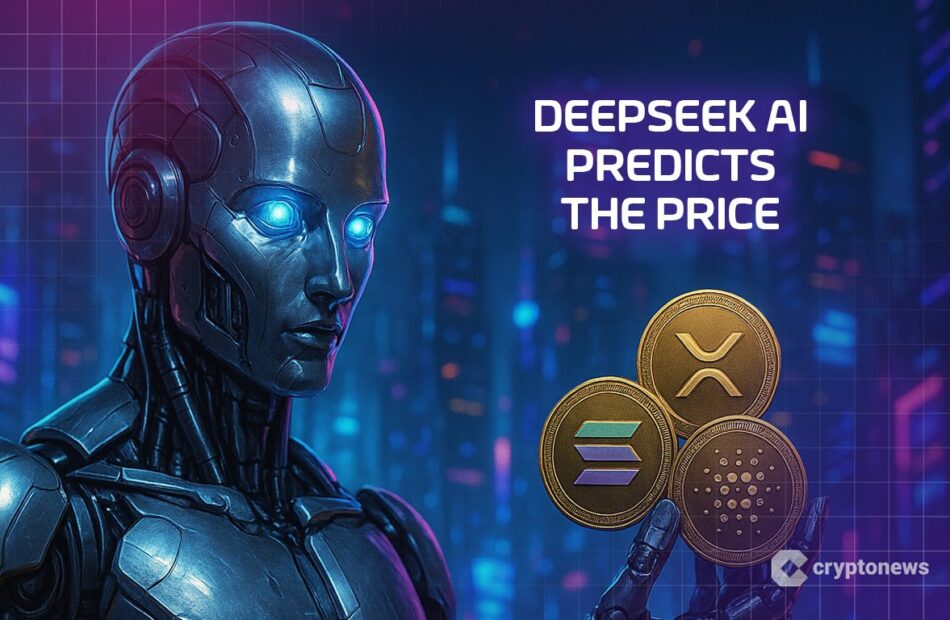
DeepSeek AI Predicts Bold Moves for XRP, SOL, and ADA
**Disclaimer**: Crypto is a high-risk investment. This article is for informational purposes only and is not financial advice. Always do your own research before investing.
—
**AI Model DeepSeek Drops Bold Price Predictions for XRP, Solana, and Cardano as 2025 Wraps Up**
As 2025 winds down, Chinese AI model DeepSeek—often seen as a serious competitor to ChatGPT—has released new price forecasts for three major cryptocurrencies: XRP (Ripple), Solana (SOL), and Cardano (ADA). These predictions highlight the high-volatility period expected in the final weeks of the year, suggesting both big gains or sharp losses could be on the table.
Here’s a simplified breakdown of what DeepSeek expects could happen next.
—
### **Ripple (XRP) Could See a Big Move – Up to $6 or Down to $1**
DeepSeek AI believes XRP has the potential to surge between $4.50 and $6.00 if a few key things go right:
– Positive resolution in Ripple’s legal battle with the SEC
– Increased use of Ripple’s On-Demand Liquidity (ODL) system for global payments
– Greater involvement in central bank digital currency (CBDC) projects
If all of this lines up, XRP could jump more than 80% from its current price.
But there’s also a risk of a steep drop. If selling pressure increases or investor mood worsens, XRP could crash from around $1.86 to as low as $1.00.
To turn fully bullish, XRP needs to break above the $2.20 mark. This would signal a clear reversal of its current downtrend and could open the door to a rally toward $3.
The recent launch of five spot XRP ETFs in the U.S. might boost institutional interest—similar to what happened with Bitcoin and Ethereum ETFs. If ETF momentum continues, 2026 could be a breakout year for Ripple.
—
### **Solana (SOL) Could Triple in Value – Targeting $275 to $350**
DeepSeek’s outlook for Solana is very optimistic. The AI model sees SOL jumping up to 300%, reaching price targets between $275 and $350 by early 2026.
Why the bullish sentiment?
– Solana is leading the way in scalable consumer applications
– Its ecosystem is growing rapidly
– Institutional investors are showing increasing interest
Even in a bearish scenario, DeepSeek only expects SOL to dip to a support range of $80 to $95—which isn’t too far from current levels.
Technical indicators still favor upward movement. Analyst James Easton notes that SOL’s price remains within a bullish wedge pattern. Interestingly, Solana’s weekly RSI (Relative Strength Index) is now even lower than it was during the last market bottom, which historically has signaled big gains ahead.
—
### **Cardano (ADA) Might Finally Break $1 Again**
DeepSeek is cautiously optimistic about Cardano. In the best-case scenario, ADA could rise to between $0.85 and $1.20 going into 2026.
This depends heavily on successful upgrades, especially the rollout of the Chang hard fork. If that goes smoothly, it would enable on-chain governance and activate community treasury features—two major steps forward for Cardano.
However, if development delays or project disappointments arise, ADA could fall back into a bearish zone around $0.25 to $0.28.
For now, ADA needs to break above $0.36 to signal a short-term bullish move. The next resistance lies at $0.38, which it has failed to breach twice recently.
If ADA can stay above its previous low near $0.27 and avoid another drop, it still has a chance to recover heading into the new year.
—
### **Maxi Doge: The Underdog Meme Coin Gaining Quiet Momentum**
While DeepSeek focuses on big-name cryptos like XRP, SOL, and ADA, some investors are eyeing smaller, high-risk plays—especially meme coins like Maxi Doge.
Maxi Doge is emerging as a high-beta memecoin built for extreme volatility. These types of coins often thrive when bigger assets are moving sideways or struggling with mixed investor sentiment.
So far, Maxi Doge has raised over $4.28 million—a strong sign in today’s cautious market environment. Plus, it offers staking rewards with an eye-popping 71% APY, giving holders a reason to stay invested long-term instead of chasing quick profits.
While AI models debate XRP’s next move or Solana’s breakout potential, Maxi Doge is quietly doing what successful meme coins often do: building community, attracting capital, and preparing for potential explosive growth if 2026 delivers the volatility many expect.
Tokens with strong communities, simple narratives, and aggressive tokenomics often outperform during high-volatility periods—and Maxi Doge is shaping up to be one of those standout plays.
Stay connected through Maxi Doge’s official X and Telegram pages for more updates.

HashKey Capital Launches $500M Blockchain Fund IV
HashKey Capital, a major player in the global crypto and blockchain investment space, has just announced the first closing of its newest fund—HashKey Fintech Multi-Strategy Fund IV. This new fund has already secured $250 million in commitments from investors around the world, surpassing early expectations. The final goal is to raise $500 million in total assets under management (AUM).
The fund has attracted a wide range of backers, including big institutions, wealthy families, and private investors. This strong interest highlights continued confidence in blockchain technology, even as global markets shift. For example, HashKey’s first fund delivered a return of over 10 times the original investment, proving their ability to spot and support high-growth opportunities in the crypto space.
Fund IV will take a multi-strategy investment approach. That means it will invest in a mix of public and private markets. The fund’s main focus is on projects that are building the backbone of the digital asset world—like infrastructure—and tools that can be used by millions of people. It also looks for promising ideas that can grow quickly and have real-world impact. By mixing liquid investments with long-term private deals, HashKey aims to take advantage of market gaps and inefficiencies.
HashKey Capital has been a trusted name in blockchain investing since 2018. With over $1 billion already under management and more than 400 projects backed globally, they’ve built a strong reputation. Notably, HashKey was one of the earliest institutional investors in Ethereum and helped bring regulated crypto investment products to Hong Kong.
Operating out of Singapore, with offices in Hong Kong and Japan, HashKey is one of the few firms licensed to offer full-scale financial services in crypto. They’ve launched Hong Kong’s first spot Bitcoin and Ether ETFs and also organize major events like the Hong Kong Web3 Festival. Their goal is to connect blockchain communities across Asia and the rest of the world.
According to HashKey Capital CEO Deng Chao, “With $250 million already secured, we’re ready to support blockchain innovations in fast-growing markets. These are the places where real-world use of crypto is being tested every day.”
Dr. Xiao Feng, Founder of HashKey Group, added, “As we move toward 2026, we’re seeing AI, blockchain, and traditional finance come together. This creates massive new opportunities—and Fund IV puts us right at the center of that change.”
The purpose of Fund IV is to give investors strong exposure to all areas of blockchain—from core infrastructure and tools to real-life applications. It’s designed to spot what’s next in crypto and help those ideas scale up globally.
About HashKey Capital:
HashKey Capital is a leading global investment firm focused on blockchain and digital assets. It supports founders, developers, and institutional investors by providing capital and strategic guidance. The firm manages over $1 billion in client assets and has invested in more than 400 cutting-edge projects across areas like infrastructure, AI, financial services, data tools, and consumer tech.
HashKey also runs liquid digital asset funds and manages products like the Bosera HashKey Bitcoin (3008.HK) and Ether (3009.HK) ETFs listed on the Hong Kong Stock Exchange (HKEX). In September 2025, it launched Fund IV with a target size of $500 million—bridging traditional finance with blockchain innovation.
With deep industry knowledge and a global network, HashKey Capital continues to connect investors, founders, developers, and regulators to shape the future of digital finance.

HashKey Capital Raises $250M for New Crypto Fund
**HashKey Capital Raises $250 Million in First Close of New Crypto Fund**
Singapore, December 24 – HashKey Capital, a major global investor in cryptocurrency and blockchain technology, has successfully completed the first round of fundraising for its latest investment fund, called HashKey Fintech Multi-Strategy Fund IV (or simply “Fund IV”). This initial round brought in an impressive $250 million, beating expectations and drawing strong interest from institutional investors around the world. The fund is aiming to raise a total of $500 million.
**Who’s Investing in Fund IV?**
The new fund has attracted a wide mix of backers. These include large financial institutions, wealthy individuals, and family offices. Fund IV is managed by HashKey Capital Investment, which is part of the larger HashKey Group. Many investors are drawn to HashKey because of its strong past performance—especially its first fund, which achieved a return of more than 10 times the original investment.
**What Will Fund IV Focus On?**
Fund IV takes a multi-strategy approach. This means it will invest in a variety of areas within the digital asset space. The goal is to back technologies and platforms that can grow at scale and drive mass adoption of blockchain. The fund will invest in both public and private markets, using different strategies to find value in the crypto ecosystem. This includes:
– Blockchain infrastructure
– Scalable tools and platforms
– Real-world use cases for digital assets
– Public market investments with liquidity opportunities
– Selective private investments for high-growth potential
By mixing these strategies, HashKey aims to take advantage of gaps in the current market while supporting long-term innovation.
**Proven Track Record in Crypto Investment**
HashKey Capital has been in the game since 2018 and has become a key player in the blockchain world. The company manages over $1 billion in assets and has invested in more than 400 blockchain-related projects globally.
One of HashKey’s biggest claims to fame is being an early investor in Ethereum, one of the most well-known blockchain platforms. Headquartered in Singapore, with offices in Hong Kong and Japan, HashKey is also one of the few crypto-focused firms to hold regulatory licenses for securities trading, advisory, and asset management in Hong Kong.
The firm helped launch Hong Kong’s first spot Bitcoin and Ether ETFs and plays a big role in bridging crypto communities from East to West. It also organizes the annual Hong Kong Web3 Festival.
**What HashKey Leaders Are Saying**
“With $250 million in fresh capital, we’re ready to support fast-growing blockchain projects, especially in emerging markets where real-world applications are taking off,” said Deng Chao, CEO of HashKey Capital.
Dr. Xiao Feng, Founder of HashKey Group, added: “As we head into 2026, the merging of artificial intelligence, blockchain, and traditional finance is unlocking new opportunities. Fund IV positions us at the center of that change, backing projects that are both smart and practical.”
**Why This Matters**
Fund IV gives investors a chance to gain exposure to the full range of blockchain technology—from infrastructure to applications—with an institutional-grade investment strategy. The fund focuses on tools, platforms, and use cases that can drive mainstream adoption of crypto.
**About HashKey Capital**
HashKey Capital is one of the world’s top crypto investment firms. It helps institutions, developers, and entrepreneurs grow within the blockchain industry. The firm has managed over $1 billion in assets and supports more than 400 projects across areas like infrastructure, AI, data services, and consumer tech.
In addition to venture investments, HashKey also offers several digital asset products. These include actively managed crypto funds and ETFs such as the Bosera HashKey Bitcoin ETF (3008.HK) and Ether ETF (3009.HK), both listed on the Hong Kong Stock Exchange.
HashKey launched its Fintech Multi-Strategy Fund IV in September 2025 to help bring traditional financial capital into the digital asset world. With its deep knowledge and broad network across regulators, investors, and developers, HashKey continues to lead the way in connecting the global crypto ecosystem.
For more information, visit their official website: https://hashkey.capital
Follow them on X (formerly Twitter): https://x.com/HashKey_Capital