

Grayscale’s New Trusts Spark Altcoin Surge
Grayscale’s New Crypto Trusts Signal Growing Interest in Altcoins
Grayscale has quietly registered new trusts in Delaware for Binance Coin (BNB) and HYPE, sparking fresh excitement in the crypto world. While this doesn’t confirm that exchange-traded funds (ETFs) are coming for these altcoins, it’s a clear signal that Grayscale is laying the groundwork for future products beyond Bitcoin and Ethereum.
This kind of move usually happens before a bigger launch or investment push, so traders are paying attention. The crypto market tends to react quickly when big players like Grayscale show interest in something new. It often boosts confidence and gets both institutional and retail investors moving capital into newer projects.
One of those projects gaining serious momentum right now is DeepSnitch AI — a rising star in the crypto space with a unique focus on risk detection and utility for retail traders. With over $1.1 million raised during its presale and a 121% token price increase, DeepSnitch AI is starting to look like the next big thing. Some investors are even betting on 100x returns.
Grayscale’s Trust Move Boosts Optimism Across Altcoins
Grayscale’s registration of trusts tied to BNB and HYPE doesn’t guarantee ETFs just yet, but it does show strategic planning. These Delaware trusts are often an early step before a full product launch, which could include ETFs in the future.
What makes this interesting is that most U.S.-based crypto ETFs still revolve around Bitcoin or Ethereum. Adding BNB and HYPE suggests that institutional investors may be ready to explore other major cryptocurrencies — especially those with active ecosystems and growing user bases.
This move also lines up with Grayscale’s positive outlook for 2026. They expect better regulations and more capital flowing into crypto, which could benefit both large-cap coins like BNB and emerging projects like DeepSnitch AI.
DeepSnitch AI: A Top Crypto to Watch Right Now
DeepSnitch AI is getting attention for doing something different — it focuses on helping retail traders manage risk more easily using AI tools. Even though it’s still in development, there are already three live tools available, a working dashboard, and seven detailed updates showing progress.
The platform uses AI “snitches” to scan tokens and give easy-to-understand ratings like CLEAN, CAUTION, or SKETCHY. Tools like SnitchFeed and SnitchGPT help explain why a token might be risky, turning complex research into a simple checklist.
It also offers dynamic staking with no cap, meaning the more people stake, the higher the potential returns — especially appealing after recent rate cuts across markets. Two independent audits have also verified its security, building more trust in the project.
With a major announcement expected soon, many believe DeepSnitch AI is one of the best cryptos to buy now. Analysts think it could offer 100x or even 500x gains if user adoption takes off as expected.
Binance Coin (BNB): Stable Growth With Institutional Potential
BNB continues to be one of the most used cryptocurrencies due to its role in powering Binance’s exchange and ecosystem. Grayscale’s move to register a trust for BNB suggests that institutions may be preparing to include BNB in investment portfolios.
Even though it’s not as volatile or early-stage as some new projects, BNB provides solid growth potential and deep liquidity. That makes it a good choice for investors looking for stability with upside. Analysts predict BNB could return to its previous high of $1,300 soon.
HYPE: A High-Risk, High-Reward Play
HYPE is connected to Hyperliquid, a popular decentralized platform for perpetual futures trading. It saw massive trading volume throughout 2025, although competition has increased recently.
Grayscale’s trust registration hints at growing institutional interest in decentralized trading solutions. While HYPE is more volatile than top coins like BNB, it offers strong potential for short-term gains. Analysts believe HYPE could double from current levels and hit $50 again by early 2026.
Why This Matters for Altcoin Investors
Grayscale’s actions show that institutional interest in crypto is expanding beyond Bitcoin and Ethereum. This shift creates opportunities for projects that are already delivering value and making real progress.
DeepSnitch AI fits that mold perfectly. It offers useful tools for regular traders, has shown consistent development, and is backed by growing presale support. With buzz building and an announcement on the horizon, DeepSnitch AI could be the next breakout coin — making it one of the top cryptos to watch right now.
Visit DeepSnitch AI’s official presale page to get in early before the major news drops. Stay updated by following their X (Twitter) and Telegram channels.
FAQs
Can DeepSnitch AI be useful in both bull and bear markets?
Yes. The platform helps identify risks and unsafe tokens regardless of market direction, making it valuable whether prices are going up or down.
Who should use DeepSnitch AI?
It’s designed for everyday traders who want simple tools to assess risks before investing. It’s also deep enough for experienced users who want more context without complex analysis.
How is DeepSnitch AI different from Telegram trading bots?
Most bots focus on fast trades. DeepSnitch AI is all about research and risk awareness before you even buy — giving you clearer information so you don’t trade blindly.

Vitalik Buterin Urges Crypto to Reject ‘Corposlop’
Ethereum co-founder Vitalik Buterin is urging the crypto world to shift its focus back to its roots: giving people more control over their digital lives. He believes developers should stop chasing quick profits and instead build tools that protect privacy, support responsible finance, and promote true digital independence.
In a conversation on Farcaster, Buterin introduced the idea of “corposlop” — a mix of corporate greed, slick design, and unethical practices that prioritize profits over people. He says this kind of behavior is taking over the crypto space and damaging its original purpose.
Buterin praised Bitcoin supporters for recognizing the dangers of corpo-style platforms early on. He explained how they avoided things like ICOs and speculative tokens to stay true to the core values of digital freedom and sovereignty. According to him, the real threat today isn’t just government control, but also corporate platforms that manipulate users for clicks, data, and money.
He called on crypto developers to build privacy-focused apps that don’t leak user data, financial tools that help users grow wealth without risky leverage or gambling, and AI systems that work with humans instead of replacing them. The goal is to create a “sovereign web” — a version of the internet where individuals are in control, not big corporations.
Buterin also criticized how many projects today are just copy-pasting popular ideas like prediction markets or launchpads to make a quick buck. He believes this trend is harming innovation in the crypto space and pushing it toward becoming just another part of the traditional financial system.
When it comes to AI, Buterin says it should be open-source, privacy-friendly, and used to enhance human capabilities — not turn people into passive users who rely on machines for everything. He also wants DAOs (decentralized autonomous organizations) to support unique missions and resist becoming tools for powerful interests. To achieve this, he suggests using voting systems that protect privacy and don’t rely solely on token ownership.
Buterin explained that “corposlop” is more than just corporate influence. It’s about platforms that look polished and respectable but actually make users dependent while maximizing profit. He pointed to social media as a key example, where algorithms are designed to keep people hooked instead of providing real value.
He also called out companies like Apple for creating closed ecosystems that limit user freedom. While he acknowledged Apple’s focus on privacy and long-term thinking, he urged them to stop monopolistic practices and support open-source development.
To push back against corposlop, Buterin encouraged developers and investors to build better social platforms where users control their own feeds and data. These platforms should reward meaningful content and long-term thinking, not just viral trends or quick dopamine hits.
His message was clear: take back control of the internet. “Be sovereign. Reject corposlop and believe in somETHing,” he said — a play on Ethereum’s ticker symbol ETH.
This call to action comes after Ethereum recently made major progress on technical challenges like the blockchain trilemma. With innovations like zero-knowledge EVMs (zkEVMs) and PeerDAS now live, Ethereum has seen a 110% spike in new wallet addresses since its last major upgrade in December.
Buterin also continues to speak out on legal issues in the crypto world. He recently supported Roman Storm, a developer of the privacy protocol Tornado Cash who is facing prison time. The case has raised concerns about whether building privacy tools could be treated as a crime — something Buterin strongly opposes as it threatens the core values of crypto: privacy, freedom, and decentralization.
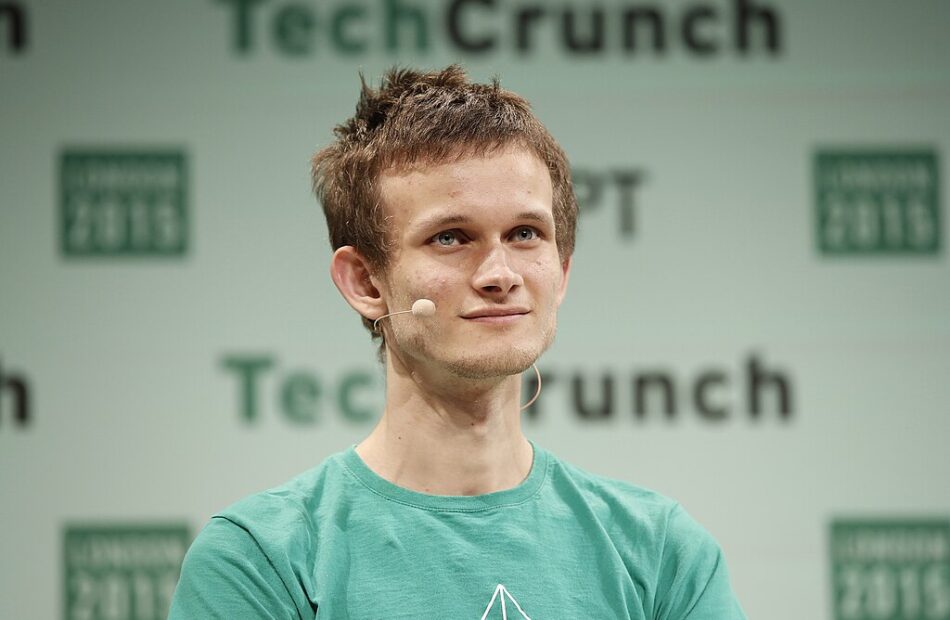
Vitalik Buterin Urges a More Ethical, User-Controlled Web
Ethereum co-founder Vitalik Buterin is speaking out again about the problems with today’s internet. In a recent post on social media platform X, he urged developers to build better online tools that focus on privacy, user control, and long-term well-being. He believes the current internet is too focused on profit and not enough on people.
Buterin says the internet is dominated by what he calls “corposlop” — a mix of slick branding and aggressive business tactics designed to keep users hooked and collect as much data as possible. These tactics often include algorithms that create addiction through endless scrolling, outrage-driven content, and flashy notifications. The result, he warns, is a dull, repetitive digital world where users have less power and more distractions.
He also called out big tech companies for collecting massive amounts of personal data and creating “walled gardens” — platforms that trap users inside closed systems. These platforms charge high fees, block outside competition, and give users very little real control over their own information or experience. Buterin believes this setup gives too much power to a few big players and makes it hard for users to truly own their digital lives.
In the past, the idea of digital freedom mostly meant avoiding government censorship. But Buterin says it now also means protecting our minds from manipulative designs and business models that try to control our choices. Real digital freedom should allow people to think clearly and act independently. To get there, he says we need tools that use encryption and privacy-focused tech to shield users from attention-grabbing tricks and data harvesting.
He even gave credit to Bitcoin supporters for being early champions of this mindset. They pushed back against risky projects and financial schemes that could weaken Bitcoin’s independence.
Looking ahead, Buterin shared a vision for what he calls a “sovereign web.” This would be an internet made up of apps that protect privacy, work well without big middlemen, and support fair, long-term value creation — not just quick profits from speculation. He also wants to see open AI systems that help people make better decisions instead of turning them into passive users.
Buterin’s message is part of a growing movement in the crypto and Web3 world. More developers are now focusing on creating a fairer, more ethical internet — one where people have true control over their data, attention, and online experiences.

Vitalik Buterin: Bitcoin Maximalists Were Right
Ethereum co-founder Vitalik Buterin recently made a surprising statement: Bitcoin maximalists may have been right all along. In a series of posts on social media platform X, he admitted that early Bitcoin supporters correctly predicted one of the biggest threats to the crypto world—corporate control disguised as innovation and user empowerment.
Buterin acknowledged a growing divide between two digital landscapes: the “corposlop web,” dominated by corporations, and the “sovereign web,” where users maintain control over their data and financial freedom. He admitted that Bitcoin maximalists saw this coming years ago, warning against the rise of corporate influence in the crypto space. Their stance against ICOs and other token projects was aimed at protecting Bitcoin’s independence and avoiding unnecessary financial complexity.
However, Buterin also pointed out that Bitcoin maximalists went too far by trying to fight government control and limiting Bitcoin’s functionality. Instead of evolving, they kept Bitcoin too rigid, which hurt its potential.
He described “corporatocracy” as a dangerous mix of three things: corporate efficiency that looks good on the surface, slick branding that earns public trust, and profit-driven behavior that eventually destroys that trust. This model now dominates much of the internet. Social media companies, for example, chase attention through outrage and dopamine hits, collecting massive amounts of user data often misused or sold.
This same trend is visible across other industries. Big tech firms build closed platforms that charge high prices and block competition. Hollywood focuses on sequels to reduce financial risk. Even corporations that promoted diversity in 2020 now mock those causes in 2025 to chase social engagement.
Buterin echoed thoughts from Zac from Aztec, who argued that fighting back against corporate domination doesn’t contradict libertarian ideals. True digital sovereignty isn’t just about limiting government power—it’s about protecting personal privacy through cryptography and resisting corporate manipulation.
To move forward, Buterin encourages the development of “sovereign tools.” These are privacy-focused apps that work locally without needing centralized servers or third parties. Social media platforms should be run by users themselves with long-term goals in mind—not short-term clicks or profits.
In finance, tools should help users become more responsible with their money instead of relying on risky or manipulative systems. AI should be used to boost productivity through human-bot collaboration. Apps need strong vision and cultural values, not just flashy features.
Decentralized Autonomous Organizations (DAOs) can support mission-driven communities. Voting systems must protect user privacy to avoid being manipulated, and token-based governance may need a complete overhaul.
Buterin also highlighted Apple as a rare example of a company with a non-corporate mindset. Despite its market dominance, Apple focuses on long-term vision and values user privacy. He hopes Apple adopts more open-source practices in the future, emphasizing that company goals should go beyond what the market dictates.
In summary, Buterin is calling for a shift back to crypto’s original vision—one where users are truly in control, privacy is protected, and long-term value matters more than short-term profits.

Top 21 Fintech & Crypto Trends to Watch in 2026
As we look ahead to 2026, fintech and crypto are entering a new era. The trends shaping the future are less about individual tools and more about big changes in how money, technology, and people work together. Here’s a simplified and straight-to-the-point breakdown of what to expect in 2026:
**1. Tech That Thinks Ahead**
By 2026, systems won’t just respond to user actions—they’ll predict them. This means smarter fraud detection, faster customer service, and better financial planning tools. AI becomes proactive, not just reactive.
**2. AI Becomes the Brain Behind Everything**
Artificial intelligence will move behind the scenes. Instead of being just a tool, it will quietly power decisions across banking, investing, and everyday money management. Think AI helping you make smarter choices without you even realizing it.
**3. Digital Tools Fade Into the Background**
In 2026, you won’t think about logging in or verifying your identity—everything will just work. Payments, compliance checks, and security will be built into your daily digital life, happening automatically in the background.
**4. Trust Will Be Everything**
Speed and innovation won’t be enough anymore. The real edge will come from trust—strong security, responsible governance, and resilience. The companies that invest in these areas will win customers’ loyalty.
**5. Fewer But Bigger Platforms**
We’ll see fewer fintech apps, but the ones that remain will be more powerful and interconnected. After years of experimentation, it’s time for consolidation—meaning stronger, unified platforms that do more.
**6. Real-Time Payments Take Over**
Instant payments are becoming the global standard. In 2026, expect faster transactions everywhere—from paying friends to settling invoices—thanks to real-time payment rails becoming the norm.
**7. Crypto Finds Its Place**
Cryptocurrency is no longer the wild west. Regulations are catching up worldwide, with stablecoins and tokenized assets becoming mainstream. This means safer, more trusted digital assets for both businesses and consumers.
**8. Central Bank Digital Currencies (CBDCs) Grow Fast**
More than 130 countries are exploring their own digital currencies. These CBDCs could change how governments issue money, making payments more efficient and secure.
**9. Sustainability Is a Big Deal in Fintech**
Green fintech is on the rise. Companies and investors are pouring money into tools that help track carbon emissions, invest responsibly, and meet climate regulations.
**10. Quantum-Proof Security Becomes Critical**
With the rise of quantum computing, data security is getting an upgrade. Financial institutions are moving toward quantum-resistant cryptography to protect against future cyber threats.
**11. Open Banking Expands Into Open Finance**
Open banking is evolving. By 2026, consumers will have even more control over their financial data across banks, insurers, and investment platforms—leading to smarter tools and better deals.
**12. Embedded Finance Is Everywhere**
Non-financial companies—from e-commerce sites to software platforms—will offer banking services directly within their products. This means users can borrow, invest, or pay without ever leaving the app they’re in.
**13. AI Personalization Becomes Standard in Banking**
Banks will use AI to offer hyper-personalized services based on your habits and goals—automatically managing your money, spotting savings opportunities, or suggesting investments tailored to you.
**14. Autonomous Finance Gets Real**
AI won’t just suggest actions—it will take them for you. In 2026, your financial assistant could switch your insurance provider or rebalance your portfolio without needing your input—based on real-time insights and your preferences.
**15. Compliance Becomes a Priority**
New laws around AI and financial operations mean that staying compliant is more important than ever. Companies that delay modernizing their systems will face heavy fines or lose customer trust.
**16. Tokenization Becomes the New Standard**
Everything from real estate to stocks could be digitized using blockchain technology. Tokenized real-world assets (RWAs) are set to become a core part of global finance—making trading faster and more transparent.
**17. Embedded Ecosystems Take Over**
Embedded finance will evolve into full financial ecosystems inside apps you already use—like accounting software offering loans or e-commerce platforms providing insurance—all powered by multiple integrated fintech services.
**18. Regulations Vary Globally**
While some regions like Europe push clear fintech rules, others remain fragmented. Global fintechs will need flexible models to comply with different regulations across countries.
**19. Crypto Grows Up**
Crypto is maturing fast—with predictions showing stablecoin supply could hit $1 trillion by 2026 and decentralized finance (DeFi) reaching $300 billion in total value locked (TVL). Meanwhile, regulated crypto investment products are expected to grow massively.
**20. Agentic AI Changes Everything**
Agentic AI—AI that acts independently on your behalf—is reshaping finance. From personalized investing to automated transactions, these intelligent agents are transforming how people interact with money.
**21. Banks Must Reinvent Themselves**
To stay relevant in 2026, banks need to:
– Build AI-first systems
– Maintain strong data governance
– Modernize old infrastructure
– Improve interoperability
– Move to cloud-native platforms
This transformation is essential for banks to compete with agile fintechs and meet rising customer expectations.
**Bottom Line: It’s All About Smart Finance**
2026 marks a turning point for finance: smarter systems, invisible tech, proactive AI, embedded services, tokenized assets, and trusted security frameworks all working together in real-time. The organizations that combine innovation with responsibility will lead the way into the next generation of digital finance.