
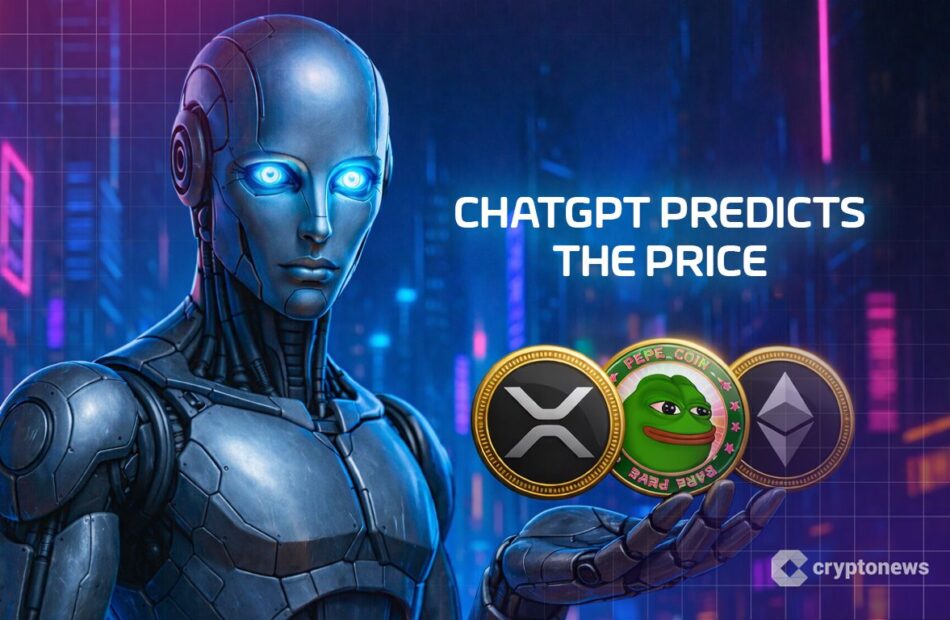
ChatGPT Predicts Big Gains for XRP, PEPE, and Ethereum
**Disclaimer:** Crypto is a high-risk investment. This article is for information only and does not count as financial advice. You could lose your entire investment.
—
**ChatGPT Predicts Big Gains for XRP, PEPE, and Ethereum – But Warns of FOMO Risks**
OpenAI’s popular AI tool, ChatGPT, is forecasting massive price increases for top cryptocurrencies like XRP, PEPE, and Ethereum. It also reminds investors to be cautious, especially with fear of missing out (FOMO) becoming common during market rallies.
According to ChatGPT, if the crypto market enters another strong bull run — possibly helped by clearer regulations in the U.S. — some coins could hit new all-time highs by 2026.
Here’s a look at what ChatGPT predicts for these top tokens:
—
**XRP ($XRP): Could Reach $12 by 2027**
XRP has had a strong start to the year, rising 19% in the first week and 9% in the last two weeks. It’s currently trading around $2.06.
ChatGPT suggests that if bullish momentum continues, XRP could climb to $12 by 2027. That’s a 483% increase from current levels.
XRP had a big moment last year when it reached $3.65 — its first new all-time high in seven years — after Ripple won a legal battle against the SEC. That ruling reduced uncertainty around XRP and gave investors more confidence.
The token’s Relative Strength Index (RSI) is at 58, meaning there’s still room for more upward movement. Plus, with new spot XRP ETFs now live in the U.S., institutional money is starting to flow into the asset, much like what happened with Bitcoin and Ethereum ETFs.
—
**Pepe ($PEPE): Could Explode Over 1,900%**
PEPE is one of the top meme coins that doesn’t use a dog mascot. It launched in April 2023 and now has a market cap of around $2.5 billion.
Its character comes from Matt Furie’s “Boy’s Club” comics, and its popularity on social media has helped it stand out in a crowded meme coin market.
Even though it’s down about 79% from its peak price of $0.00002803 in December 2024, ChatGPT thinks PEPE could skyrocket up to $0.00012 — a gain of nearly 1,934%. Speculation around Elon Musk’s posts and the coin’s strong community support continue to drive interest.
—
**Ethereum ($ETH): Eyeing $15,000 If Bullish Trend Holds**
Ethereum is still the leader when it comes to smart contracts, DeFi apps, and Web3 development. It has a huge market cap of nearly $400 billion and over $75 billion locked in DeFi protocols.
Right now, ETH is trading around $3,308. The next major resistance level is expected near $5,000. If Ethereum can break through that barrier, ChatGPT believes it could hit new highs between $7,000 and $15,000 during the next bull run.
Ethereum’s long-term strength comes from its security, early dominance in stablecoins and tokenized assets, and its potential for even more institutional adoption if U.S. lawmakers provide clearer crypto rules.
—
**Maxi Doge (MAXI): High-Risk Meme Coin With Big Upside**
Outside of ChatGPT’s predictions, there’s growing excitement around new meme coins — especially those launching through presales.
One of the most talked-about right now is Maxi Doge ($MAXI), which has already raised around $4.5 million during its presale phase.
Maxi Doge takes inspiration from Dogecoin but adds a wild twist with an over-the-top muscle-bound character. It’s got a loyal following of meme traders who love its high-volatility style.
Built on Ethereum’s eco-friendly proof-of-stake network, MAXI offers staking rewards up to 69% APY during its early sale stages. As more people join the staking pool, the reward rate will go down. Right now, MAXI is priced at $0.0002785 and will increase automatically in future sale rounds. You can buy it using MetaMask or Best Wallet.
The project positions itself as the next big meme coin and aims to challenge Dogecoin for dominance in the space.
For updates, follow Maxi Doge on X and Telegram.
—
**Key Takeaways:**
– XRP could rise to $12 by 2027 if momentum holds.
– PEPE might surge nearly 2,000% during the next bull cycle.
– Ethereum could hit between $7,000 and $15,000 if it breaks above $5K.
– MAXI offers high potential returns but comes with high risk typical of meme coins.
As always, do your own research before investing in crypto.

Galaxy Launches Tokenized CLO on Avalanche Blockchain
**Galaxy Launches Tokenized CLO on Avalanche Blockchain, Opening New Doors for Onchain Credit**
Galaxy Digital has taken a big step in bringing traditional finance closer to blockchain technology. The company just announced the successful launch of its first-ever tokenized Collateralized Loan Obligation (CLO), named Galaxy CLO 2025-1. This financial product is built on the Avalanche blockchain and represents a new way for institutions to get involved in onchain credit markets.
The CLO, which is similar to a loan bundle sold to investors, is being used to support Galaxy’s growing lending business. It received a major initial investment of about $50 million from Grove — a credit protocol within the Sky ecosystem, which was previously known as MakerDAO. Grove is backed by Grove Labs, a subsidiary of Steakhouse Financial, known for its expertise in both traditional and decentralized finance.
Chris Ferraro, Galaxy’s President and Chief Investment Officer, highlighted how this innovative structure blends Galaxy’s strengths in blockchain, asset management, and traditional debt markets. He emphasized that this new approach offers better efficiency, more transparency, and greater flexibility through blockchain execution.
The CLO funds are supporting an uncommitted credit facility for Arch Lending, a crypto lending platform supported by Galaxy Ventures. Arch provides consumer loans backed by digital assets like Bitcoin and Ethereum. So far, around $75 million in loans have been financed under this facility. As more loans are created, the CLO can expand up to a total of $200 million.
This launch fits into Galaxy’s strategy of scaling its lending operations using familiar financial tools, but with a blockchain twist. It allows for more efficient capital deployment while offering investors access to innovative credit products with real-time tracking and better security.
Sam Paderewski, Co-Founder of Grove Labs, pointed out that bringing a CLO onchain shows how traditional financial structures can still meet institutional standards when adapted for blockchain. Grove’s support in anchoring the deal highlights its commitment to making high-quality credit products available onchain.
The debt tranches of the CLO were issued and tokenized through the Avalanche network by INX. These tokens will be available for trading on INX’s Alternative Trading System (ATS), owned by Republic. This makes it easier and more affordable for qualified investors to access the product. The CLO offers a senior coupon rate of SOFR + 570 basis points and is set to mature in December 2026, with monthly payouts.
By tokenizing the CLO, Galaxy aims to make private credit more accessible through features like instant settlement, improved transparency, potential for better liquidity, and more effective use of collateral.
Galaxy’s in-house teams handled both the structuring and tokenization of the CLO. Galaxy Asset Management will oversee the product. Anchorage Digital Bank acts as bond trustee and custodian while also managing collateral and settlements using its Atlas Settlement Network. Fund administration will be handled by NAV Consulting.
To boost transparency even further, Galaxy is working with Accountable — a platform that verifies both on-chain and off-chain data in real time. Investors can use an interactive dashboard to monitor loan performance and collateral status live, giving them better insights into risk and helping avoid past issues seen in credit markets.
**About Galaxy Digital**
Galaxy Digital Inc. (Nasdaq/TSX: GLXY) is a global leader in digital assets and AI infrastructure. The company offers institutional services across trading, advisory, asset management, staking, self-custody, and tokenization. It also runs massive data center infrastructure to power AI and high-performance computing, including its 800 MW Helios campus in Texas with another 2.7 GW under development. Headquartered in New York City, Galaxy operates across North America, Europe, the Middle East, and Asia. Learn more at www.galaxy.com.

Crypto Market Rises as ETF Inflows Boost Sentiment
Cryptocurrency markets have been on the rise over the past 24 hours, driven by strong investor interest in U.S. Bitcoin Spot ETFs. This renewed momentum is also being supported by Bitcoin’s growing dominance in the crypto market, helping boost overall market sentiment.
Nearly 80 of the top 100 cryptocurrencies are showing positive gains for the year so far, with many up by more than 1%. The total crypto market value has climbed over 1% overnight, reaching $3.27 trillion.
Sentiment in the market is also improving. The CoinMarketCap Fear and Greed Index, which gauges investor mood, rose to 54. That’s up from 52 just a day ago and 43 last week—indicating a shift from cautious optimism toward a more neutral stance.
On the regulatory side, the U.S. Senate Banking Committee has postponed its discussion on a key bill related to crypto market structure. This delay follows Coinbase’s decision to pull its support from the latest version of the legislation.
Meanwhile, data from Coinglass shows a drop in crypto liquidations—forced sell-offs that happen when traders can’t meet margin requirements. In the past 24 hours, $449 million was liquidated, down from $686 million the previous day. This drop hints at a more stable trading environment.
Bitcoin Spot ETFs in the U.S. saw significant inflows on Wednesday, totaling $840 million—up from $754 million on Tuesday and $117 million on Monday. The iShares Bitcoin Trust (IBIT) led with $648 million in inflows, followed by Fidelity’s Wise Origin Bitcoin Fund (FBTC), which saw $125 million.
Ethereum Spot ETFs also attracted attention, with $175 million in net inflows on Wednesday versus $130 million the day before. The iShares Ethereum Trust (ETHA) led this group with $82 million in inflows.
Despite the rising total market value, daily trading volume dropped by 5%, now standing at $148 billion. Around 18 of the top 100 cryptocurrencies posted gains of over 1% in the last 24 hours, while about 50 saw losses greater than 1%.
Bitcoin rose 1.9% over the past day to trade at $96,614.06. While still about 23% below its all-time high of $126,198.07 (set on October 7, 2025), Bitcoin is up 7.5% over the last week. In the past 24 hours, it traded between $94,647.19 and $97,860.60.
Ethereum also gained 1.9%, now priced at $3,352.37. It’s currently 32% below its peak of $4,953.73 reached on August 25, 2025. Over the last day, Ethereum traded between $3,278.35 and $3,397.90.
In terms of global asset rankings by market cap, Bitcoin holds the 8th spot while Ethereum ranks 35th.
Bitcoin’s market dominance has grown to 59.1%, up from 58.6% a day ago and 58.3% a week ago. Ethereum’s share is also increasing—now at 12.4%, compared to 12.3% yesterday and 12.2% last week.
Among other major coins:
– XRP (Ranked #4) dipped slightly by 0.18% to $2.11, still about 45% below its record high of $3.84 from January 2018.
– BNB (Ranked #5) went up by 0.87%, reaching $938.62—32% below its high of $1,370.55 set in October 2025.
– Solana (Ranked #6) rose by 0.62% to $144.90 but remains about 51% under its January peak of $294.33.
– TRON (Ranked #8) gained 1.3%, now trading at $0.3053—still down 31% from its December high of $0.4407.
– Dogecoin (Ranked #9) dropped 1.6% to $0.1439, sitting far below its all-time high of $0.7376 from May 2021.
– Cardano (Ranked #10) lost 2.5%, now trading at $0.4052—87% below its peak of $3.10 reached in September 2021.
Among altcoins with notable moves:
– Decred (Ranked #56), a privacy-focused cryptocurrency using both Proof of Work and Proof of Stake mechanisms, jumped by 30.6%, leading overnight gains.
– Internet Computer (ICP), associated with AI and big data applications, climbed by 11.1%.
On the downside:
– Story (IP), a Layer-1 blockchain designed for managing intellectual property online, fell sharply by 29.2%.
– Lighter (LIT), ranked #99, dropped by 11.3%.
Overall, crypto investors are showing renewed interest as ETF inflows climb and volatility cools down—setting a positive tone for near-term performance across the digital asset space.
Markets Edge Higher Amid Inflation Optimism and Tensions
**Stock Market Update: Futures Rise After Choppy Trading Day**
U.S. stock futures are pointing slightly higher this morning after a rough day on Wall Street. On Wednesday, major indexes mostly finished in the red, despite a positive report on inflation. The Producer Price Index (PPI) came in lower than expected, suggesting inflation is easing. However, global tensions and domestic political issues are making investors nervous.
One concern is the growing tension between the U.S. and Iran. While President Trump later downplayed the possibility of military action, earlier reports stirred market uncertainty. Domestically, debates over immigration policy and enforcement are also creating unease among investors.
By the end of Wednesday’s session:
– **Nasdaq** dropped 1% to close at **23,471**
– **Dow Jones Industrial Average** slipped 0.13% to **49,128**
– **S&P 500** fell 0.53% to **6,926**
– **Russell 2000**, a small-cap index, bucked the trend, rising 0.55% to **2,647**
The Russell 2000 has been leading so far this year as investors start shifting attention to smaller U.S. companies.
—
**Treasury Yields Drop as Investors Seek Safety**
Bond yields declined across most of the yield curve on Wednesday as investors moved their money into safer assets. The only exception was short-term Treasury bills.
This move reflects a mix of caution and optimism: while recent retail sales were strong and inflation is cooling, the economic outlook remains uncertain. Many expect the Federal Reserve to cut interest rates again, though likely not until summer.
– **30-year Treasury bond** yield ended at **4.79%**
– **10-year Treasury note** yield was at **4.14%**
—
**Oil Prices Reverse Gains; Natural Gas Takes a Hit**
Oil prices dropped after initially rising during early trading. This shift came after President Trump softened his tone on potential U.S. military action against Iran.
– **Brent Crude** fell 1.41% to **$64.55**
– **West Texas Intermediate (WTI)** dropped 1.55% to **$60.20**
Natural gas prices plunged nearly 10%, closing at **$3.09**. Analysts say this is due to lower demand for LNG exports, especially after an outage at the Corpus Christi terminal. Also, storage levels remain high and weather forecasts are milder than expected, reducing heating demand.
—
**Gold and Silver Shine Amid Uncertainty**
Gold prices rose again as investors continue looking for safe-haven assets during volatile times. Gold ended the day up 0.74%, closing at **$4,620**.
Silver had a standout day, jumping 6.6% to **$92.80**. Several factors are boosting silver prices:
– Strong industrial demand from industries like solar energy, electric vehicles, and AI
– Limited physical supply
– Growing investor interest
– Government policies that classify silver as a critical mineral
Silver is now approaching the key $100 mark.
—
**Crypto Market Surges as Bitcoin Breaks Resistance**
Cryptocurrencies saw a strong rally on Wednesday. Bitcoin crossed the **$97,000** level thanks to renewed interest from institutional investors and large inflows into spot Bitcoin ETFs.
This momentum helped boost other major cryptocurrencies like Ethereum and XRP.
As of 8 a.m. EST:
– **Bitcoin** is trading at **$96,866**
– **Ethereum** is priced at **$3,362**
Institutional buying and corporate investments in crypto assets are adding fuel to the market’s upward trend.
—
**Analyst Ratings: Top Stock Upgrades and Downgrades (January 15, 2026)**
Here are some key stock rating changes from Wall Street analysts:
**Upgrades:**
– *Applied Materials (AMAT)*: Upgraded to Overweight by Barclays with a new target of $360 (from $250)
– *Dell Technologies (DELL)*: Upgraded to Overweight at Barclays, target set at $148
– *Digital Realty Trust (DLR)*: Upgraded to Buy by HSBC with a target price of $193 (up from $187)
– *DraftKings (DKNG)*: Upgraded to Overweight at Wells Fargo with a target of $48
– *Lam Research (LRCX)*: Upgraded to Overweight by Wells Fargo with a $250 target
**Downgrades:**
– *Albertsons (ACI)*: Downgraded to Underweight by Morgan Stanley; target cut to $14 (from $20)
– *Flutter Entertainment (FLUT)*: Downgraded to Equal Weight by Wells Fargo; new target is $228 (was $248)
– *GE Healthcare Technologies (GEHC)*: Downgraded to Sell by UBS despite a small price target increase to $77 (from $73)
– *Nutanix (NTNX)*: Downgraded to Equal Weight by Barclays; target lowered to $53 (from $64)
– *Rocket Lab (RKLB)*: Downgraded to Sector Weight by KeyBanc with no specific price target
These analyst updates offer insights into which stocks may have upside potential or face headwinds in the near term. However, it’s important for investors to do their own research before making decisions based solely on analyst ratings.

Aether Holdings Acquires Coinstack to Boost Crypto Reach
**Aether Holdings Acquires Coinstack to Expand Reach in Institutional Crypto Market**
Aether Holdings, Inc. (NASDAQ: ATHR), through its media arm Alpha Edge Media, has just made a major move in the digital asset world by acquiring Coinstack, one of the top institutional crypto newsletters globally. This acquisition is a key step in Aether’s goal to build a stronger presence in the digital finance and blockchain space.
Coinstack, launched in late 2020, has grown into a trusted source for over 340,000 readers, including hedge funds, venture capital firms, family offices, and other professional crypto investors. The platform delivers weekly updates and deep insights on Bitcoin, Ethereum, DeFi, NFTs, and broader blockchain industry trends.
By bringing Coinstack into its ecosystem, Aether now has a powerful content channel with high engagement from institutional investors. This move strengthens Aether’s ability to deliver cutting-edge data, research, and market intelligence to a sophisticated audience.
According to Aether’s CEO Nicolas Lin, Coinstack is a perfect fit. “It’s more than just a newsletter. It’s a trusted voice among serious investors in the digital asset space. With this acquisition, we’re not only expanding our audience reach—we’re also enhancing the quality and depth of content we can offer,” said Lin.
Coinstack will continue to operate under its existing brand. However, it will now benefit from Aether’s advanced tech tools and analytics systems. Over time, Aether plans to integrate Coinstack’s insights across its other platforms to deliver more value to investors.
This acquisition is part of Aether’s larger strategy: to buy or build fintech and media assets that boost engagement, increase data value, and improve returns for shareholders. It’s about creating a smarter, more connected ecosystem for financial content and digital investing tools.
**About Alpha Edge Media**
Alpha Edge Media is the content engine behind Aether Holdings. It produces expert-led newsletters and investor resources focused on public markets, digital assets, and alternative investments. Its goal is to make financial information easier to access and act on for self-directed investors. Some of its key publications include:
– Alpha Edge Digest
– IPO Stream
– The Russell Report
– AltCoin Investing
– WhaleTales
– StockCastr
– 21Bitcoin
– Coinstack
Alpha Edge combines editorial expertise with strong fintech infrastructure, allowing it to deliver timely insights in ways that are both user-friendly and actionable.
**About Aether Holdings**
Aether Holdings is a financial technology company focused on improving how investors interact with market data. It builds tools that make complex information simple and useful—helping both retail and institutional investors make smarter decisions.
Aether’s platforms turn real-time market data into clear insights, helping users manage risk and spot opportunities. With its strong focus on technology, transparency, and user experience, Aether continues to push boundaries in the fintech space.
For more details about Aether Holdings and Alpha Edge Media, visit:
https://helloaether.com
**Important Note on Future Plans**
Statements made about the future in this update are based on current expectations. These include plans to grow Coinstack’s impact, expand Aether’s media reach, and develop new data-driven products. Like all business plans, these carry risks—especially in fast-changing sectors like crypto and fintech. Investors should consider these uncertainties when evaluating future expectations.