

Copper Hits Record High, Signals Prolonged Inflation Risk
Copper prices just hit a new all-time high this week, and while most crypto traders are still watching gold and silver, copper’s rise might actually change how markets view interest rates and liquidity. As of January 14, copper reached around $6.06 per pound — the highest it’s ever been.
This surge wasn’t just a one-day spike. Futures activity shows continued movement, suggesting deeper trends at play. According to a January 15 COMEX report, trading volume dipped slightly to 74,332 contracts from 83,265, but open interest — which measures how many contracts are still active — actually went up by 3,588 to a total of 269,825. This shows traders are staying in their positions rather than reacting to short-term price moves.
Even though crypto markets don’t directly trade copper, its strong performance is feeding into a broader market mindset where everything — from metals to digital assets — is going up. Gold and silver are getting attention as traditional safe havens, but copper is different. It’s more tied to real-world demand, like construction and technology infrastructure. That means rising copper prices could be a sign that inflation isn’t going away anytime soon.
This matters for crypto because if inflation stays high, the U.S. Federal Reserve may keep interest rates elevated longer than expected. Higher rates usually reduce liquidity in financial markets, which can hurt assets like Bitcoin (BTC) and Ethereum (ETH) that tend to benefit from easier monetary policy.
Federal Reserve officials are still unsure about where inflation is heading. Minneapolis Fed President Neel Kashkari recently said inflation might be around 2.5% by the end of 2026 but admitted he wasn’t certain. That uncertainty is making it harder for markets to predict when the Fed might start cutting interest rates again.
Earlier this year, most people assumed rate cuts would come in 2026. But now, even top economists like J.P. Morgan’s Michael Feroli are saying they don’t expect any cuts this year at all.
Part of copper’s rally is also linked to growing demand from tech companies building out artificial intelligence infrastructure. The Wall Street Journal reported that Amazon signed a two-year deal with mining company Rio Tinto for copper from its Nuton/Johnson Camp project. With data centers booming and copper supplies tight, prices are being pushed even higher.
For crypto investors, the key takeaway isn’t that copper is the new hedge — it’s that rising commodity prices like copper could signal more inflation ahead. If that’s true, interest rates might stay high longer, making it tougher for riskier assets like cryptocurrencies to rally.
On the other hand, if inflation starts to cool later in 2026, the Fed could ease up on rates — which would be good news for crypto markets. But for now, everything depends on how the real economy holds up and whether supply constraints keep pushing prices higher.
Looking at COMEX trading data gives us another clue. When open interest rises while volume drops, it often means traders are holding onto their positions instead of jumping in and out. This suggests they see the current price trend as something more lasting.
Ultimately, copper’s record high is becoming a key test for what kind of economic story will dominate in 2026: one where demand and inflation stay strong — or one where things cool off enough for rate cuts and more liquidity in the system. Either way, crypto traders will be watching closely as these trends unfold across both traditional and digital markets.

Husky Inu AI (HINU) Price to Rise Again Pre-Launch
**Husky Inu AI (HINU) Pre-Launch Price Set to Increase Again**
Husky Inu AI (HINU), a new crypto project in its pre-launch stage, is getting ready for another planned price increase. The token price will go up slightly from $0.00025248 to $0.00025344. This gradual increase is part of the project’s fundraising strategy, allowing it to build momentum and grow its community ahead of its full launch.
The pre-launch phase began on April 1, 2025, and these steady price hikes help raise funds to develop the platform, roll out marketing efforts, and support the overall ecosystem. The official launch is scheduled for March 27, 2026, but the team has made it clear that this date is flexible. They’re holding regular review meetings to evaluate progress and possibly adjust the timeline. Meetings already took place on July 1 and October 1, 2025, and the next one is planned for January 1, 2026.
**Crypto Market Sees Another Dip**
The overall cryptocurrency market has taken a hit over the last 24 hours. Bitcoin (BTC) struggled to break above $97,097 and fell to a low of $95,112 before recovering slightly to around $95,688—down nearly 1% for the day. Ethereum (ETH) also dropped to a low of $3,290 before bouncing back to about $3,312, still down about 0.40%.
Other major cryptocurrencies followed the same downward trend:
– Ripple (XRP) fell 1.17% to $2.07
– Solana (SOL) dropped over 1% to $142
– Dogecoin (DOGE) lost almost 3%
– Cardano (ADA) dropped a steep 3%
– Chainlink (LINK) fell nearly 1% to $13.77
Additional tokens like Stellar (XLM), Hedera (HBAR), Litecoin (LTC), Toncoin (TON), and Polkadot (DOT) also posted losses. The global crypto market cap declined by 1%, and trading volume dropped by a significant 20.5%, now at $119 billion.
**SEC Criticized for Dropping Crypto Cases**
On the regulatory front, Democratic lawmakers are questioning why the U.S. Securities and Exchange Commission (SEC) has recently dropped several enforcement cases against big crypto companies. Since early 2025, the SEC has pulled back from nearly a dozen lawsuits, including high-profile cases involving Binance, Coinbase, and Kraken—even after courts supported some of the SEC’s claims about fraud and unregistered securities.
Critics say this sudden shift could be politically motivated. They point out that companies like Coinbase, Kraken, Ripple, Robinhood, and Crypto.com have donated large sums to Donald Trump’s presidential campaign and inauguration events.
Lawmakers are also focusing on Justin Sun, the founder of Tron. His case with the SEC has been paused, yet he continues investing heavily in crypto projects tied to Trump-backed ventures.
**Stay Updated on Husky Inu AI (HINU)**
With its pre-launch phase continuing smoothly and regular price increases in place, Husky Inu AI is positioning itself as a promising player in the evolving crypto space. Keep an eye out for updates as the next phase approaches.
**Disclaimer:** This content is for informational purposes only and should not be considered legal, financial, or investment advice.
Tech Stocks Lead as Market Ends Mixed; Commodities Drop
**U.S. Stock Market Ends Mixed as Tech Shines and Commodities Slide**
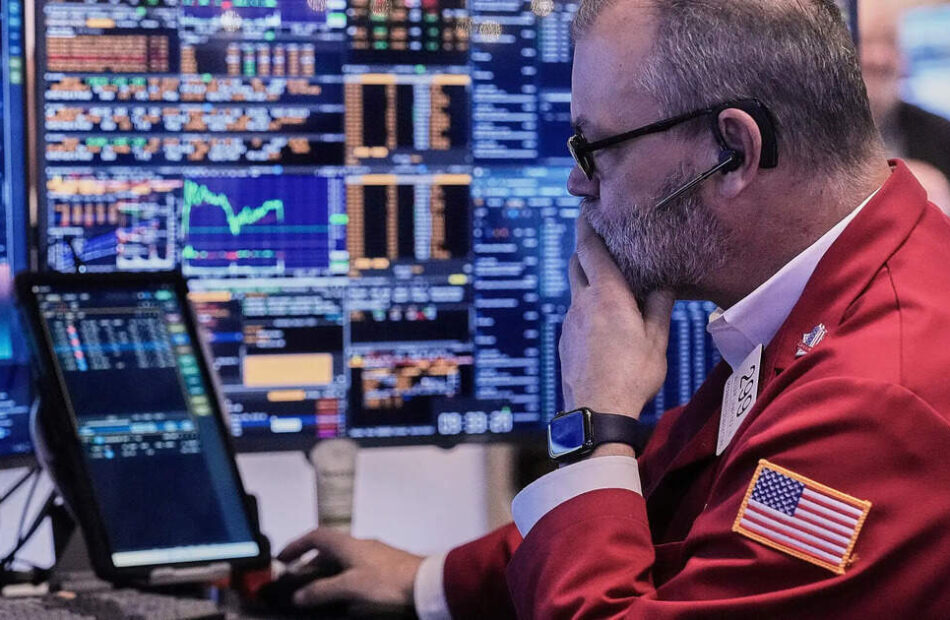
The U.S. stock market closed Friday with mixed signals. The Dow Jones Industrial Average dropped over 120 points, and the S&P 500 edged slightly lower. In contrast, the Nasdaq managed to stay in positive territory, supported by strength in tech stocks, especially semiconductors.
Despite some gains earlier in the week, Friday’s trading session revealed growing caution among investors. While tech stocks—especially chipmakers—continued to perform well, broader market participation was weak. About 1,590 stocks on the New York Stock Exchange fell, compared to just 850 that gained. This shows that most of the recent market growth is coming from a small group of large tech companies.
**Semiconductors Lead the Charge**
The biggest boost this week came from the semiconductor sector. Taiwan Semiconductor Manufacturing Company (TSMC) reported strong fourth-quarter earnings and gave an optimistic outlook for the future. This sparked big gains in chip-related stocks and ETFs.
Adding to the excitement, the U.S. and Taiwan announced a major trade and investment agreement. Taiwanese tech firms are planning to invest at least $250 billion into U.S. chip production over the next few years. This move is seen as a way to strengthen America’s tech supply chains and reduce dependence on foreign manufacturing during uncertain geopolitical times.
As a result, chip stocks like NVIDIA rose 1.5% to $189.87, and Micron Technology jumped 7.68% to $362.48—just shy of its 52-week high. Intel also edged up 0.21%, while Apple dipped slightly by 0.32%.
**Small-Cap Stocks See Big Moves**
Among individual companies, biotech firm ImmunityBio surged 22.41% to $4.83, with heavy trading volume driven by investor speculation rather than company fundamentals. Locafy, another small-cap stock, soared 81.47% to $5.68 on unusually high volume, although it remains highly volatile.
**ETFs Show Investor Sentiment**
Traders also showed strong interest in leveraged ETFs tied to tech stocks and semiconductors. The Direxion Daily Semiconductor Bull 3x Shares (SOXL) jumped 6.75% as investors bet on continued gains in chip stocks. Meanwhile, the bearish counterpart (SOXS) fell 5.76%, showing less interest in shorting the sector.
Tesla-related ETF TSLL rose 2.89% to $18.50, indicating ongoing speculative interest in electric vehicles despite broader market caution.
**Commodities Take a Hit**
Precious metals saw notable declines. Gold slipped 0.2% to $4,614.40 per ounce, while silver tumbled 3.68% to $88.94. Platinum dropped 4.18% to $2,309.10, driven by profit-taking after recent gains.
Industrial metals also weakened. Copper fell 2.85% to $5.82, reflecting investor concerns about slowing global economic growth.
In ETF trading related to metals, the ProShares UltraShort Silver (ZSL) rose 5.67%, benefiting from silver’s drop. In contrast, the iShares Silver Trust (SLV) fell 2.75%, tracking the metal’s decline.
**Bond Yields Edge Higher**
In the bond market, Treasury yields moved higher due to ongoing inflation concerns and long-term fiscal risks. The 10-year yield increased to 4.182%, while the 30-year yield climbed to 4.809%. Shorter-term yields like the 2-year stayed near 3.569%, putting pressure on rate-sensitive investments.
**Currencies and Crypto Stay Steady**
Currency markets were mostly calm. The euro traded around 1.1621 against the U.S. dollar, while the dollar rose against the Japanese yen to 157.85.
Cryptocurrencies had a quiet session as well. Bitcoin slipped 0.4% to $95,199, Ether fell 0.73% to $3,294, and Litecoin posted a small gain. The digital asset market appears to be consolidating after recent rallies.
**Market Outlook: Narrow Gains, Rising Risks**
Overall, Friday’s market action reflects a trend where investors continue to chase growth in select sectors like AI and semiconductors while pulling back from commodities and defensive assets. Experts warn that although fundamentals like earnings and revenues remain strong, high valuations leave little room for error.
With political uncertainty ahead of U.S. elections and geopolitical risks still present, many analysts believe we’ve entered a more fragile phase of this market cycle—where selectivity and timing matter more than ever for investors and traders alike.

Top Crypto for 2026: ZKP and Its Passive Income Pods
The crypto market in early 2026 is showing mixed signals. Bitcoin is holding steady around $91,000, and the total crypto market is near a $3 trillion valuation. Solana (SOL) is trading at $138 after handling an impressive $6.7 billion in daily decentralized exchange (DEX) activity. Meanwhile, Chainlink (LINK) is priced at $13.22 despite recent big-name partnerships with platforms like Coinbase. Both Solana and Chainlink are solid projects with strong networks, but their higher prices make it hard for investors to see massive returns quickly.
This has led many investors to look for newer opportunities with more growth potential. One project catching attention is Zero Knowledge Proof (ZKP), a privacy-focused crypto that’s combining artificial intelligence and blockchain technology. Analysts are excited about its unique setup, especially the use of “Proof Pods”—small plug-and-play devices that make it easy for anyone to earn crypto from home.
Zero Knowledge Proof (ZKP) offers something different. It’s a decentralized AI compute network that prioritizes privacy and security. The core of the system is the Proof Pod, a $249 device that connects to your home internet. These Pods process encrypted tasks and validate transactions using advanced cryptography, all while keeping your data private.
Here’s where ZKP stands out: You don’t need expensive mining rigs or technical know-how. Just plug in the Pod and keep it connected to the internet. It will automatically earn you ZKP tokens every day—no heavy electricity bills or complicated setups required. It’s a simple way to earn passive income from crypto.
Experts believe the ZKP token could grow 500x to 3,000x in value, offering far greater upside than Bitcoin or Ethereum today. This makes ZKP one of the top choices for investors looking for high-growth opportunities in 2026.
More than just a token, ZKP is building a network powered by users around the world. Every new Proof Pod added to the system strengthens the network and mints tokens for its owner. It’s a model that combines hardware ownership with crypto rewards—something many see as a game-changer.
Solana remains a major player in the crypto space, with a market cap of $80.6 billion and leading DEX volume. It processed over 121 billion transactions in 2025 and consistently handles about 1,190 transactions per second. Big institutions like Galaxy Digital and State Street are launching tokenized funds on Solana in 2026, showing strong support for its ecosystem.
Still, with SOL already at $138, hitting a 10x return means the price would have to reach $1,380—a tough ask even with solid fundamentals. While Solana ETFs hold over $1 billion and developers continue to build on its platform, the price point makes it harder for new investors to see explosive gains.
Chainlink is another strong project priced at $13.22 with a $9.36 billion market cap. It leads the space in oracle technology—connecting blockchains to real-world data. In 2025, Coinbase chose Chainlink’s CCIP as its main bridge for $7 billion in assets. Lido also integrated Chainlink into its $33 billion staking system.
Chainlink enabled $27.3 trillion in transaction value and saw cross-chain transfers jump nearly 2,000% year-over-year. Two new ETFs are launching in early 2026—one from Grayscale and another from Bitwise. Despite these wins, LINK’s potential for big gains is limited compared to earlier-stage projects. Getting to $100 would still require nearly an 8x increase, which is decent but not life-changing.
Both Solana and Chainlink are mature projects with strong support and use cases. Solana’s massive DEX volume and Chainlink’s real-world integrations show they’re here to stay. But their high market caps mean smaller percentage gains going forward.
That’s why Zero Knowledge Proof (ZKP) is getting so much attention. The $249 Proof Pod gives you a personal way to earn crypto daily without needing technical skills or expensive equipment. It’s a low-cost entry point into a project with potentially massive upside.
Thousands of these Pods are shipping globally, creating a growing network of users earning ZKP tokens from home. Your home internet connection becomes your income source—no mining farms or staking pools needed.
If you’re looking for the best crypto to invest in for 2026, Zero Knowledge Proof offers a new kind of opportunity: real utility, daily rewards, and room for explosive growth—all from a simple device you can set up yourself.
Bitcoin Rebounds: Is 2024 the Year to Buy In?
**Bitcoin Bounces Back: Is It Finally Time to Buy?**
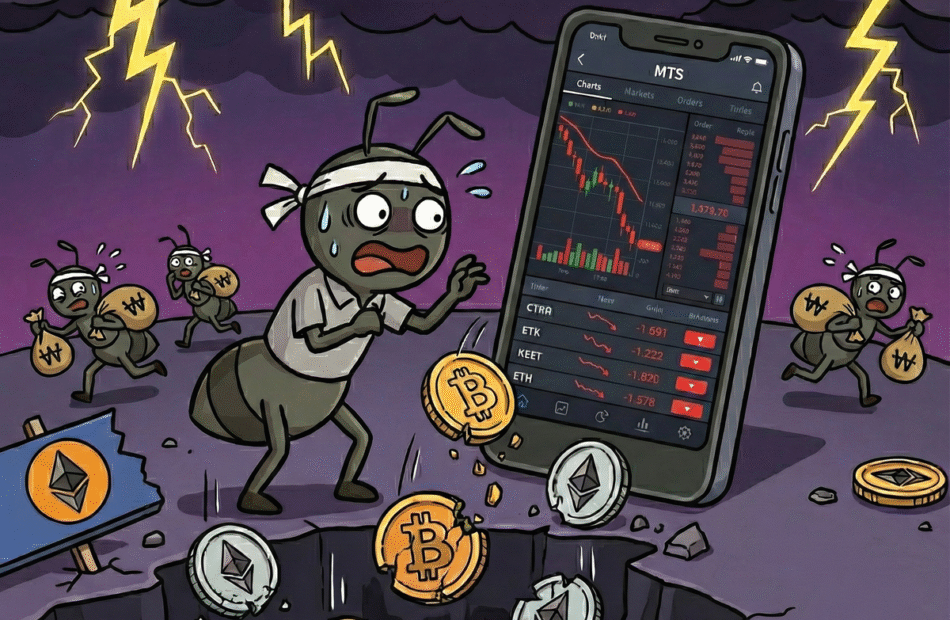
Lately, a phrase is making waves among everyday crypto investors: “Making money from KOSPI just to average down on Bitcoin. Sob.” This reflects the frustration many felt after Bitcoin’s sharp drop late last year. But now, things are starting to look a bit better.
After falling hard in the fourth quarter of 2023, Bitcoin is showing signs of life again. It recently surged past $97,000 (about 143 million KRW), giving investors a reason to breathe a little easier. Last November, when it dipped below $80,000, panic spread fast. But with new money flowing into Bitcoin ETFs, some believe the worst may be over.
Still, not everyone is rushing to buy. Bitcoin typically follows a four-year cycle. If that pattern holds, we could still see another decline this year. The big question: Is this year different?
**KOSPI Skyrockets While Crypto Lags Behind**
While Korean stocks (KOSPI) jumped by 75% last year and U.S. stocks and gold also climbed, crypto didn’t keep up. Bitcoin actually ended 2023 down 6.2%, moving in the opposite direction of other major assets.
Early last year, things looked promising. The return of pro-crypto sentiment—especially in the U.S.—gave the market hope. By October, Bitcoin hit a new high above $126,000 on Coinbase. But that rally didn’t last.
Soon after hitting its peak, crypto markets got shaky. A wave of massive sell-offs started in mid-October and lasted through December. Over $6 billion was pulled out from Bitcoin ETFs during this period. Fear took over, and investors started shifting their money into more stable options like stocks.
The biggest scare came from companies known as Digital Asset Treasury firms (DATs) like Strategy and Bitmine. These firms buy crypto to boost their stock prices. When news broke that MSCI might exclude them from major indexes, panic hit the market. DATs are popular with Korean investors, so any trouble with them causes ripple effects. There were even bankruptcy rumors about Strategy at the end of last year.
**JP Morgan Says the Bottom Is In – Big Targets for 2024**
Fast forward to now—things are looking up again. Earlier this month, MSCI decided not to kick out DAT firms from its indexes, calming investor nerves. On February 13th alone, $760 million flowed into Bitcoin ETFs—the most since October.
By mid-February, Bitcoin was up 7.7% for the year, and other cryptocurrencies like Ethereum, Ripple (XRP), and Solana had jumped more than 10%. Bitcoin even hit $97,900 on February 14th—a two-month high.
With fewer negative headlines and better demand-supply conditions, crypto seems to be back on track. Geopolitical tensions and fears about U.S. monetary policy have also helped push Bitcoin higher, alongside gold.
JP Morgan believes the crypto market bottomed out in January and expects a strong rebound. Strategy even bought $1.2 billion worth of Bitcoin recently, easing concerns about supply pressure.
JP Morgan has set a bold forecast: Bitcoin could hit $170,000 this year. Korean research firm Tiger Research is even more optimistic, predicting $185,500 in Q1 alone. Potential U.S. interest rate cuts and favorable regulations could further fuel growth, especially as traditional finance firms get more involved in crypto.
**Will This Be the Year Crypto Breaks Its Cycle?**
Despite the upbeat mood, some investors are still worried about the famous four-year cycle in crypto markets.
Historically, Bitcoin goes through a cycle tied to its “halving” event—when the reward for mining is cut in half. After halving years (like 2020), prices usually hit new highs the following year (2021), followed by a downturn the next year (2022). Based on that pattern, 2024 could still be a down year.
Another concern: New investment trends like space tech and AI may be pulling money away from crypto. With huge IPOs like SpaceX expected this year, some investors might favor stocks over coins.
And then there’s the macro economy. Right now, stocks are rising because people expect U.S. interest rate cuts. But if those cuts don’t happen—or are fewer than expected—both stocks and crypto could fall again like they did last November.
In summary: Crypto is recovering, investor confidence is growing, and big names like JP Morgan are predicting strong gains for Bitcoin this year. But history and outside risks still hang in the air. Whether Bitcoin breaks its usual cycle or not will depend on market conditions—and maybe a little bit of luck.