

BlackRock Eyes $20B AI Deal, Sora Tops App Store
**BlackRock Eyes $20 Billion AI Data Center Deal**
BlackRock, the global investment giant, is close to finalizing a massive $20 billion deal to buy Aligned Data Centers. This move is part of BlackRock’s strategy to tap into the rapidly growing demand for artificial intelligence infrastructure. As AI technology expands, data centers are becoming a crucial part of the digital economy, making them a hot target for investors.
**Nvidia CEO Frustrated Over Delays in UAE Chip Deal**
Nvidia’s CEO Jensen Huang is reportedly growing impatient over delays in a multibillion-dollar semiconductor deal with the United Arab Emirates. The agreement, first announced in May, has stalled due to U.S. government concerns. Commerce Secretary Howard Lutnick is pushing the UAE to make specific U.S.-based investments before moving forward with the chip project, creating tensions around international tech cooperation.
**OpenAI’s Sora App Tops App Store, Meta Stock Drops**
OpenAI’s new app, Sora, has quickly become the most downloaded app on Apple’s App Store. Sora is similar to TikTok but only features short videos made using AI tools by users. As its popularity skyrockets, Meta (the parent company of Facebook and Instagram) saw a dip in its stock price, likely due to rising competition. Meanwhile, ICEBlock, another popular app, was taken down by Apple after concerns from the U.S. Justice Department that it could endanger law enforcement operations.
**Walmart’s OnePay App Will Soon Support Bitcoin and Ethereum**
Walmart is expanding its presence in the financial tech world with its OnePay app. Soon, users will be able to buy, sell, and hold cryptocurrencies like Bitcoin and Ethereum directly through the app. This move places Walmart in the growing space of crypto-enabled retail finance and could make digital currencies more accessible to everyday consumers.
**Pfizer and Trump Admin Reach Last-Minute Drug Pricing Deal**
Pfizer and former President Trump’s administration reached a drug pricing agreement after intense last-minute negotiations. The deal reflects a long series of talks between Pfizer CEO Albert Bourla and Trump’s team about lowering medicine costs. This agreement was part of broader efforts to make prescription drugs more affordable in the U.S.
**Google Invests $4 Billion in Arkansas Data Center**
Google has announced plans to build a new $4 billion data center in Arkansas. The project will create hundreds of permanent jobs and thousands of construction roles in the region. This major investment reflects Google’s ongoing expansion of cloud computing capabilities and support for AI infrastructure across the U.S.
**Applied Materials Faces $710M Hit from New U.S. Export Rules**
Applied Materials expects to lose around $710 million in revenue due to new U.S. export restrictions. These rules, issued by the Bureau of Industry and Security, limit the company’s ability to ship certain technology products to customers in China without government approval. The changes are part of broader efforts to tighten tech exports amid U.S.-China tensions.
**Beauty Tech Group Boosts London Stock Exchange with Market Debut**
Beauty Tech Group saw its stock rise during its first day of trading on the London Stock Exchange. The company’s successful market debut is seen as a positive sign for London’s financial market, which has faced challenges attracting high-profile listings recently.
**Corning Set to Win Big from AI Data Center Growth**
Corning, best known for making Pyrex glassware, is emerging as a key player in the AI data center boom. Analysts say Corning’s decades-long investment in advanced glass and optical technology gives it an edge as demand grows for high-speed data connections in AI-driven systems.
**Brazilian Telecom Oi Denied U.S. Chapter 11 Bankruptcy Option**
Brazilian telecom provider Oi has been blocked from switching its current foreign bankruptcy protection status in the U.S. to Chapter 11 bankruptcy. The move would have allowed Oi more flexibility in restructuring its debts, but a U.S. court denied the request.
**Opendoor’s Popularity Doesn’t Fix Its Money Problems**
Opendoor, a real estate tech company known for buying and selling homes quickly, has become popular among retail investors online. Despite the hype, the company continues to lose money and faces questions about whether its business model can survive long-term.
**Cyberattack on Asahi Sparks Beer Shortage Fears in Japan**
Japan’s favorite beer brand, Asahi Group, is struggling to restore production after a cyberattack disrupted its operations. Four days after the attack, many of Asahi’s breweries remain offline, raising concerns that beer supplies could run low across the country if the issues continue.
DeepSnitch AI: Top Crypto Presale with 500x Potential
**DeepSnitch AI: The Hottest Crypto Presale with 500x Potential by 2026**
Crypto investors are buzzing about DeepSnitch AI, a new project that’s quickly becoming one of the most talked-about presales in 2025. With its powerful AI technology designed to give retail traders an edge, many believe this could be the next big thing — with some predicting a massive 500x return by 2026.
As Bitcoin pushes past $118,000 and interest in crypto futures grows, attention is shifting to new opportunities. DeepSnitch AI is grabbing headlines as one of the most promising presales, offering tools that help everyday investors keep up with whales and institutions.
### What Makes DeepSnitch AI Special?
DeepSnitch AI is built for one purpose: to help regular crypto traders make smarter moves using real-time blockchain insights. It uses five advanced AI agents to scan every corner of the blockchain for signs of risky contracts, sudden whale movements, and liquidity issues.
Instead of dumping raw data, DeepSnitch simplifies everything. It sends easy-to-understand alerts straight to Telegram or X (formerly Twitter), so users can act fast when new opportunities appear. Think of it as having a personal crypto watchdog that never sleeps.
This real-time insight is what could push DeepSnitch to the top. It offers a real-world use case that meets a growing demand: making crypto investing safer and smarter for everyday people.
With Stage 1 of the presale almost over, many early investors are rushing to get in before prices go up. Over $284,000 has already been raised, and analysts believe this could be one of the biggest crypto breakouts in 2025.
### Institutional Interest Boosts Confidence in Crypto
Big investors are getting more serious about crypto. In 2025, institutional demand has surged, especially through futures trading. CME Group reports that open interest (OI) in Solana (SOL) and Ripple (XRP) futures has hit record highs.
Open interest refers to the total number of active futures contracts. This is important because it shows how many institutions are betting on these tokens. For example, XRP futures hit $1 billion in OI just three months after launch, while Solana reached the same milestone in five months — much faster than Bitcoin, which took three years.
This rapid growth shows that more institutions are entering the space and using futures to gain exposure without directly owning crypto. This trend is expected to continue as governments introduce more crypto-friendly laws.
### Why DeepSnitch Could Be the Next Big Crypto
Crypto markets move fast. Often, retail investors miss out not because they’re wrong, but because they’re late. DeepSnitch AI aims to solve that problem by offering tools that level the playing field.
By giving users instant alerts on hidden trends and risks, DeepSnitch allows them to act quickly — often before the rest of the market catches on. This early access could mean huge gains for those who get in now.
The combination of strong demand, powerful AI tools, and practical use makes DeepSnitch a standout project in 2025’s crowded presale market.
### Bitcoin Hyper Brings DeFi to Bitcoin
Another exciting project on the horizon is Bitcoin Hyper, which aims to bring decentralized finance (DeFi) to the Bitcoin ecosystem. Unlike Ethereum, Bitcoin doesn’t support smart contracts by default, which has limited its use in DeFi.
Bitcoin Hyper changes that by using Solana’s Virtual Machine — a high-speed tech that allows lending, staking, and more on Bitcoin. So far, Bitcoin Hyper has raised over $19 million through its presale. However, because it’s already in later stages, there may be less room for big profits compared to earlier investments like DeepSnitch.
### BlockDAG Hits $415M Presale — But Investors Are Wary
BlockDAG recently passed $415 million in presale revenue — a massive number. Still, some investors are cautious. Rumors have surfaced that the team might not launch the project at all, and the lack of clear communication hasn’t helped ease concerns.
Even though it’s raised a lot of money, falling investor confidence could hold BlockDAG back from reaching its full potential.
### Final Thoughts: DeepSnitch AI Could Lead 2025’s Presale Boom
With Bitcoin rebounding and institutions diving deeper into crypto, 2025 is shaping up to be a big year for new projects. Among them, DeepSnitch AI stands out as a top contender thanks to its unique approach and strong growth potential.
The presale is moving fast with Stage 1 nearly sold out. Early buyers have the best chance at big returns — especially if predictions of 300x or even 500x gains come true.
If you’re looking for the best crypto presale to buy right now, DeepSnitch AI might be your golden ticket.
Secure your DSNT tokens today on the official presale site before prices climb.
—
**Frequently Asked Questions**
**Can you make money on crypto presales?**
Yes. Buying during a presale means getting tokens at a lower price before they hit public exchanges. If the project succeeds, early investors often see high returns.
**Which crypto could explode next?**
Many believe AI-focused cryptocurrencies like DeepSnitch AI could lead the next big wave due to their strong use cases and rising demand.
**What’s the best crypto presale of 2025?**
DeepSnitch AI is gaining serious attention for its innovative tech and potential for massive gains — making it one of the top ICOs to watch this year.
**How do you find pre-launch crypto projects?**
Follow trusted crypto news platforms and watch for trending presales across social media and project websites.
Sora 2 Raises Stakes for Realistic AI Crypto Scams
OpenAI has just unveiled Sora 2, a powerful new upgrade to its AI model that creates realistic audio and video. The first version, released in February 2024, was a big step for AI-generated video, but Sora 2 takes things much further. It now follows the laws of physics much more accurately. For example, if someone misses a basketball shot in a video, the ball will bounce off the backboard realistically instead of magically going into the hoop.
This new level of realism is great for things like simulations, education, and entertainment. However, it also opens the door for more advanced scams, especially in the cryptocurrency world.
In the past, crypto scams often used low-quality deepfake videos showing famous people like Elon Musk or Vitalik Buterin promoting fake projects. These videos were usually easy to spot because they had awkward speech or poor visuals. But with Sora 2, scammers can now create lifelike videos with smooth dialogue and realistic scenes that look completely real.
Imagine seeing a video where Michael Saylor seems to promote a new Bitcoin investment or Vitalik Buterin introduces an Ethereum staking offer. These videos could include fake interviews, panel discussions, or conference talks — all generated by AI — and could easily trick even experienced investors.
This shows a serious problem: the same technology that helps make movies, online classes, and games better can also be used to spread fake content that looks completely real. Phishing scams and crypto “rug pulls” are already common, but now we could be facing a wave of AI-powered scams that are harder than ever to detect.
If you’re someone who spends time online, especially in the crypto space, this is a wake-up call. Don’t trust every video or social media post you see — even if it looks real. There’s currently no strong defense against AI-created scams. That’s why it’s so important to stay alert and look out for signs of deception.
In the future, tools like digital watermarks, content verification systems, and AI-based scam detectors might become just as important as blockchain technology itself for keeping the crypto world safe. Until then, your best defense is staying cautious and not believing everything you see online.
Shiba Inu Rises in October as Meme Coins Surge
**Crypto Market Heats Up in October: Shiba Inu Gains Momentum**
The crypto market is showing signs of life again as October kicks off. Big names like Bitcoin, Ethereum, and Solana are all seeing strong price gains. Altcoins and meme coins are also joining the rally, leading to talk of a possible major breakout.
Shiba Inu (SHIB), one of the most popular meme coins, is also catching attention. After weeks of slow movement, SHIB is starting to gain strength. Many traders believe this could be the start of a fear-of-missing-out (FOMO) rally.
**Shiba Inu Teams Up With AI Startup Arlo**
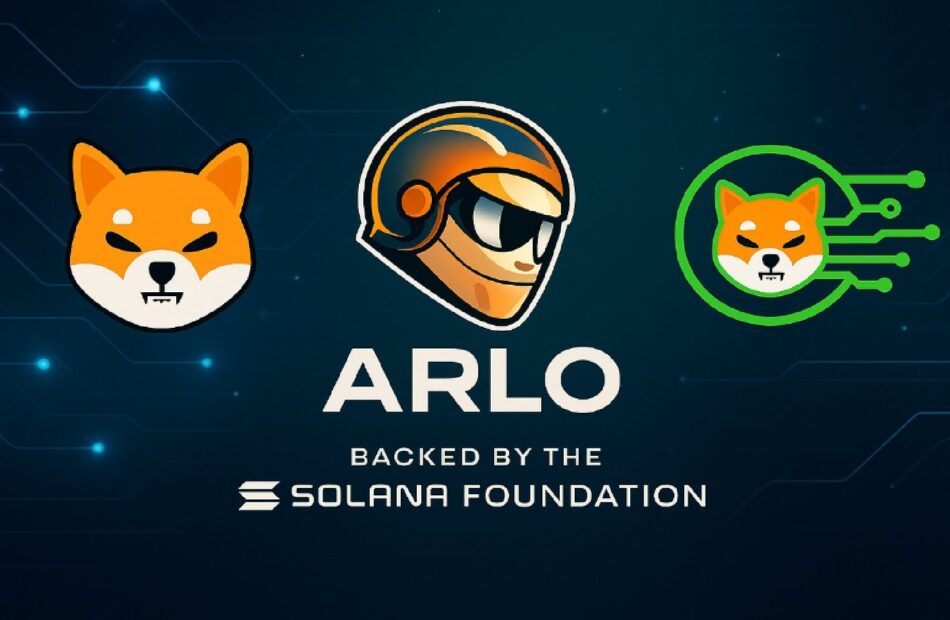
The Shiba Inu team recently announced a new partnership with Arlo, a blockchain-based artificial intelligence company supported by the Solana Foundation. Arlo’s tech will be used within Shibarium, Shiba Inu’s Layer 2 blockchain network.
This AI tool will help track important data like token activity, whale movements, risk signals, and audit results. While this doesn’t directly affect SHIB’s price, it shows that the project is growing and using new technology to become more secure and transparent. This could improve investor confidence and attract more interest in the SHIB ecosystem.
**Shiba Inu Price Outlook: What’s Next for SHIB?**
Right now, SHIB is trading around $0.0000125, up 3% in the last 24 hours and 5% over the past week. Analysts are getting more bullish as SHIB breaks through key resistance levels. If it can move past $0.000014, which has been a tough barrier since 2021, there’s potential for a much bigger rally.
October tends to be a strong month for crypto overall. With Bitcoin and Ethereum already rising, SHIB could ride the wave of positive market sentiment. If the momentum continues, SHIB may finally break out of its long-term price pattern and climb higher.
Even though the Arlo partnership doesn’t directly impact SHIB’s price, it strengthens the project’s foundation and adds to its reputation for innovation—two things that can increase long-term investor interest.
**Top Meme Coin Presales to Watch Alongside SHIB**
If you’re looking to diversify your crypto portfolio beyond SHIB, there are some promising new meme coin presales happening right now. Two standouts are Pepenode (PEPENODE) and Maxi Doge (MAXI). Both offer low entry prices and potential for high returns.
**Pepenode (PEPENODE)**
Pepenode is trying something new in crypto with a “mine-to-earn” model. Instead of using expensive mining equipment, players build virtual server rooms to earn rewards. These rewards come in Pepenode tokens as well as other meme coins like Pepe and Fartcoin.
So far, the project has raised nearly $1.6 million in its presale. Early investors can stake their tokens right away and earn up to 800% annually. With nearly 1 billion tokens already staked and a current price of just $0.0010831, Pepenode offers a rare opportunity to get in early with high earning potential.
**Maxi Doge (MAXI)**
Maxi Doge is another meme coin that’s getting lots of attention. Its presale is close to hitting $2.7 million, showing strong community interest. Unlike projects with deep utility, MAXI focuses on hype and high-risk, high-reward strategies.
Its branding is bold—featuring a bodybuilding-themed Doge—and it promises up to 1000x leverage trading potential. A quarter of the total token supply is set aside for boosting liquidity and marketing through the “Maxi Fund.”
Analysts say that once MAXI gets listed on centralized exchanges, demand could rise fast. The presale pricing model also creates constant urgency as prices go up over time. You can buy into the project using ETH, BNB, USDT, or even fiat, with staking options offering up to 120% APY.
**Best Way to Buy SHIB and Join Presales Safely**
SHIB remains a top pick for many investors due to its strong community and brand recognition. But adding some new presale tokens like Pepenode or Maxi Doge can help you stay ahead of trends in the meme coin space.
To buy SHIB or get involved in presales easily and safely, consider using Best Wallet—a secure crypto wallet app that lets you buy, store, send, stake, and manage your crypto all in one place.
Best Wallet also supports presale access for new tokens like PEPENODE and MAXI. It’s updated regularly with new features focused on security and user experience, making it a great tool for both beginners and experienced investors.
**Get started with Best Wallet today** and take advantage of both well-known coins like SHIB and exciting new opportunities in meme coin presales.

Bitcoin Hits $119K, Dogecoin Eyes $0.34 Amid Rally
**Dogecoin Gains Steam as Bitcoin Climbs Past $119K – Analysts Predict Bigger Breakouts Ahead**
The crypto market is heating up again, with Bitcoin pushing above the $119,000 mark and showing signs of heading towards $120,000. This rise is creating a ripple effect across the altcoin space, with coins like Dogecoin and Ethereum also seeing strong upward movement.
**Bitcoin Heading Toward $181,000? Citi Thinks So**
Bitcoin recently hit a new all-time high above $120,000 before entering a short consolidation phase. Now that it’s back over $118,000, momentum is building again. This recovery has helped boost confidence in the overall market, especially for altcoins.
Citi Bank has made a bold prediction: Bitcoin could surge to $181,000 within the next 12 months. This forecast comes from a well-established financial institution, giving crypto investors more reason to stay bullish. Citi’s involvement in crypto dates back to its 2007 acquisition of a 20% stake in Turkey’s Akbank, which recently launched its own crypto trading services. This connection suggests that traditional banks may gradually become more involved in the crypto space, potentially helping the industry grow into a multi-trillion dollar market.
**Altcoins on the Rise – Dogecoin Targets $0.34**
Dogecoin, often seen as a meme coin but now a serious player in the altcoin world, is gaining attention again. Its price recently jumped 5%, reaching around $0.255. Analysts say this is a key level—if Dogecoin can stay above it, we might see more gains soon.
One analyst, known as Trader Tardigrade, pointed out that Dogecoin is showing signs of breaking out on its four-hour chart. If this pattern holds, the next target could be around $0.34—a big step forward for DOGE.
This upswing in altcoin prices isn’t happening by chance. Some experts believe we’re entering another altcoin bull run, similar to what happened in previous cycles. Optimism is also growing due to potential interest rate cuts in the U.S., which typically favor riskier assets like cryptocurrencies.
**Crypto Market Outlook – Familiar Patterns Return**
Veteran analysts like Gordon and Quinten suggest we might see a repeat of previous market trends—especially in October when crypto prices have historically surged. While no one can predict the future with certainty, patterns are emerging that hint at another strong rally ahead.
As always, it’s important to remember that crypto markets are highly volatile. Prices can swing quickly, so it’s wise for investors to do their own research and stay informed.
**Key Takeaways:**
– Bitcoin is trading above $119K with sights on $120K+.
– Citi predicts Bitcoin could hit $181K in the next year.
– Dogecoin breaks key resistance at $0.255 and may target $0.34.
– Altcoin bull market signs are reappearing.
– Market optimism fueled by potential interest rate cuts and historical trends.
Stay tuned as the crypto market continues to evolve—big moves could be just around the corner.