
Kiyosaki Urges Shift from Dollar to Crypto & Gold
Robert Kiyosaki, the best-selling author of “Rich Dad Poor Dad,” is once again making headlines with his warnings about the U.S. dollar and strong support for alternative assets like Bitcoin, Ethereum, gold, and silver. His recent comments have sparked concern—and curiosity—among investors around the world.
**Kiyosaki’s Concerns About the U.S. Dollar**
Kiyosaki has issued a stark warning to people holding large amounts of U.S. dollars. He believes that hyperinflation could seriously damage the value of the dollar and that its dominance in global finance is coming to an end. According to him, those who continue to save in U.S. dollars could lose the most as inflation rises and other countries challenge the dollar’s global position.
His concerns are tied to recent moves by the BRICS nations—Brazil, Russia, India, China, and South Africa—who are reportedly working on launching a new currency backed by gold. This move is seen as a direct challenge to the U.S. dollar. Kiyosaki reacted strongly, saying “Goodbye US Dollar!” and urged people to stay alert and protect themselves.
**Gold and Silver: Timeless Safe Havens**
Gold has recently hit new all-time highs before taking a slight pause, while silver has started gaining momentum. Kiyosaki has long promoted gold and silver as real money, especially during times of financial instability. Both metals are seen as safer stores of value compared to traditional currencies, especially when inflation is high or fiat currencies are under threat.
**Bitcoin and Ethereum Still in Focus**
Although Kiyosaki previously sold his Bitcoin holdings to invest in rental property, he hasn’t turned his back on cryptocurrency. In fact, he now includes Ethereum along with Bitcoin in his list of recommended assets. This comes as major institutions like BlackRock show increasing interest in blockchain technology and tokenization—a process that turns real-world assets into digital tokens on networks like Ethereum.
Ethereum is at the heart of many tokenization projects, making it a key player in the future of finance. Kiyosaki believes that these digital assets are not just trends—they’re essential tools for protecting wealth in a changing world.
**Kiyosaki’s Strategy: Diversify With Real Assets**
In summary, Kiyosaki is advising people to move away from fiat currencies like the U.S. dollar and focus on what he calls “real assets”: Bitcoin, Ethereum, gold, and silver. He sees these as better options for preserving value, especially as global finance undergoes major shifts.
His message is clear: be cautious, stay informed, and consider diversifying your wealth into assets that can withstand economic turbulence.
**Key Takeaways:**
– Kiyosaki warns that holding U.S. dollars could be risky due to hyperinflation.
– BRICS countries are developing a gold-backed currency that may challenge the dollar.
– Gold and silver remain strong assets in uncertain times.
– Ethereum joins Bitcoin on Kiyosaki’s list of recommended investments due to growing institutional interest.
– Diversification into real assets like crypto and precious metals may offer better protection against economic instability.
This is not financial advice—always do your own research before making investment decisions. Cryptocurrencies and precious metals carry risks and should be approached with care.
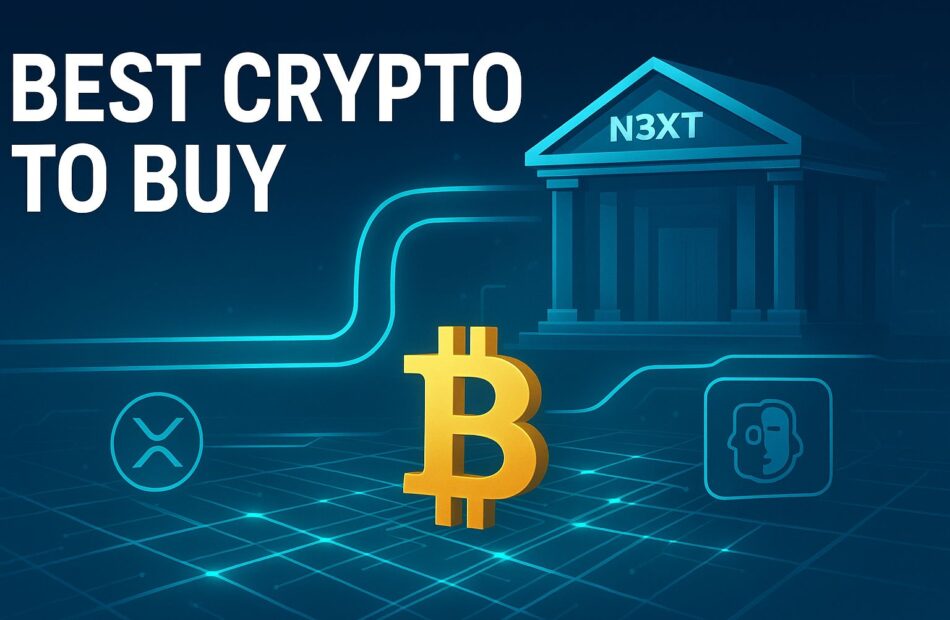
Top 3 Crypto Tokens for Payments and DeFi in 2024
If you’re looking for the best cryptocurrencies to invest in for payments, creator payouts, and institutional transfers, three names are currently standing out: XRP, SUBBD, and Bitcoin Hyper ($HYPER). These projects are gaining attention as new financial infrastructure like 24/7 crypto banking becomes a reality.
### N3XT Bank: Fixing Crypto’s Banking Problem
A new crypto-focused bank called N3XT, based in Wyoming, is trying to solve one of crypto’s oldest headaches—traditional banks that close after hours and on weekends. N3XT offers 24/7 programmable dollar payments to crypto companies, making it easier for exchanges, trading platforms, and DeFi projects to manage cash flow and liquidity any time of day.
This is a big deal. When banks are always online, crypto platforms can move money instantly and without interruption. This is a major upgrade for payments, global transfers, and financial settlements between institutions.
As real-time banking rails go live, the next step is figuring out which blockchains and tokens can actually handle fast and cheap transactions. That’s where projects like Bitcoin Layer 2s, payment networks, and smart contract platforms come into play.
### Bitcoin Hyper ($HYPER): Smart Contracts on Bitcoin
Bitcoin Hyper is a new project that turns Bitcoin into more than just a store of value. It works as a high-speed Layer 2 network built on top of Bitcoin. By using the Solana Virtual Machine (SVM), it brings fast smart contracts to Bitcoin’s secure base layer.
This setup means users can send wrapped BTC quickly and cheaply. Plus, it supports DeFi tools like swaps, lending, staking, NFTs, and gaming—all with better speed than even Solana itself.
Here’s why people are watching: the presale has already raised $29 million. Tokens are currently priced at $0.013375. Early buyers are getting in before the price rises further. One investor even put over $500K into $HYPER tokens.
The project allows staking right after launch, with rewards for early supporters and active community members. If you believe Bitcoin can be more than just digital gold, $HYPER could be your way to invest in its future as a DeFi hub.
**Keywords**: Bitcoin Layer 2, fast crypto payments, smart contracts on Bitcoin, DeFi on Bitcoin
### SUBBD Token ($SUBBD): Crypto Payments for Creators
SUBBD is changing how online creators earn money. Right now, platforms like Patreon or YouTube take big fees and control when and how creators get paid. SUBBD uses AI and crypto to flip the script.
With SUBBD, creators can use AI tools to manage fans, automate support, and even create virtual versions of themselves using voice cloning and influencer bots. This means they can grow their brand without hiring big teams.
SUBBD also allows token-based access to exclusive content or events. Fans can pay in crypto to unlock premium material. And because payments are settled in cryptocurrency, creators can get paid instantly from anywhere in the world—no banks or credit card issues involved.
The project has already raised over $1.3 million in its presale, with token prices at $0.0571. Staking offers 20% rewards in the first year, giving early backers a chance to earn while they support the platform’s growth.
**Keywords**: crypto for content creators, Web3 creator tools, AI-powered creator economy, SUBBD token presale
### XRP: Fast Global Payments for Enterprises
Ripple’s XRP is one of the top choices when it comes to fast international money transfers. It’s designed for institutions that need to send money across borders quickly and cheaply—settling transactions in 3–5 seconds with very low fees.
The XRP Ledger doesn’t just move XRP—it also supports tokenized assets and has an Ethereum-compatible sidechain. Ripple is also launching its own stablecoin (RLUSD), which will make it even easier for institutions to use the platform for regular financial operations.
If you’re interested in the business side of crypto payments—not just personal DeFi—XRP remains one of the most reliable options available today.
**Keywords**: XRP payments, Ripple blockchain, cross-border crypto transactions, enterprise crypto solutions
### Final Thoughts
With new banks like N3XT offering 24/7 programmable dollars for crypto platforms, there’s a major shift happening in how money moves in the blockchain world.
– **Bitcoin Hyper ($HYPER)** offers fast DeFi on Bitcoin
– **SUBBD Token ($SUBBD)** empowers creators with AI tools and instant crypto payments
– **XRP** continues to lead in enterprise-level cross-border settlement
Each project solves a different piece of the crypto payment puzzle. Whether you’re focused on decentralized finance, content creation, or institutional transfers, these tokens could be strong bets as infrastructure improves.

SpaceX $800B Valuation Could Spark Crypto Market Surge
SpaceX, Elon Musk’s leading space company, is reportedly in talks for a new share sale that could value the company at a massive $800 billion. This would make SpaceX one of the most valuable private companies in the world. The news is causing a stir not just in traditional markets, but also in the crypto world, especially among fans of Dogecoin (DOGE) and Bitcoin (BTC). That’s because Elon Musk has a long history of influencing the prices of cryptocurrencies through his business moves and social media activity.
Traders and investors are paying close attention because Musk-related news has often triggered big movements in crypto. For example, when Musk changed Twitter’s logo to the Doge meme in April 2023, DOGE saw a sharp price jump. Similarly, past moves by his companies involving Bitcoin—like Tesla buying $1.5 billion worth in 2021—pushed BTC to record highs. So, if this SpaceX valuation deal goes through, it could once again fuel optimism and trading activity in Musk-linked coins.
The $800 billion valuation is a huge leap from previous estimates and highlights how fast SpaceX is growing, thanks to its work on reusable rockets and the Starlink satellite internet network. With this kind of momentum, investors might see more institutional interest not only in space technology but also in futuristic crypto projects. Tokens connected to innovation—like Ethereum (ETH), which supports decentralized apps—could benefit from this boost in tech enthusiasm.
This kind of big financial news often impacts crypto trading volume. For instance, Dogecoin has shown strong reactions during Musk-related announcements, typically bouncing between $0.10 and $0.20 based on historical data. When excitement builds up, trading pairs like DOGE/USD or DOGE/BTC tend to see increased action. On-chain data and technical indicators like trading volume spikes can help traders find entry points during these hype cycles.
Beyond DOGE and BTC, other cryptocurrencies linked to emerging tech may also see gains. Projects like Helium (HNT), which focus on decentralized communication using wireless networks, align well with what Starlink is doing. This overlap between space tech and blockchain may drive interest in IoT-focused tokens as well. Meanwhile, Bitcoin might see another round of buying as investors look for safer bets during high-tech market moves. BTC often performs well when there’s excitement around tech companies, especially those tied to Elon Musk.
Traders should be cautious though. Musk-driven hype can lead to both big gains and sharp drops. Remember when DOGE fell 30% after one of his tweets? To reduce risk, consider diversifying with stablecoins or using tools like stop-loss orders and options trading on platforms like Binance. Also, keep an eye on altcoins with themes related to space, AI, or virtual reality—areas that have seen rising institutional interest.
If you’re looking for strategy tips, combine technical analysis with news monitoring. For example, use moving averages or RSI (Relative Strength Index) indicators on Ethereum or DOGE charts to spot buy zones when sentiment is high. Long-tail keywords like “how SpaceX affects crypto prices” are gaining traction, showing that people are curious about these connections. Understanding this trend can help you stay ahead of sudden market shifts.
From an investment perspective, the news about SpaceX’s massive potential valuation may lead to more money flowing into crypto markets that are aligned with future technologies. Venture capital firms are already exploring ways to merge blockchain with space projects through tokenized assets. This could even support Bitcoin’s role as a hedge against market volatility.
There’s also a strong link between stocks and crypto when it comes to Elon Musk’s companies. Tesla stock movements often mirror changes in Bitcoin because of Musk’s influence in both spaces. For example, a 10% rise in Tesla’s stock has previously lined up with 5–7% gains in BTC. AI-focused tokens like Fetch.ai (FET) and SingularityNET (AGIX) could also see a surge thanks to SpaceX’s tech-heavy image and use of artificial intelligence in spacecraft systems.
For traders looking to make smart moves, keep an eye on support and resistance levels in key trading pairs like BTC/USD or DOGE/USDT. Use simple tools like RSI and MACD indicators to avoid buying at the top. With market excitement growing around SpaceX, now might be the time to prepare for increased volatility and opportunity across crypto markets.
In short, SpaceX’s rumored $800 billion valuation could spark a ripple effect across both traditional finance and cryptocurrency markets. As always with Musk-related news, expect rapid shifts in sentiment—so stay informed and trade wisely.
Chainlink ETF Shines as Bitcoin Slips Below $90K
**Crypto Market Update: Chainlink ETF Shows Strength as Bitcoin Dips Below $90K**
As the crypto market heads into the weekend, Bitcoin is trading just under the $90,000 mark. Investors are keeping a close eye on the upcoming U.S. Federal Reserve interest rate decision, scheduled for Wednesday. Historically, these Fed announcements have triggered sharp price swings in both directions for cryptocurrencies. Concerns around major companies like MicroStrategy (MSTR), ongoing debates about crypto ETFs, and Japan’s economic policies are creating a cautious mood in the market.
Despite all this uncertainty, crypto often defies expectations—and there are still some bright spots worth noting.
—
**Bitcoin Reacts to Global Market Trends**
Bitcoin is becoming more sensitive to broader economic signals like the Purchasing Managers’ Index (PMI) and Personal Consumption Expenditures (PCE). This means that crypto investors are now paying more attention to global economic reports and central bank decisions. The current dip in Bitcoin’s price—down about 30% from its peak—is not unusual historically and doesn’t necessarily mean the bullish trend is over.
—
**MicroStrategy Faces Setbacks**
Investment firm Cantor Fitzgerald has slashed its price target for MicroStrategy stock by 60%, dropping it to $229. This comes amid discussions about removing MSTR from the MSCI Index due to its heavy exposure to digital assets. A delisting could further impact its valuation and investor confidence.
—
**Crypto Regulation News from Italy**
Italy has given crypto companies until December 30 to comply with the new MiCA (Markets in Crypto-Assets) regulations. This deadline sets the stage for more structured oversight of digital assets across Europe.
—
**Ripple CEO Predicts Bitcoin at $180K**
Brad Garlinghouse, CEO of Ripple, shared a bold prediction: he believes Bitcoin could hit $180,000 by 2026. While ambitious, his forecast reflects long-term optimism in the market despite short-term turbulence.
—
**Ethereum and Chainlink Make Big Moves**
Ethereum is planning a major update this year aimed at reducing the power of large staking pools. This move is designed to keep the network decentralized but has sparked debate among investors who worry it may interfere with free market dynamics.
Meanwhile, Ethereum’s Layer 2 network Base has successfully integrated with Solana using Chainlink’s cross-chain technology. This partnership enhances blockchain interoperability and could open the door for more use cases and innovation.
—
**New Chainlink ETF Launches Strong**
Chainlink (LINK) made headlines with the recent launch of its ETF, called GLNK. It started strong, attracting $37 million on its first day of trading. Although daily inflows have since dropped to around $3.8 million and $4.4 million, the ETF has held steady in a generally weak market.
As of now, GLNK has a net asset value of $71.7 million, which is about 0.72% of LINK’s total market cap. This resilience suggests that investors still have confidence in Chainlink’s future, even in a tough market environment.
—
**New Player in the Crypto Stock Arena**
Twenty One Capital, backed by Tether and SoftBank, is merging with Cantor Equity Partners to prepare for a public listing on the NYSE. The firm holds 42,000 BTC and is positioning itself as a strong competitor to MicroStrategy in the Bitcoin investment space.
—
Stay tuned for more updates as the market responds to global events, regulatory changes, and institutional moves. Crypto continues to evolve—and often surprises when least expected.

Crypto Security: Mixers Shut, AI Hacks, $30M Stolen
**Crypto Security Roundup: CryptoMixer Shutdown, AI Exploits Smart Contracts, and More**
Here’s a quick breakdown of the latest cybersecurity developments in the crypto world, from law enforcement takedowns to AI threats and major hacks.
—
**CryptoMixer Shut Down by Authorities**
Swiss and German police, with help from Europol, have shut down a major crypto mixing service called CryptoMixer. They seized three servers in Switzerland, took over the cryptomixer.io domain, and collected over 25 million euros in Bitcoin along with 12 terabytes of data.
CryptoMixer was used by hackers, ransomware groups, and dark web markets to hide where their crypto came from. Since 2016, it helped launder over 1.3 billion euros in Bitcoin by mixing user funds to make them untraceable.
—
**AI Can Hack Smart Contracts, Says Anthropic**
AI company Anthropic has found that its advanced AI agents can exploit smart contract vulnerabilities on blockchains like Ethereum and BNB Chain. Using AI models like Claude Opus 4.5 and Claude Sonnet 4.5, they ran tests in a simulated blockchain environment.
The AI successfully hacked 17 out of 34 vulnerable contracts, grabbing $4.5 million in fake funds. When tested on a larger set of 405 smart contracts, the AI exploited 207 of them, simulating a total gain of $550 million. Even when the AI scanned over 2,800 new contracts, it found two zero-day bugs worth nearly $3,700 — though this scan cost $3,476 to run via API.
This shows that AI could be used to discover and exploit blockchain vulnerabilities at scale.
—
**UK Plans to Ban Crypto Political Donations**
The UK government is planning to ban political donations made with cryptocurrencies. Officials are concerned that crypto donations are hard to trace and could allow foreign or criminal money into British politics.
The move would impact parties like Reform UK, which recently started accepting crypto donations. The Electoral Commission originally said the risks were manageable but now warns that tracking the source of crypto funds is difficult and expensive.
Any ban would likely need stronger laws to block foreign influence through digital assets.
—
**Do Kwon Seeks Shorter Sentence for Terra Collapse**
Terraform Labs founder Do Kwon is asking a U.S. judge for a lighter sentence — no more than five years — after pleading guilty to fraud tied to the $40 billion Terra-Luna collapse in 2022.
In court documents, his lawyers say Kwon didn’t act out of greed but out of desperation. He admitted to misleading investors by hiding a deal with Jump Trading meant to stabilize TerraUSD. Kwon has already spent nearly two years in detention in Montenegro and still faces charges in South Korea. His sentencing is set for December 11.
—
**Lazarus Group Suspected in $30M Upbit Hack**
North Korea’s infamous Lazarus Group is suspected of stealing about $30 million in crypto from Upbit, South Korea’s largest exchange. Upbit noticed abnormal withdrawals involving Solana-based assets and halted transactions.
Investigators believe hackers used admin account impersonation — similar to Upbit’s 2019 breach, which was also blamed on Lazarus. Blockchain data shows the stolen crypto is being swapped for USDC and bridged to Ethereum.
—
**Balancer Proposes $8M Payout After Major Hack**
Decentralized finance (DeFi) platform Balancer plans to repay users around $8 million after a recent hack drained over $128 million from its vaults.
Out of $28 million recovered so far, about $19.7 million is still held by liquid staking platform StakeWise. The proposed reimbursement will go to liquidity providers affected by the exploit. Funds will be distributed based on user balances at the time of the attack and will be paid in the same tokens that were recovered.
White hat hackers who helped recover funds will get 10% bounties — up to $1 million each — if they pass ID checks. There will be a 180-day window for users to claim their refunds.
—
**Yearn Finance Recovers $2.4M After yETH Exploit**
Yearn Finance has recovered $2.4 million of the nearly $9 million lost in an attack on its older yETH pools. The exploit was caused by a bug that let the attacker mint an unlimited supply of yETH tokens.
The attacker used these fake tokens to swap for real assets and moved at least 1,000 ETH through Tornado Cash for laundering. The newer Yearn V2 and V3 vaults weren’t affected.
Yearn is working with security experts from SEAL 911, ChainSecurity, and Plume to track down more funds and return them to affected users.
—
**Key Takeaways for Crypto Users**
– Crypto mixing services like CryptoMixer are prime targets for law enforcement.
– Advanced AI can now exploit smart contracts without human help.
– Governments are tightening rules on crypto to prevent misuse.
– High-profile figures like Do Kwon are facing serious legal consequences.
– North Korean hackers remain highly active in targeting exchanges.
– DeFi platforms are under constant threat but are improving recovery efforts.
Stay updated and secure — the crypto space moves fast, and so do its risks.