
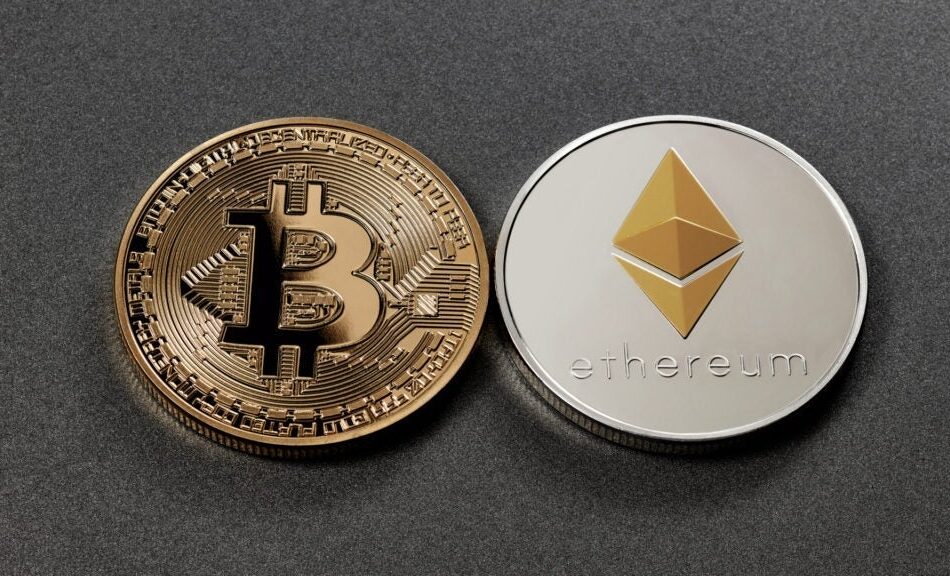
Ethereum May Have Bottomed, BitMine Bets Big on ETH
**Ethereum May Have Hit Its Bottom, Says BitMine Chairman**
Ethereum (ETH) could already be past its lowest point this cycle, according to Tom Lee, Chairman of BitMine Immersion Technologies (NYSE: BMNR). In a recent podcast, Lee shared that Ethereum’s dip toward $3,000 hasn’t shaken his bullish view. In fact, he sees these price levels as a chance for big investors to stock up.
**BitMine Boosts Ethereum Holdings**
Lee revealed that BitMine has doubled its ETH purchases over the last two weeks. The company is planning to stake over 3.7 million ETH gradually as part of its strategy to earn passive income from the network. He pointed out that Ethereum’s bear market bottoms often happen in November, and this cycle seems to be following the same pattern.
He described the recent price dip not as a warning sign but as a buying opportunity.
**Why Ethereum Could Be Worth Trillions**
Lee believes Ethereum is one of the most promising assets for the next ten years. He explained that ETH has historically traded at about 0.08 of Bitcoin’s value. If Bitcoin hits $200,000, this would imply Ethereum could reach around $16,000.
More importantly, he sees Ethereum becoming the backbone of future technologies like decentralized finance (DeFi), AI infrastructure, and digital asset tokenization. According to him, this could eventually justify a multi-trillion-dollar valuation for the network. Right now, he thinks ETH is undervalued and offers long-term upside at a discount.
**BitMine’s Strategy Mirrors MicroStrategy’s Bitcoin Playbook**
Lee compared BitMine’s approach to MicroStrategy’s (NASDAQ: MSTR) Bitcoin investment strategy. Just like MicroStrategy became known for holding large amounts of BTC, BitMine aims to be a major ETH holder. Lee noted that although there are over 80 publicly traded digital asset treasury (DAT) companies, BitMine and MicroStrategy together account for more than 90% of trading volume in this space.
He also highlighted that BitMine holds a significant cash reserve alongside its ETH, helping the company manage risks during market downturns and keep investor confidence high during volatile periods.
**Challenging the Bitcoin 4-Year Cycle Theory**
Lee also questioned the idea that Bitcoin always moves in four-year cycles based on its halving events. He pointed out that similar long-term patterns have already broken in traditional markets like gold and copper.
He argued that if Bitcoin surpasses $126,000 by January, it would break the cycle theory completely. This could lead to a fresh surge in Ethereum and other Layer 1 cryptocurrencies as investor sentiment shifts.
**Big Things Could Happen in 2026**
Looking ahead, Lee expects 2026 to be a breakout year for digital assets. He said growing interest in tokenization, enterprise blockchain adoption, and prediction markets will drive more money into crypto.
He believes prediction markets will become essential tools for financial insights and could blend with tokenized assets, giving everyday investors access to strategies usually reserved for hedge funds.
**Ethereum Price Update and What Comes Next**
Ethereum recently broke out of a downtrend it had been stuck in since early November. It’s now testing a key resistance area between $3,330 and $3,350. This zone has previously acted as a barrier, so closing above it would signal a strong breakout. That move could send ETH toward $4,130 — the next big target based on Fibonacci levels.
Right now, bulls are in control as long as ETH stays above $3,208 — a support area backed by both the 20-day and 50-day exponential moving averages (EMAs). The MACD momentum indicator has turned positive, showing strong short-term momentum.
If Ethereum drops below $3,208, the next support lies near $3,084 and then around $2,973. Falling below these levels could put ETH back into a sideways trend near $2,830.
For now, Ethereum appears to be in recovery mode. Buyers have reclaimed control of the trend, momentum indicators are bullish, and key price levels are holding. If ETH can break above $3,350 convincingly, the next target is around $3,600 — with a potential push toward $4,130 if momentum continues to build.
**Key Takeaways:**
– BitMine Chairman says Ethereum bottomed in November.
– BitMine doubling ETH buys; plans to stake 3.7 million ETH.
– Lee sees ETH reaching $16K if Bitcoin hits $200K.
– Ethereum’s future tied to DeFi, AI, and tokenization.
– 2026 expected to be a breakout year for crypto.
– ETH currently testing major resistance at $3,350.
– A confirmed breakout could open path toward $4,130.

Top 3 Cryptos to Watch: ETH, TAO, DeepSnitch AI
**Top Cryptos to Watch Right Now: Ethereum, TAO, and DeepSnitch AI**
The crypto market is heating up again, and three coins are making serious moves: Ethereum (ETH), Bittensor (TAO), and DeepSnitch AI (DSNT). These projects have strong fundamentals, big upcoming events, and major growth potential heading into 2025 and 2026.
—
**Ethereum (ETH) Gaining Momentum with Big Upgrades and Institutional Support**
Ethereum is showing clear bullish signs as we move into 2025. Two major upgrades are coming—Pectra in May and Fusaka in December. These upgrades will make Ethereum faster and more scalable, especially for layer-2 platforms. That’s great news for users and developers.
Institutional investors are also getting in. BitMine is buying millions of ETH, and on-chain data confirms that crypto whales are accumulating heavily. Even BlackRock is showing confidence by pushing for a new Ethereum staking ETF (ETHB), a strong sign of belief in ETH’s long-term value.
On the technical side, Ethereum looks ready for a price breakout. Analysts say the next wave of movement could push ETH to $6,000, with even more upside possible in the coming months—potentially hitting $7,600 if the market follows historical trends.
—
**Bittensor (TAO): Halving Event and Institutional Demand Could Push Prices Higher**
Bittensor is another top crypto to keep an eye on. The first TAO halving is scheduled for December 14. This means fewer new tokens will be created, which often leads to price increases due to reduced supply.
TAO is also seeing strong institutional interest. Grayscale has launched a major decentralized AI fund with TAO as its key asset. Several other firms are also adding TAO to their treasuries.
With the halving reducing inflation and long-term supply getting tighter, TAO could soon pass the $1,000 mark. Combined with its growing role in the artificial intelligence sector, Bittensor is positioning itself as one of the best cryptos to buy heading into 2026.
—
**DeepSnitch AI (DSNT): Presale Boom and 100x Potential**
DeepSnitch AI is making waves in the crypto world thanks to its explosive presale performance. The project has already raised over $720,000, and its token price has jumped by more than 80%. What’s attracting so much attention?
DeepSnitch AI uses artificial intelligence to track crypto market activity in real time. It gives retail traders access to tools once available only to big institutions. This levels the playing field and gives everyday investors a serious edge.
The platform is expected to benefit from major AI industry growth—forecasts suggest the AI sector could grow 25x by 2030. Because DSNT is still in presale, it offers a low entry price of just $0.02735 and massive upside potential.
To sweeten the deal, DeepSnitch AI has launched a limited-time bonus offer: invest over $2,000 using code DSNTVIP50 to get 50% more tokens or invest over $5,000 with code DSNTVIP100 to double your token amount with a 100% bonus.
DSNT has also passed a Certik audit, boosting investor confidence in its security and credibility. If you’re looking for a high-potential AI crypto project before it launches on exchanges, DeepSnitch AI is one of the most promising choices right now.
—
**Key Takeaways: Best Cryptos to Buy Now**
– **Ethereum (ETH)**: Two major upgrades and strong institutional support could drive prices toward $6,000 or more.
– **Bittensor (TAO)**: Upcoming halving and growing demand from institutions put this AI token on track for long-term gains.
– **DeepSnitch AI (DSNT)**: Record-breaking presale, unique AI tools, and huge growth potential make this a top pick for early investors.
If you’re wondering what crypto to buy right now, these three stand out based on fundamentals, momentum, and future growth prospects. DeepSnitch AI, in particular, offers one of the highest reward potentials thanks to its presale stage and ties to the fast-growing AI sector.
—
**FAQs**
**Is DeepSnitch AI the best crypto to invest in now?**
Yes. With its presale bonus offer and real-time AI trading tools, DeepSnitch AI offers high upside potential—up to 100x—making it one of the top crypto investments at this stage.
**What is the best crypto to buy in December?**
Ethereum, TAO, and DeepSnitch AI all have strong fundamentals. However, DeepSnitch AI stands out due to its presale pricing and exposure to the booming AI market.
**Which cryptos are trending this week?**
Ethereum and TAO are trending due to upgrades and halving events. DeepSnitch AI is trending thanks to its presale success and limited-time bonus offer.

Betty Bonkers Review: Playtech’s 1960s Vegas Adventure
Enter Betty Bonkers, Playtech‘s sizzling slot that drops you right into that electric scene. It’s a high-energy 3×3 grid packed with retro charm and payout potential that can send your balance soaring.
Ready to join Betty for a night of wild spins? Let’s dive in and see why this game’s got everyone talking.
Betty Bonkers Game Overview
Betty Bonkers paints a vivid picture of Fremont Street’s glory days: Casinos glow under palm silhouettes, a starry sky winks overhead, and Betty struts in, ready to shake things up.
The 3×3 setup screams classic fruit slot, but Playtech amps it with smart twists, only three matching symbols win on those 5 lines, keeping things tight and tense.
Scatters are your spark: Two trigger the menu for instant perks; three unlock 20-spin mayhem. Wilds help seal deals by swapping in, and that exclusive Bonkers Line in bonuses? It chains wins into multiplier madness.
- Fruit Pays: Cherries at 1x, plums 3x, up to seven at 15x, simple, satisfying lines.
- Wild Power: Fill a row for 30x; they pop anywhere to boost combos.
- Menu Access: Base game scatters or bonus-line hits flip on random boosters.
- Jackpot Ladder: Starts at 10x-1,000x, but free spins can rocket the Mega to 10,000x.
Betty Bonkers Features & Highlights
Betty Bonkers shines brightest through its bonus arsenal, courtesy of Playtech‘s clever design.
Betty’s Menu steals the show, randomly serving up wild floods or symbol scrubs that clear the way for big lines. Free spins layer on retriggers and a Bonkers Line that juices jackpots with each tap.

Want to fast-track? Bonus buys cost $2 for a menu roll or $300 for 20 spins, your call on skipping the grind.

Betty Bonkers Game Info
Playtech lays it all out for Betty Bonkers, ensuring you know the score before you spin. Base RTP sits at 96.1%, edging higher to 96.59% via buys, great value for a slot this punchy.

Why Play Betty Bonkers at Playtech?
Why drop coins into Betty Bonkers over the sea of slots out there?
First off, it’s a breath of fresh air for players tired of bloated 1,000-ways grids, this 3-reeler feels classic yet loaded with surprises.
The retro theme hooks you emotionally, like flipping through old Vegas photos, but the features deliver real heat: Those growing jackpots and x10 multipliers can turn a $1 spin into $10,000 overnight.



Top UK Crypto Projects to Watch in 2025 and Beyond
**Top Crypto Projects to Watch: UK’s Future in Blockchain for 2025 and Beyond**
The world of cryptocurrency is moving fast, and people in the UK are paying close attention. With platforms like Trade Age AI helping investors and traders spot new opportunities, many exciting crypto projects are emerging that could shape the future. Let’s break down what’s happening, why it matters, and which projects are leading the way.
—
**The Big Picture: Why Crypto Is Growing**
Cryptocurrency is becoming more popular globally and in the UK. More businesses are accepting digital currencies, and blockchain technology is being used in many areas beyond finance. Here’s why crypto adoption is growing:
– People are using crypto for real-world payments
– Blockchain is being added to everyday tools and services
– New crypto projects are offering real value and usefulness
As this trend continues, more industries like retail, finance, supply chain, and logistics will begin to use blockchain to improve efficiency and reduce costs.
—
**Beyond Bitcoin: New Uses for Blockchain**
Blockchain isn’t just for digital money anymore. It’s now being used in healthcare, real estate, government services, and even personal identity management. Smart contracts—automated agreements built on blockchain—are helping industries by:
– Cutting out manual work
– Reducing errors
– Saving money
– Speeding up processes
This rise in blockchain applications means more jobs for developers, analysts, and engineers. As the tech matures, the demand for skilled professionals will grow too.
—
**Regulation Is Catching Up**
Governments around the world, including the UK, are starting to create clearer rules for crypto. This gives investors and developers more confidence. In the UK, platforms like Trade Age AI already follow strict compliance standards, which helps build trust.
Key areas of regulation include:
– Anti-money laundering (AML)
– Know your customer (KYC)
– Fraud prevention
– Transparent transactions
The UK is also using “regulatory sandboxes,” which let new crypto ideas be tested in a safe environment. As rules become clearer, more big investors are expected to enter the space.
—
**Tech That Will Change Crypto by 2025**
Big tech improvements are coming that will make crypto better, faster, and more secure:
– **Layer-2 solutions:** Make transactions quicker and cheaper (great for Ethereum and Bitcoin)
– **Interoperability:** Allows different blockchains to work together
– **Quantum computing:** Could challenge current security but also lead to stronger protection
– **AI and machine learning:** Help with market predictions, fraud detection, and smarter trading
Platforms like Trade Age AI already use AI to give users better data-driven insights.
—
**GreenChain: Making Crypto Eco-Friendly**
GreenChain is focused on making blockchain technology better for the planet. With growing concerns about how much energy crypto uses (especially with proof-of-work systems), GreenChain is building greener solutions by:
– Using renewable energy like solar and wind
– Making blockchain systems more energy-efficient
– Partnering with environmental groups
– Reporting energy use clearly
It also has a community-led governance model where users vote on sustainability ideas. This makes it a strong contender for a greener crypto future.
—
**HealthNet: Fixing Healthcare with Blockchain**
HealthNet is changing how patient data is managed using secure blockchain technology. It offers:
– Encrypted digital medical records
– Patient-controlled access to their data
– Automated billing through smart contracts
– Lower admin costs for clinics and hospitals
HealthNet is also teaming up with healthcare providers to support research, data sharing, and personalized treatment plans—making it one of the most useful projects in health tech today.
—
**EduCoin: Decentralized Education for Everyone**
EduCoin wants to reinvent how people learn by making education more open and accessible through blockchain. Its features include:
– Verified digital diplomas and certificates
– Direct access to global learning content
– Rewards for teachers and students using tokens
– Better access for underserved communities
EduCoin is working with schools, certification groups, and online platforms to get wide recognition for its credentials—helping learners of all ages around the world.
—
**FinTech DeFi: The Future of Finance Without Banks**
FinTech DeFi is a leader in decentralized finance (DeFi), offering services like lending, staking, borrowing, and trading—all without middlemen. Benefits include:
– Lower fees
– Faster transactions
– Full control over your assets
– Transparent smart contracts
The platform is easy to use for both beginners and pros, with solid security checks and community governance. It’s also bridging traditional banks with DeFi by partnering with fintech firms—helping make decentralized finance mainstream.
—
**How New Projects Get Funded: ICOs and IDOs**
To launch their ideas, many crypto startups use funding models like ICOs (Initial Coin Offerings) and IDOs (Initial DEX Offerings):
– **ICOs:** Sell tokens directly to early investors. Great for building communities early on.
– **IDOs:** Launch tokens on decentralized exchanges (DEXs), offering instant liquidity and global access.
ICOs helped launch major projects like Ethereum. While they face more regulations now, they still offer a strong way to raise capital.
IDOs are newer and gaining popularity because they’re transparent, fairer, and built on smart contracts. They also reduce fraud risk through automation.
—
**New Ways to Raise Money in Crypto**
Besides ICOs and IDOs, other funding models are gaining ground:
– **STOs (Security Token Offerings):** Tokens backed by real-world assets under strict financial rules
– **IEOs (Initial Exchange Offerings):** Tokens launched through centralized exchanges that vet each project
Some startups are blending these models with traditional fundraising methods. These hybrid approaches help:
– Attract diverse types of investors
– Stay compliant with regulations
– Raise money faster
– Grow sustainable projects
—
**Looking Ahead: What’s Next for Crypto in 2025–2026**
The future looks bright for crypto in the UK and beyond. Whether it’s GreenChain making blockchain sustainable, HealthNet improving healthcare systems, EduCoin changing education, or FinTech DeFi reshaping finance—there’s no shortage of innovation.
To stay ahead in this fast-moving space:
– Follow trusted news sources
– Join online crypto communities
– Attend events and webinars
– Network with other investors
These steps can help you spot trends early and invest wisely in the next generation of blockchain breakthroughs.
—
**Final Thoughts: Endless Possibilities in Crypto**
Crypto is no longer just about trading coins. It’s transforming how we manage money, share information, learn new skills, protect our health, and care for the planet.
As technology grows and adoption spreads, expect even more life-changing applications to emerge. For those ready to learn and explore, the opportunities in crypto are limitless.

Bitcoin Recovers as Europe Weighs on Crypto Markets
Bitcoin and other cryptocurrencies are starting to recover after a tough drop in November, but markets are still feeling pressure—especially from Europe. Bitcoin is currently trading around $90,300, and investors are watching closely to see if it can rise toward the $94,000–$98,000 range. However, continued selling during European trading hours may slow down any upward momentum.
**European Markets Triggered November Drop**
Data shows that most of the big losses in Bitcoin (BTC) and Ethereum (ETH) last month happened during European trading sessions. During these hours, prices dropped the most, while Asian and U.S. trading hours remained mostly stable. This trend highlights how different regions are reacting differently as crypto markets go through a correction phase.
Bitcoin dropped by 1% in the past day, and Ethereum slipped just 0.2%. Other altcoins like BNB fell 1.5%, SOL lost 2%, and XRP dipped slightly. Overall market activity remains quiet as traders wait for a key interest rate decision from the U.S. Federal Reserve, expected this Wednesday.
**Big Bitcoin Purchase Shows Investor Confidence**
Despite market uncertainty, one major company made a bold move by buying over 10,600 BTC for nearly $1 billion—their biggest purchase in three months. This brings their total Bitcoin holdings to around 660,600 BTC, valued at about $60 billion. However, the company’s stock is still down nearly 50% over the last six months, raising concerns among investors.
**Global Factors Add to Market Uncertainty**
Outside of crypto, global financial conditions are also affecting sentiment. Stock markets in Asia are slightly down as investors wait for clues on future U.S. interest rate cuts. High global bond yields continue to make risky assets like crypto less attractive.
Adding to the cautious mood, CryptoQuant’s Bull Score—which tracks bullish behavior in Bitcoin’s on-chain data—has fallen to zero for the first time since January 2022. This suggests bearish sentiment is dominating the market right now.
**South Korea Pushes for Clearer Crypto Rules**
In Asia, South Korea’s financial regulator has finished drafting new rules for crypto exchanges. These new regulations are designed to improve market transparency and attract more institutional investors. Experts believe clearer rules in regions like South Korea could help stabilize global crypto markets in the long run.
Looking ahead, changes to U.S. retirement plans like 401(k)s could also open the door to Bitcoin investments starting in 2026—potentially bringing trillions of dollars into the crypto space.
For now, all eyes are on Bitcoin’s next move and whether upcoming policy decisions and improved regulations can help boost confidence across global crypto markets.