
False Stability: Hidden Risks in Today’s Economy
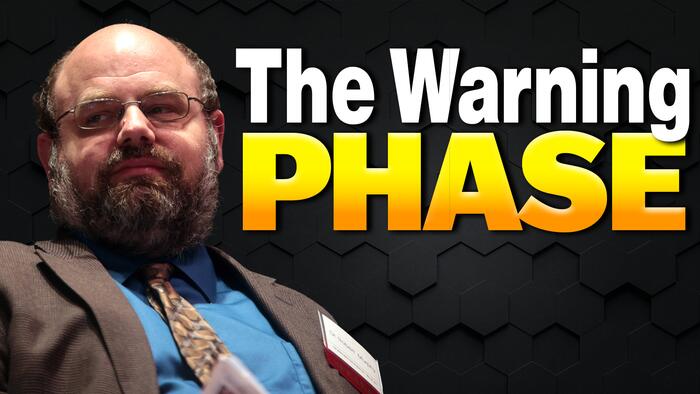
The most dangerous times in the economy often don’t feel like a crisis. Everything seems normal—until it’s not. Economist Bob Murphy explains how warning signs can be hiding in plain sight, and why people tend to ignore them until it’s too late.
He dives into key economic indicators like the yield curve, which has a near-perfect track record of predicting recessions. Despite this, when it inverted after COVID due to the Federal Reserve raising interest rates, people didn’t take it seriously. The economy didn’t crash right away, so many dismissed the warning. But Murphy warns that economic problems often build slowly and then unravel very quickly.
He discusses how the Fed quietly changed its balance sheet policy, signaling a shift in monetary strategy that most people missed. He also breaks down why rising debt, interest payments, and housing prices don’t cause instant chaos—they build pressure over time and then suddenly break.
Murphy explains that these underlying risks create a false sense of stability. Stock markets and gold prices might be at all-time highs, but that doesn’t mean the system is safe. In fact, it could mean people are hedging against future problems.
When asked why economists often get things wrong or seem unhelpful, Murphy admits the field lacks controlled experiments like in physics or chemistry. We can’t rerun historical events like the Great Depression under different policies to see what works better. So economists rely on theory, data patterns, and their best judgment.
The Federal Reserve kept interest rates at 5% after a long period of near-zero rates, and the economy didn’t collapse. Murphy says critics who predicted disaster missed some important points. For example, many homeowners locked in ultra-low mortgage rates before the Fed raised rates. This created a housing supply squeeze—people weren’t selling their homes because new mortgages were too expensive. That kept home prices from falling.
Murphy also points out that the Fed was buying mortgage-backed securities for years, which helped support housing prices. But now they’re shifting their balance sheet strategy—letting those securities roll off and reinvesting in Treasury bills instead. That could start to pressure home prices in the near future, especially by 2026.
Even though some warnings haven’t come true yet, Murphy believes many will eventually play out. For instance, central banks are quietly buying more gold, suggesting they don’t fully trust government bonds or fiat currencies long-term.
On the national debt, Murphy warns it’s already becoming a problem. The U.S. government now spends more on interest payments than on defense. While the system hasn’t collapsed, we’re closer than people think to a point where something has to give—either massive spending cuts or more money printing. And if inflation rises again, the Fed may be stuck between tightening policy or helping the Treasury manage its debt costs.
Japan often gets cited as an example of how a country can carry huge debt without disaster. Murphy acknowledges that Japan has managed so far but says it came with high costs like low growth and demographic challenges. He sees Japan’s model as unsustainable long-term and not a reason for the U.S. to feel safe about its own rising debt.
China is another case Murphy discusses. Despite massive debt and real estate issues, China still functions as a major global economy. But he believes China’s problems—such as capital controls and low trust in banks—highlight the risks of state-managed economies. He notes that some central banks are increasing gold reserves as a hedge against currency instability, including China’s.
Murphy also talks about technological progress like AI and medical innovations (e.g., Ozempic) potentially improving productivity and lowering long-term healthcare costs. However, he warns that these advancements don’t cancel out economic risks—they just change how we experience them.
On stablecoins—cryptocurrencies pegged to assets like the U.S. dollar—Murphy says they could have been a real-world test of whether people prefer 100% reserve banking or fractional reserves. But recent regulations now require U.S.-based stablecoin issuers to hold reserves in Treasury bills or bank accounts, removing market choice and skewing the experiment.
Still, Murphy believes stablecoins have strengthened the U.S. dollar’s global role in the short term by making it easier for anyone with an internet connection to use dollars. But he also warns that once people are used to blockchain-based money systems, switching away from USD-backed coins could become effortless—making it easier to adopt alternatives like gold-backed coins or other currencies in the future.
He sees stablecoins as duct tape for the dollar’s dominance—it helps hold things together now but doesn’t fix underlying weaknesses.
In a rapid-fire Q&A section:
– He’d prefer Keynes over Krugman to run the Fed—because Keynes is dead and can’t do anything.
– He thinks silver is more likely than Ethereum to be added to central bank reserves.
– He sees the gold-to-silver ratio as still useful.
– There’s over a 20% chance the U.S. mints a trillion-dollar platinum coin.
– Tariffs are overrated as causes of consumer inflation.
– AI is real and impactful—not just hype.
– He would go long San Antonio and Florida, short New York (city and state), and long Texas (as a country), short the U.S.
– He believes surveillance states and drone use are growing concerns.
– On historical moments, he’d go back to the Bitcoin pizza transaction—and keep the Bitcoin instead.
Murphy also shares his current work at Infineo, where they’re combining blockchain with life insurance to create more efficient financial tools. They’re building blockchain-based infrastructure for liquidity, transparency, and better access to financial products.
This conversation helps unpack why so many economic red flags are ignored until disaster strikes—and how markets can look calm even when serious risks are building underneath. It’s a reminder that false stability is often the most dangerous warning sign of all.