

Sphera AI: Smart Travel Planning with Crypto Payments
**PrivateCharterX Launches Sphera AI: Your New Travel Planning Assistant Powered by AI and Crypto**
Miami-based travel tech company PrivateCharterX has just launched something big: Sphera AI v1.0. It’s a smart travel assistant that helps people plan trips using simple conversations. Whether you’re on a tight $500 budget or planning a luxury vacation worth $50,000, this AI can build a custom travel plan just by chatting with you.
Sphera AI isn’t just smart—it’s also connected to crypto. That means you can pay for your trips using Bitcoin, Ethereum, USDC, and more than 70 other digital currencies. This makes booking easy, flexible, and modern, especially for crypto users and tech-savvy travelers.
**All-in-One Travel Booking Made Easy**
One of the biggest issues in travel today is having to visit multiple websites to book flights, hotels, and activities. PrivateCharterX aims to fix that with Sphera AI. This tool brings everything together in one place. Just start a chat, say where you want to go, how much you want to spend, and what kind of experience you’re looking for. The AI then does the rest—finding flights, hotels, local tours, restaurants, transportation, and even activities.
For example, you can tell it: “Plan a 7-day beach vacation in Thailand for under $2,000,” and it will build your full itinerary in seconds. Everything is tailored to your budget and preferences.
**Travel with Crypto: A New Way to Pay**
Sphera AI stands out by accepting cryptocurrency payments. Thanks to a partnership with CoinGate, users can pay with over 70 cryptocurrencies. This makes it super convenient for digital nomads and global travelers who prefer using crypto instead of traditional money.
With more people using digital currencies worldwide, this feature gives PrivateCharterX an edge in the travel market. It also makes international travel smoother by removing currency exchange hassles.
**Budget-Friendly or Luxury Travel—It’s All Covered**
What’s great about Sphera AI is that it works for everyone—whether you’re saving every penny or spending without limits. Budget travelers get access to low-cost flights and affordable stays, while luxury travelers can book private jets, high-end resorts, gourmet food experiences, and more.
One cool perk is the option to book “empty leg” private jet flights at up to 75% off. These are last-minute private jet routes that would otherwise fly empty. It’s a clever way for budget travelers to enjoy luxury flying without the hefty price tag.
Plus, you can add extra experiences like spa treatments, wine tastings, or guided city tours—all through the same chat.
**One Simple Chat = Full Travel Itinerary**
With Sphera AI, planning a trip is as easy as texting a friend. Just tell it where you want to go and your budget. The AI handles everything—from flights and hotels to restaurants and local activities. You can even make updates in real-time during the conversation.
This all-in-one approach removes the stress of juggling multiple apps or websites. It gives you everything in one place, saving time and energy.
**Rewards for Every Traveler**
To make things even better, PrivateCharterX added a rewards program. Every booking earns points—whether it’s a quick weekend trip or a luxury holiday. These points can be used for future travel perks, offering value no matter how much you spend.
This makes Sphera AI not just smart but also rewarding for frequent travelers who want to get more out of their bookings.
**Helping Travelers Around the World**
Sphera AI isn’t limited by geography. Because it accepts crypto and works through simple chat conversations, anyone around the world can use it—whether you’re in the U.S., Europe, Asia, or Africa. This global accessibility means more people can explore new places without dealing with complicated booking tools or currency issues.
By simplifying travel planning and making it more personalized, Sphera AI could change how people travel internationally—especially those who want faster, easier solutions.
**Looking Ahead: More Features Coming Soon**
PrivateCharterX isn’t stopping here. The company is already working on a new debit card designed specifically for travelers. It will sync with the rewards program and help users manage their spending while abroad. They’re also building more banking partnerships in places like the U.S. and Singapore to serve more users worldwide.
As Sphera AI gets smarter and more features roll out, it’s clear that PrivateCharterX wants to lead the future of travel tech.
**Why Sphera AI Is a Game-Changer**
Sphera AI v1.0 is changing how we think about travel planning. It combines artificial intelligence with cryptocurrency payments to create a smart, easy-to-use travel assistant. Whether you’re booking a budget escape or a luxury retreat, this tool can handle everything in one seamless experience.
No more switching between apps or struggling to keep track of bookings. With Sphera AI, everything is handled in one conversation—from flights and hotels to food and fun.
As more people look for flexible and customized ways to travel, services like this are setting a new standard for convenience, personalization, and tech-driven planning in tourism.
Top 4 Crypto Presales to Watch in 2026
The 2026 crypto presale season is heating up, and investors are keeping a close eye on promising new projects. With a focus on transparent tokenomics, solid roadmaps, and strong community support, some early-stage cryptos are already standing out. Four notable names gaining attention are BlockDAG, DeepSnitch AI, Bitcoin Hyper, and Pepeto—each offering something different for various types of investors.
**BlockDAG (BDAG): Structured Growth with Real Utility**
BlockDAG is making waves with its unique technical foundation and a well-planned presale strategy. It uses Directed Acyclic Graph (DAG) technology alongside Proof-of-Work to enable fast, secure, and scalable transactions. This design allows multiple transactions to be processed at the same time, unlike traditional blockchain systems.
– Final Presale Ends: January 26, 2026
– Entry Price: $0.001
– Listing Price: $0.05 (goes live February 16, 2026)
– Total Raised: Over $444 million
– Token Supply: 44 billion tokens across multiple stages
– Community: More than 312,000 holders
It’s also fully compatible with Ethereum smart contracts (EVM-compatible), which means developers can easily build apps on it. Key goals ahead include launching the mainnet, offering grants to developers, and growing the ecosystem.
**DeepSnitch AI (DSNT): Smart Tools for Safer Crypto Decisions**
DeepSnitch AI offers smart tools powered by artificial intelligence to help users analyze the blockchain. The platform helps track smart contracts, detect scams early, and understand on-chain activity—making it valuable for both regular users and institutions.
– Presale Price: Around $0.034
– Funds Raised: Over $1.2 million
Users get access to staking rewards and premium features that boost their research and security efforts. It’s not just another hype coin—DeepSnitch focuses on real-world use.
**Bitcoin Hyper (HYPER): Speeding Up Bitcoin with Layer-2 Tech**
Bitcoin Hyper is designed to take Bitcoin to the next level by adding Layer-2 functionality. This means faster transactions and support for smart contracts—without losing Bitcoin’s strong security.
– Presale Price: $0.013
– Funds Raised: More than $30 million
HYPER tokens will be used for staking, network fees, and governance—giving holders more ways to participate in the project’s future. It aims to bring DeFi capabilities to Bitcoin users.
**Pepeto (PEPETO): A Meme Coin Powered by Community Hype**
Pepeto is a fun and high-energy meme coin that thrives on community support and viral trends. It appeals to investors looking for short-term excitement and high-risk/high-reward potential.
– Price: Around $0.00067
– Circulating Supply: Approximately 100 million tokens
Its value is driven mostly by social media buzz and community engagement, making it a wild card in the presale scene.
**Key Takeaways for 2026 Crypto Presales**
BlockDAG stands out with its solid roadmap, confirmed listing date, and large user base. DeepSnitch AI focuses on utility and safety in crypto investing. Bitcoin Hyper brings innovation to Bitcoin with faster and smarter transactions. Pepeto rides the wave of meme culture for those looking for something more playful.
When looking at new crypto projects, always consider their tokenomics, roadmap progress, real-world use cases, and community strength before jumping in.

Top Crypto Presales 2026: BlockDAG, Maxi Doge & More
The crypto market is heating up in early 2026, and presales are becoming a key way to get in early on promising projects before they hit major exchanges. These presales give you the chance to learn about the project’s goals, how tokens will be distributed, and how active the community is. Right now, four projects stand out for their strong presale models, real-world use cases, and growing support: BlockDAG, Bitcoin Hyper, Maxi Doge, and Subbd.
**BlockDAG: Big Gains Still Possible Before Presale Ends**
– Current Price: $0.001
– Next Price: $0.05 (on February 16, 2026)
– Funds Raised: Over $445 million
– Tokens Left: 2.4 billion
BlockDAG is built for speed and security. It uses a mix of Proof-of-Work and Directed Acyclic Graph (DAG) technology to process over 100 blocks per second. It’s fully compatible with Ethereum, which means developers can easily build smart contracts on it. The project offers mobile mining through its X1 app and even has a crypto card that works at 38 million stores worldwide. With the presale ending January 26, there’s still time to take advantage of a possible 50x return before the price jumps.
**Bitcoin Hyper: Fast Bitcoin Transactions with Meme Energy**
– Current Price: $0.01356
– Funds Raised: Over $30 million
Bitcoin Hyper is a Layer-2 solution that makes Bitcoin transactions faster by using Proof-of-Stake and the Solana Virtual Machine. It doesn’t change the core Bitcoin network but adds speed and efficiency. It also brings meme-style branding to attract a wider audience. While it’s raised solid funding, there’s no set end date for the presale, so timing your entry may require some patience.
**Maxi Doge: Fun Community with Real Use Cases**
– Current Price: $0.0002785
– Funds Raised: Over $4.4 million
– Community Size: 100,000+
Maxi Doge is more than just another meme coin. It has deflationary tokenomics (meaning the supply shrinks over time), NFT integration, cross-chain compatibility early on, and community governance features. The smart contracts have been audited for safety, and the large community backing adds a layer of trust. It’s ideal for investors looking for high-growth opportunities with some added fun.
**Subbd: AI-Powered Tools for Content Creators**
– Current Price: $0.057475
– Funds Raised: $1.5 million
– Hard Cap: $55 million
Subbd is designed for creators who make money from subscriptions. It uses AI to help scale content creation and boost fan engagement. Creators keep 80% of their earnings, and staking offers investors around 20% APR. With audited ERC-20 smart contracts, limited token supply, and partnerships with over 2,000 influencers who reach 250 million followers, Subbd is building strong momentum in the creator economy.
**Market Overview**
These top crypto presales each offer something unique—whether it’s advanced blockchain infrastructure like BlockDAG, fast Layer-2 tech with Bitcoin Hyper, a meme-powered utility coin like Maxi Doge, or AI-driven tools for creators with Subbd. BlockDAG stands out with over $445 million raised and a clear 50x growth window still open. When exploring presales, it’s important to consider project goals, timeline clarity, token utility, and how active the community is—these factors can strongly influence early investment success.
**Crypto Presale Keywords:** crypto presale 2026, best crypto projects early 2026, BlockDAG investment opportunity, Bitcoin Hyper Layer-2, Maxi Doge meme coin utility, Subbd AI creator tools, top crypto tokens presale now, early-stage crypto investments

AI Predicts XRP at $6, SHIB 1,100% Surge by 2026
Google’s AI tool, Gemini, has shared bold price predictions for popular cryptocurrencies like XRP, Dogecoin, and Shiba Inu as we move closer to 2026. According to Gemini, a longer crypto bull market, backed by improved U.S. regulations, could send altcoins to new all-time highs.
Here’s a breakdown of Gemini AI’s forecast for these top altcoins:
**XRP (Ripple) Could Reach $6 by End of 2026**
XRP is off to a strong start in 2026, jumping 19% in just the first week. Currently trading around $1.95, Gemini AI predicts XRP could hit $6 before 2027. That’s about a 200% gain from current levels.
The recent surge in XRP comes after Ripple won a major legal battle against the U.S. SEC, helping reduce regulatory uncertainty for the token. This win also gave a confidence boost to investors, especially with pro-crypto sentiment growing under the new U.S. administration.
From a technical standpoint, XRP is showing signs of a bullish flag pattern, and if the broader market conditions stay positive, it could break out toward Gemini’s $6 target. Also boosting confidence are newly approved spot XRP ETFs in the U.S., which are drawing interest from traditional finance investors—just like what happened with Bitcoin and Ethereum ETFs.
**Dogecoin (DOGE) Could 6x but Might Not Hit $1**
Dogecoin, originally created as a meme coin in 2013, now holds a market cap of nearly $22 billion. While it’s still far from its peak price of $0.7316 seen in 2021, Gemini AI thinks DOGE could reach $0.70 again in this cycle.
From its current price of around $0.1257, that would be close to a 6x return. However, hitting the dream milestone of $1 might still be out of reach this time around.
Despite its meme origins, Dogecoin is increasingly being used in real-world payments. Tesla accepts DOGE for some merchandise, and payment apps like PayPal and Revolut support it. This growing utility is helping DOGE evolve beyond just being a joke coin.
**Shiba Inu (SHIB) Could Surge Over 1,100%**
Shiba Inu, often seen as Dogecoin’s younger rival, has become a major player with a market cap above $4.6 billion. It’s currently trading at around $0.000007923 but has already gained 11% over the past two weeks—beating Bitcoin, Ethereum, XRP, and Dogecoin in that timeframe.
Gemini AI predicts that if SHIB breaks above its resistance at $0.000025, it could rocket up to $0.0001 by the end of the year. That would be an incredible 1,162% gain and push it slightly above its previous all-time high of $0.00008616 from October 2021.
SHIB isn’t just about memes anymore—it now has a Layer-2 blockchain called Shibarium. This network offers faster transactions, lower fees, better privacy, and tools for developers, giving SHIB real utility beyond hype.
**Maxi Doge (MAXI): The Next Big Meme Coin?**
While Gemini AI didn’t include this one in its predictions, Maxi Doge is gaining major attention as a new meme coin presale in early 2026. It’s raised over $4.5 million so far and is gearing up for exchange listings soon.
Maxi Doge brings an over-the-top meme style inspired by fitness and gym culture—calling itself a parody of Dogecoin but louder and bolder. It aims to tap into the meme coin energy that first made Dogecoin and Shiba Inu explode in popularity.
MAXI is built on Ethereum’s proof-of-stake system, which means it’s more environmentally friendly than Dogecoin’s proof-of-work setup. Early buyers can earn up to 69% APY by staking their tokens during the presale.
As each funding round fills up, the token price automatically increases. Right now, MAXI is priced at $0.0002795. You can buy it using MetaMask or Best Wallet.
If you’re hunting for the next big meme coin run—Maxi Doge might be one to watch.
Stay connected through Maxi Doge’s official pages on X and Telegram for updates.
**Key Takeaways:**
– Gemini AI sees XRP hitting $6 if the bull market continues.
– Dogecoin could see a 6x return but may not break its all-time high.
– Shiba Inu might climb over 1,100% with help from its Shibarium network.
– Maxi Doge is an emerging meme coin with strong presale traction and big community buzz.
Crypto markets are heating up again—and according to AI predictions—the next year could be huge for these altcoins.
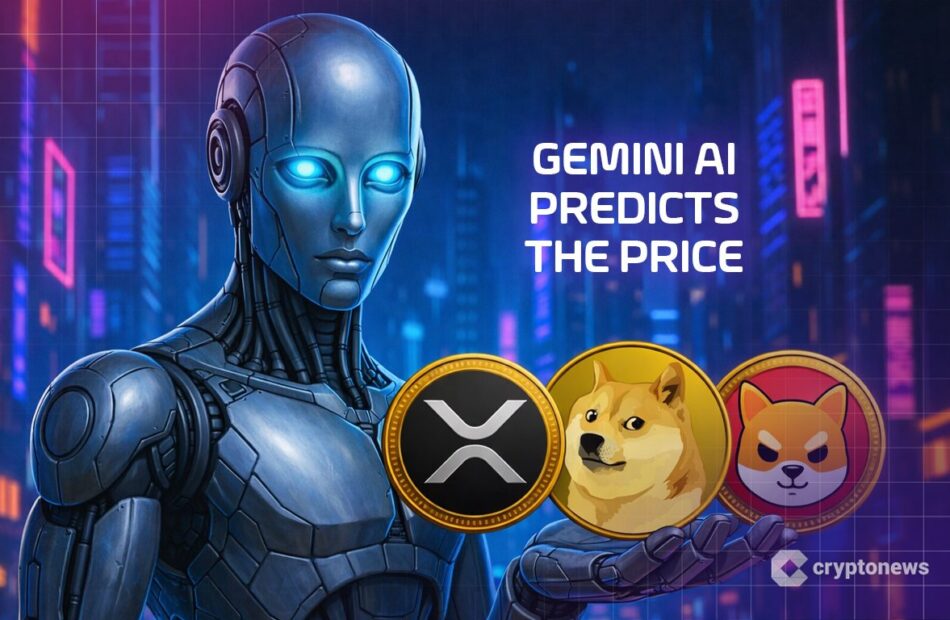
Gemini AI Predicts XRP, SHIB, DOGE Price Surges by 2026
**Disclaimer: Crypto is a high-risk investment. This article is for information only and not financial advice. You could lose all your money.**
—
### Gemini AI Predicts Big Price Moves for XRP, Solana, and Pepe by 2026
Gemini AI, Google’s answer to ChatGPT, has shared bold predictions for some of the hottest cryptocurrencies on the market, including XRP, Solana, and Pepe. The AI tool expects that if U.S. crypto regulations improve and the bull market continues, these altcoins could reach new all-time highs by 2026.
Here’s what Gemini AI sees coming:
—
### XRP Price Prediction: Targeting $6 by 2026
Ripple’s token, XRP, started 2026 strong with a 19% gain in the first week alone. Currently trading around $1.95, Gemini AI predicts XRP could hit $6 by the end of 2026. That’s roughly a 200% increase from current levels.
XRP had a big win last year when Ripple beat the U.S. SEC in court. This helped reduce regulatory fears and pushed the token to $3.65—its first all-time high in seven years.
With XRP forming a bullish chart pattern and its RSI (Relative Strength Index) sitting at 43, technical indicators look promising. If crypto-friendly policies continue under the Trump administration and spot XRP ETFs bring in more institutional investors, hitting $6 could be very realistic.
—
### Dogecoin Forecast: 6x Growth Possible, But No New Record High
Dogecoin ($DOGE), once just a joke coin, is now a top crypto asset with a market cap near $22 billion. Even after a recent market drop in October, DOGE still holds strong.
Gemini AI predicts DOGE could rise to $0.70 this year—almost six times its current price of $0.1257. However, it may fall short of breaking its previous all-time high of $0.7316 from the 2021 bull run.
Dogecoin is already being used in real life. Tesla accepts it for select products, and major payment platforms like PayPal and Revolut allow DOGE transactions. This growing utility adds real-world value beyond memes.
—
### Shiba Inu (SHIB): Over 1,100% Gains on the Table
Shiba Inu ($SHIB), another meme coin that started as a joke, has evolved into a serious crypto project with real technology behind it. Trading around $0.000007923 today, SHIB has jumped 11% in just two weeks—outperforming Bitcoin, Ethereum, XRP, and DOGE.
Gemini AI believes SHIB could surge to $0.0001 by the end of the year if it breaks above resistance at $0.000025. That would be a whopping 1,162% gain from current levels and even beat its previous record high from 2021.
What sets SHIB apart is its ecosystem. Shibarium, its Layer-2 blockchain network, offers faster transactions, lower fees, and better tools for developers—giving SHIB real-world use beyond just being a meme.
—
### Maxi Doge (MAXI): The New Meme Coin Making Waves
Maxi Doge ($MAXI) is catching attention as one of January’s most hyped new meme coins. Still in presale, it has already raised over $4.5 million before hitting exchanges.
Maxi Doge is a wild, gym-bro parody of Dogecoin—loud, bold, and made for meme culture fans and high-risk traders. It’s building its own community called the Maxi Doge Army, full of people looking for big price swings.
MAXI runs on Ethereum’s proof-of-stake system, making it more eco-friendly than Dogecoin’s older tech. Investors can stake their tokens during the presale to earn up to 69% APY. The price increases with each funding round and is currently at $0.0002795. You can buy it using MetaMask or Best Wallet.
If you’re looking for the next big meme coin before it explodes, Maxi Doge might be your shot.
Stay updated by following Maxi Doge on X (formerly Twitter) and Telegram.
—
**Keywords:** XRP prediction 2026, Solana price forecast, Pepe coin outlook, Dogecoin future price, SHIB breakout potential, Maxi Doge presale, meme coin trends, crypto bull market 2026, Gemini AI crypto predictions